
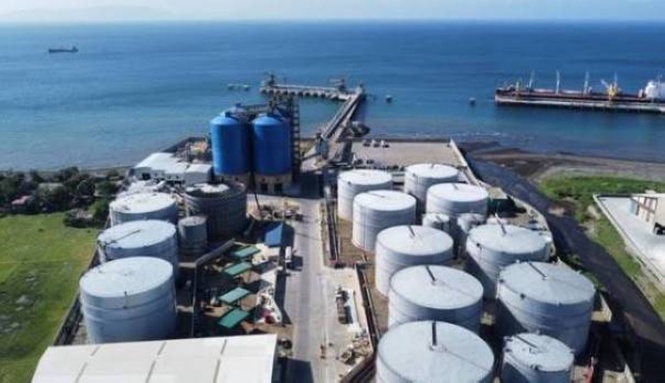
FILIPINO households and businesses can expect a more stable supply of liquefied petroleum gas (LPG) following the opening of a new import terminal in Batangas City, the Department of Energy (DOE) said on Thursday.
The facility, operated by Isla Import Terminals Inc. in Barangay Libjo, has a total storage capacity of 25 kilotons of propane, butane and mixed LPG.The terminal can receive propane and butane shipments from very large gas carriers, as well as pressurized LPG shipments. Fuel can then be distributed nationwide through LPG trucks and interisland vessels.Energy Secretary Sharon Garin said the facility would strengthen the country’s LPG supply chain by expanding its capacity to import, store and distribute the fuel.“For an archipelagic country like the Philippines, energy security depends on adequate supply and the infrastructure to receive, store and move that supply efficiently across the country,” Garin said. “This terminal adds significant capacity to our LPG supply chain and strengthens our ability to serve consumers nationwide.”The Batangas facility complements Isla LPG Corp.’s Leganes Plant in Iloilo, which was inaugurated more than a month ago.The DOE said the two facilities support different parts of the LPG supply chain. The Leganes plant expands storage, cylinder-filling and distribution capacity in Western Visayas, while the Batangas terminal provides large-scale import and storage capacity for nationwide distribution.Garin said continued investment in LPG infrastructure would strengthen the country’s ability to withstand external shocks, including geopolitical developments and disruptions to international fuel markets and shipping routes.She stressed that expanded infrastructure must be accompanied by strict compliance with safety, engineering and regulatory requirements throughout the LPG supply chain, from importation and bulk storage to transport, refilling and distribution.“Energy security ultimately must be felt by the Filipino consumer,” Garin said. “For LPG, that means families and businesses being able to rely on the fuel they need, when and where they need it.”