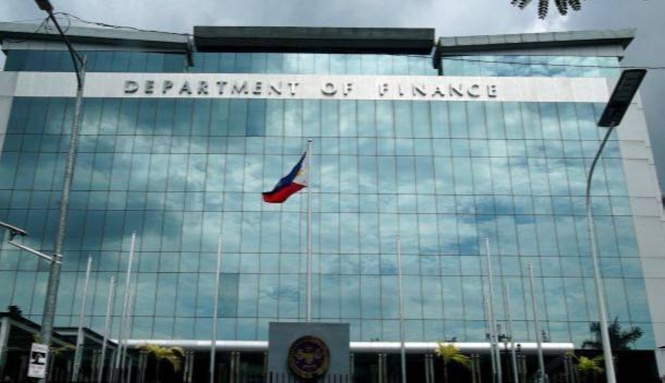
A DEPARTMENT of Finance (DOF) official said passage of the proposed ProGRESS tax reform package was likely to be carried over to next year as it is currently still with the House of Representatives.
“We want it as soon as possible because there’s a real need for it to be passed within the year,” Finance Undersecretary Karlo Fermin Adriano told reporters in a briefing late Wednesday.
“[But] It looks like it will not be passed within the year because we’re still in the lower House, but as soon as possible,” he added.
Adriano said they were already coordinating with the House and Senate Ways and Means Committee to help ensure the timely passage of the proposed reforms.
Under the proposed Promoting Growth, Revenue, and Equity towards Socio-Economic Sustainability (ProGRESS) package, the government estimated that revenue-eroding measures would cost the government P326.92 billion from 2027 to 2030 while revenue-generating measures could raise P518.71 billion over the same period.
This would result in a net positive revenue impact of P191.77 billion over four years, based on highly preliminary estimates by the DOF’s Fiscal Policy and Monitoring Group.
Adriano said the DOF wanted the proposed tax measures to be considered and passed as a single package rather than through separate bills.
Several tax measures have already been filed in Congress, including proposals covering personal income tax, minimum corporate income tax and excise taxes on selected products.
A ProGRESS bill has also been filed by Albay Rep. Adrian Salceda, although Adriano said some provisions and proposed rates differed from the DOF’s version.
Salceda’s proposal also includes a general tax amnesty, he added.
The department has been conducting consultations in different parts of the country to gather feedback on the proposed reforms. Recent engagements were held in Cebu, Baguio and Batangas.
Adriano said a planned consultation in Davao City might be moved to next year because of preparations for the Association of Southeast Asian Nations (Asean) commitments.
The largest component of the proposed tax relief is the planned increase in the personal income tax exemption from P250,000 to P350,000.
The DOF estimates that the higher exemption will reduce government revenues by P300.33 billion between 2027 and 2030, equivalent to an average annual revenue loss of P75.08 billion.
The proposal also includes an exemption from minimum corporate income tax (MCIT) for micro and small enterprises, which is estimated to reduce government revenues by another P26.6 billion over the four-year period.
Combined, the two tax-relief measures would result in a projected revenue loss of P67.02 billion in 2027, P75.99 billion in 2028, P86.17 billion in 2029 and P97.74 billion in 2030.
The biggest revenue-generating measure is the proposed increase and expansion of the sweetened beverage excise tax, which the DOF estimates could raise P296.97 billion from 2027 to 2030.
The measure is expected to generate P62.94 billion in 2027, increasing to P86.22 billion by 2030.
The second-largest revenue-generating measure is the proposed excise tax on plastics, which is expected to raise P52.19 billion from 2027 to 2030.
The DOF is proposing a P150-per-kilogram excise tax on flexible plastic packaging, including “sando” bags, “labo” bags and sachets, with the rate to be indexed by 5 percent annually.
It also proposes a P150 excise tax on e-cigarette devices, heated tobacco product devices and other novel tobacco-product devices, likewise subject to 5 percent annual indexation from 2028.
Novel tobacco products would be taxed at P72.90 per 2 grams or 2 milliliters.
The DOF estimates that the updated excise tax regime could reduce freebase vape consumption by 128 million milliliters by 2030 and heated tobacco product consumption by 5 million packs.
Alcohol taxes are also expected to generate additional revenues of P31.26 billion from 2027 to 2030.
Under the proposal, the specific excise tax on distilled spirits would increase from P78.61 to P157.21 per proof liter in 2027, with a 6 percent annual indexation thereafter.
The government also plans to expand coverage to premixed alcoholic beverages, or alcopops.
Another P15.64 billion in revenues is expected to come from a proposed higher automobile excise tax.