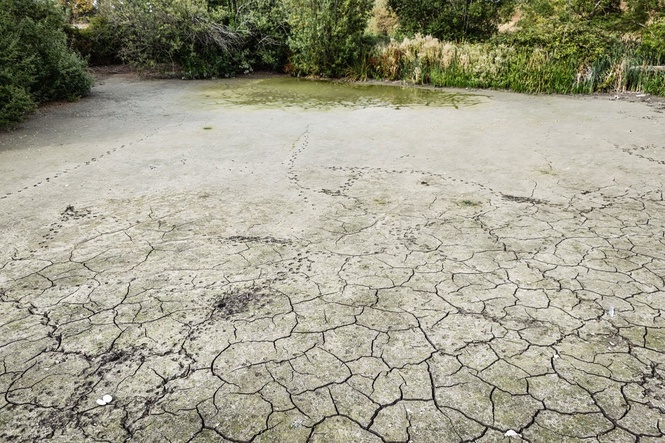
Nearly nine in 10 adults in Britain have taken at least one step to cut back on water use in the past month, a survey suggests, as many areas of the country remain officially in drought despite recent rainfall.
A summer of record-breaking heat and persistent dry weather has left reservoir levels well below average, besides damaging crops, harming wildlife and disrupting this year’s harvest.
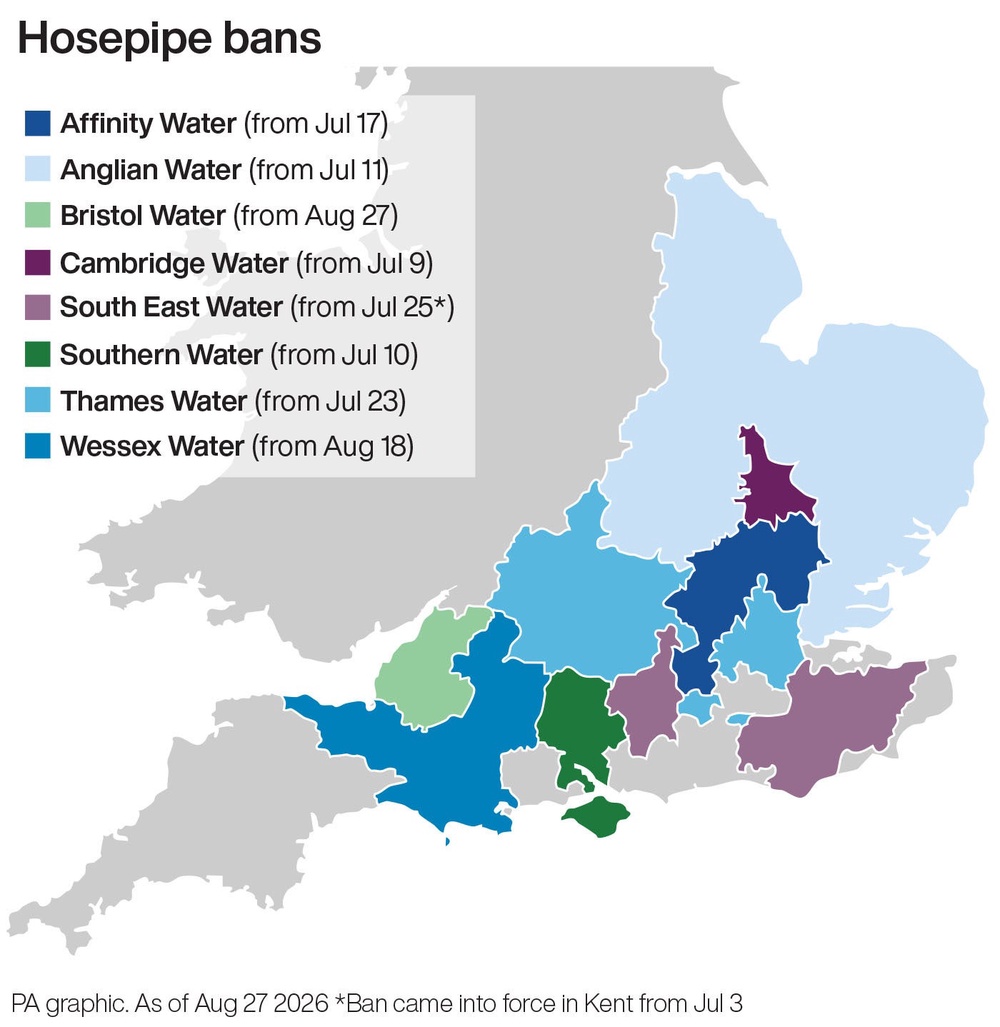
Around 30 million people in England remain affected by hosepipe bans.
Some 88% of respondents to a survey by the Office for National Statistics (ONS) said they had taken at least one step to cut water usage in August.
The figure was highest among people aged 70 and over, at 92%, falling to 90% for those aged 50 to 69, and 85% for both 16 to 29-year-olds and 30 to 49-year-olds.
The most popular action was not leaving a tap running (reported by 65% of all survey respondents), followed by waiting until the washing machine or dishwasher is full before switching it on (55%), using less tap water in the garden (48%) and taking shorter showers (42%).
The proportion of adults who reported using less tap water, including hosepipes, in the garden was notably higher in August (48%) than in July (36%).
A smaller percentage of respondents said they had collected rainwater in a water butt (25%) and taken fewer showers or baths (24%).
The ONS survey was carried out between August 5 and 30 and is based on responses from a representative sample of 3,530 adults aged 16 and over in Great Britain.
Most of England and all of Wales remain officially in drought, the exceptions being the North East, North West and Yorkshire.
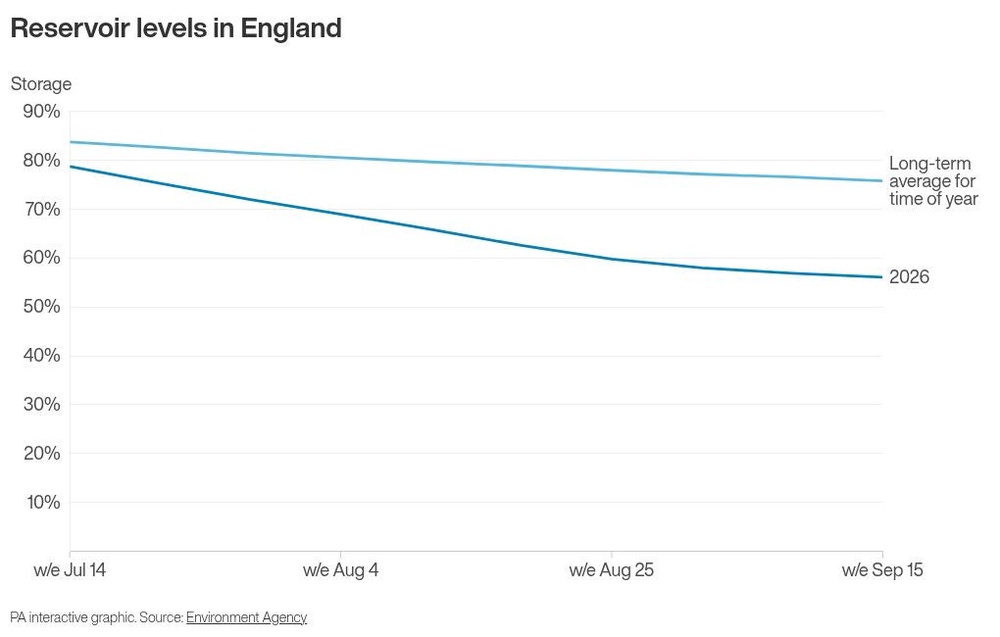
Reservoir storage in England currently stands at 56%, nearly 20 percentage points below the average for this time of year, the Environment Agency said on Friday.
Six reservoirs are classed as having exceptionally low levels: Ardingly in West Sussex; Clatworthy in Somerset; Clywedog in Powys, which provides water for central and north-west England; the Dove group of reservoirs in Derbyshire; Hanningfield in Essex; and Wimbleball in Somerset.
Water levels in Wimbleball are only 28% of the long-term average for this time of year while Ardingly and Clatworthy are both at 33%.
The Environment Agency said it is continuing to “closely monitor” these three public water supply reservoirs “due to their low levels”.
This year’s scorching weather saw parts of the country endure as many as five heatwaves, with the first in late May, followed by one in late June, two in July and one in mid-August.
The June heatwave prompted a rare red alert from the Met Office for extreme heat and saw temperatures peak at 38.0C on June 26 in Lingwood in Norfolk – a new record for the month.
An estimated 2,877 deaths in England were associated with the heatwaves in May and June, according to the UK Health Security Agency.
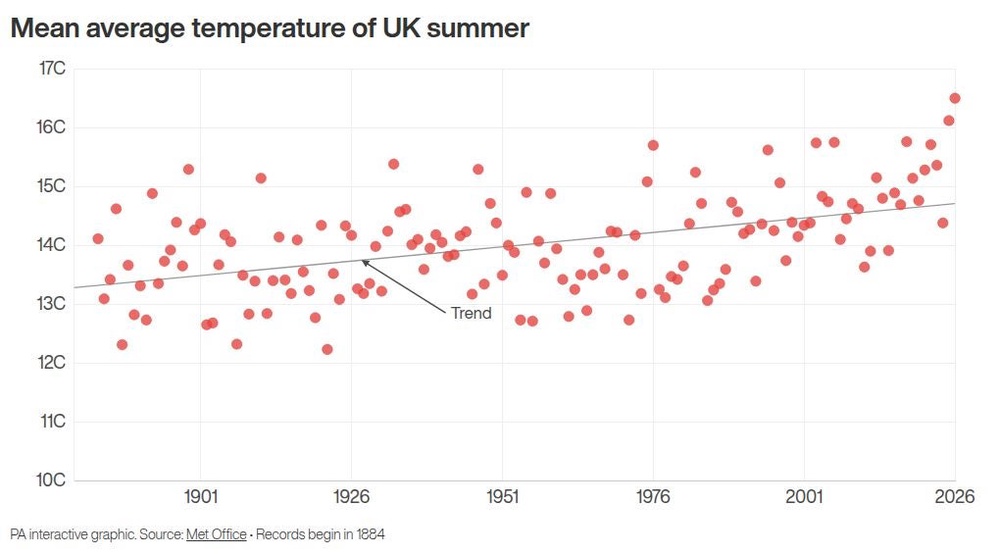
As the hot weather continued, England saw its driest July since data began, with only 7mm of rain measured, or 10% of the long-term average.
The most recent heatwave, in mid-August, saw temperatures climb as high as 38.2C at Hartpury College in Gloucestershire on August 13, making it the hottest day of the year.
The impact of the persistent hot, dry spells is continuing to affect agriculture and farming, the Environment Agency said.
While recent rainfall has eased some of the pressures, harvest yields are “highly variable” and have been dependent on access to water.
“Cereals in the east and south-east have been substantially impacted by heat and drought over summer, and apple harvests are expected to be earlier, with smaller crops and lower yields,” the agency added.
The national drought group continues to meet weekly to co-ordinate action and monitor risks across the country.
The group includes representatives of the Met Office, the Government, regulators, water companies, the National Farmers’ Union and the Canal & River Trust, along with anglers and conservation experts.
After its latest meeting on Tuesday, officials said the UK will need above-average rainfall across the next seven months for all areas of the country to move out of drought by the spring.
England had received 48% of its long-term average rainfall for this month as of September 15.
Regional averages range from 40% rainfall in the North East to 63% in the North West.
Read MoreTourists get a front-row view of military drills on Crete as Mediterranean alliances grow
A new stage for '¡GOOOOL!': Andrés Cantor’s next move is to Netflix for Women's World Cup
‘Final taste of summer’ for UK as heat dome sends temperatures rising
Britain's Prince William reveals finalists for Earthshot environmental prize
Geordie Greig’s tribute to co-founder of The Independent Andreas Whittam Smith
Mohamed Al Fayed abuse survivor brands Harrods compensation scheme ‘a disgrace’