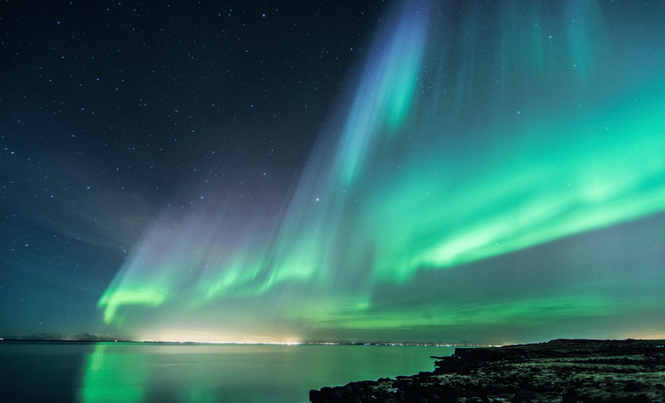
A fresh aurora borealis forecast from NOAA is giving skywatchers across parts of the northern United States another opportunity to witness one of nature’s most spectacular displays. While activity is not expected to reach major geomagnetic storm levels, conditions may still be favorable enough for observers in several northern states to catch shimmering curtains of green and purple light dancing across the night sky. With dark skies, minimal moonlight, and a weekend viewing window, tonight may offer one of the most accessible aurora opportunities of the week.
Where The Northern Lights May Be Visible Tonight
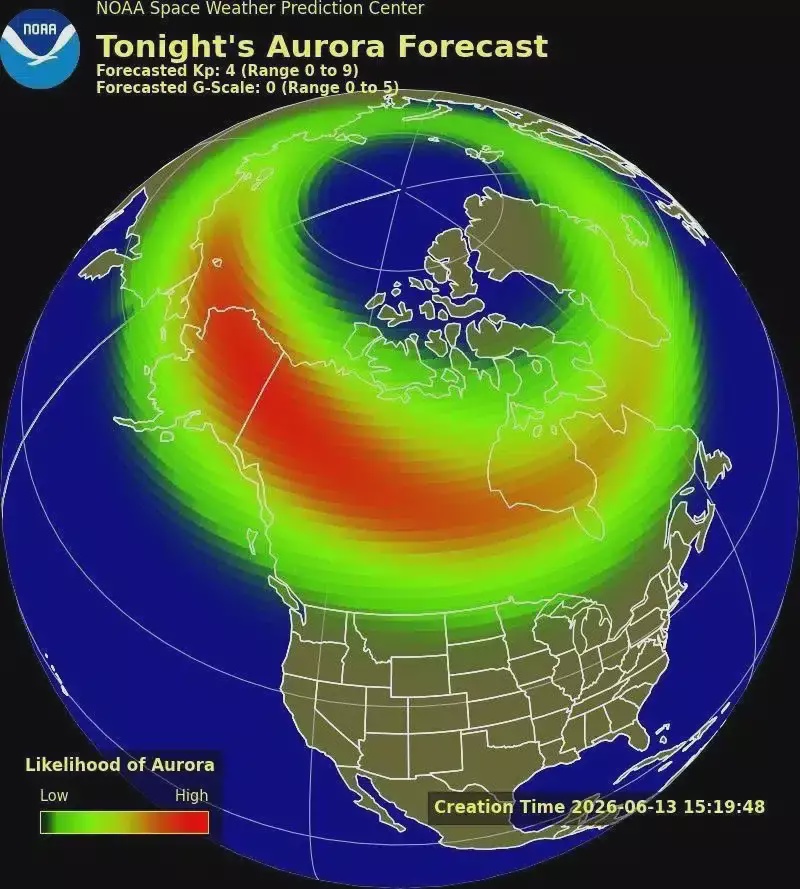
According to the latest forecast, the best chances for viewing the northern lights will be concentrated along the U.S.-Canada border. Areas with potential visibility include northern portions of Washington, Idaho, Montana, North Dakota, South Dakota, Minnesota, Wisconsin, and the Upper Peninsula of Michigan. As is often the case, much of Alaska remains in a prime position for aurora viewing, with significantly stronger probabilities than locations farther south.
Visibility does not guarantee a dramatic overhead display. In many locations,the aurora may appear low on the northern horizon, particularly in states near the southern edge of the forecast zone. Weather conditions will also play a major role. Clear skies are necessary for successful viewing, and even strong auroral activity can be hidden behind cloud cover. For many observers, patience may be required as auroral activity can fluctuate throughout the night, sometimes strengthening unexpectedly for short periods before fading again. Those living near the forecast boundary may benefit from traveling to darker rural areas where artificial light pollution is minimal.
Why Tonight’s Forecast Has Skywatchers Paying Attention
The forecast is based on a projected Kp index of 4, a measure used by scientists to estimate global geomagnetic activity. A Kp value at this level is considered moderate and can produce visually appealing aurora displays in regions close to the northern United States. While this is far below the levels associated with major geomagnetic storms, it remains strong enough to generate excitement among photographers, amateur astronomers, and casual observers hoping to catch a glimpse of the phenomenon.
The timing is also favorable. Solar activity has remained elevated during the current phase of the Sun’s activity cycle, leading to more frequent aurora opportunities than many skywatchers have experienced in recent years. Each aurora forecast attracts significant attention because displays can vary dramatically from one night to the next. Even relatively modest forecasts can occasionally produce impressive results when solar wind conditions align with Earth’s magnetic field in particularly favorable ways. This unpredictability is part of what makes aurora watching so compelling for enthusiasts across North America.
NOAA Forecast Suggests A Short-Lived Opportunity
NOAAreports that no significant geomagnetic storm impacts are expected Saturday night following a period of moderate storm activity forecast for Friday. The agency’s outlook also indicates that conditions may weaken quickly afterward, with the expected Kp index dropping to 3 by Sunday night. That decrease would reduce the likelihood of aurora visibility across the northern United States and push the best viewing opportunities farther north into Canada and Alaska.
This makes tonight’s forecast particularly noteworthy for residents of border states who may not receive another favorable opportunity immediately. Aurora forecasts can change rapidly as new solar wind data becomes available, yet current projections suggest Saturday night represents the strongest viewing window of the weekend. For many observers, that creates an incentive to take advantage of clear conditions while they are available rather than waiting for future events that may not materialize as expected.
How To Maximize Your Chances Of Seeing The Aurora
Experienced aurora watchers recommend heading to locations with unobstructed northern views and as little artificial lighting as possible. Rural landscapes, elevated terrain, open fields, and lakeshores often provide ideal conditions. Urban light pollution can significantly reduce visibility, especially during weaker auroral events where the lights may appear faint to the naked eye.
The most active period typically occurs between 10 p.m. and 2 a.m. local time, although displays can develop outside that window. Another advantage tonight is the Moon’s phase. With a waning crescent illuminated by only about 3%, moonlight interference will be minimal, allowing fainter auroral structures to stand out more clearly against the night sky. Modern smartphone cameras and long-exposure photography techniques can sometimes reveal colors and details that are difficult to detect with the naked eye, making photography an increasingly popular way to experience auroral events.