After Donald Trump unilaterally declared an “energy ceasefire” between Russia and Ukraine two weeks ago, Volodymyr Zelensky accepted it, even though it had come as news to him.
Ukrainian forces ceased their attacks on Russian refineries for a day or two, but as Vladimir Putin’s missiles and drones kept coming, the Ukrainians resumed their strikes.
It seems that President Trump had made up the ceasefire. “It was entirely in his head, which is where so many of his great diplomatic triumphs appear to occur,” as Sir Lawrence Freedman, the distinguished military analyst, observed.
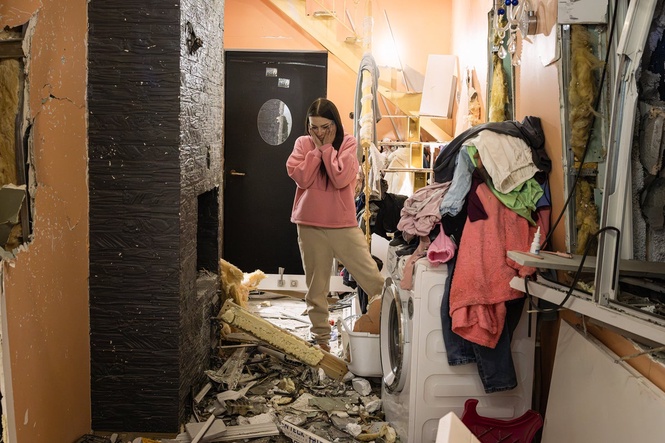
Since then, the Russian assault on Ukraine, including the deliberate targeting of civilians, has intensified. As Sam Kiley, our world affairs editor, reports, “this murder and maiming of ordinary people in the deeply personal ‘hunting drone’ killings was once confined to frontline cities such as Kherson, where Russian pilots use headsets to guide small airborne weapons onto women, the elderly and anyone caught in the open”. Now several other Ukrainian cities have been added to the target list.
On the day that Mr Trump said, “Russia, frankly, has been fine on Ukraine – they haven’t been doing much,” at least 10 people, among them a baby, her mother and a girl of 11, were killed near Kharkiv in a Russian attack.

The civilian death toll, which according to the United Nations is 85 per cent higher than this time last year, makes a ghoulish mockery of the praise for President Putin as a “humanitarian” offered by Steve Witkoff, Mr Trump’s envoy.
Something has changed in recent weeks. As Russian attacks have increased, Mr Trump has stepped up his attempts to bully Mr Zelensky into accepting surrender terms for a peace deal.
For a long time, Mr Trump’s desire to put pressure on Ukraine and to ease the pressure on Russia has been held in abeyance – partly because of the support for the Ukrainian cause among the American people, and partly because of a united front among European nations in support of Ukraine.
But Mr Trump’s war of choice against Iran has pushed up diesel prices in America, inflicting even more serious damage on the Republican Party ahead of next month’s midterm elections than will be done by siding with Mr Putin.
So Mr Trump’s strategy of trying to end the war by forcing Ukraine to surrender has coincided with his desire to buy Russian diesel. The result, including the mysterious slowdown of Elon Musk’s Starshield satellite communications system on which Ukrainian forces rely, is shameful.
It is not just morally wrong, it is strategically inept. The determination of the Ukrainian people to see out this war remains unbroken. The latest KIIS opinion poll, published on 19 October, suggested that 62 per cent of Ukrainians are prepared to endure the war for as long as necessary.
The Russian war effort on the front line is faltering or being pushed back. America has little leverage now that Mr Trump has cut back its support for Ukraine – apart from Starshield and some high-end missiles.
It is time for the non-US members of Nato to step up further and make up for Mr Trump’s perfidious betrayal of the Ukrainian people. Never mind stockpiling tins of rice pudding, it is time for Ukraine’s allies to do more to help Ukrainian forces meet the Russian threat directly over Ukrainian skies.
As Sam Kiley says, “Not because we are morally outraged by Russia’s murder of toddlers and children, or its massacre and hunting safaris against the elderly on the streets, but because it is in the interests of the West to do so.”
The more incoherent Mr Trump becomes, the more Ukraine’s allies, including Britain, must take even more responsibility for the defence of our continent.
Read MoreWhen Trump loses big in the midterms, prepare for the worst
Ukraine’s survival cannot depend on Elon Musk and Donald Trump
Sorry Wes, you can’t stockpile your way out of Armageddon
Trump and Netanyahu are the world’s worst political double act
Aung San Suu Kyi’s freedom is not a favour to be granted
By drilling Jackdaw, Mr Burnham offers the nation a drop of hope