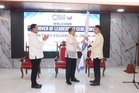
THE National Task Force to End Local Communist Armed Conflict (NTF-Elcac) has presented to a representative of the United Nations Office of the High Commissioner for Human Rights (UN-OHCHR) 71 alleged cases of arbitrary killings and other human rights violations attributed to the Communist Party of the Philippines-New People’s Army (CPP-NPA).
Documented by the NTF-Elcac National Secretariat from January 2025 to the present, the cases were discussed during an engagement led by NTF-Elcac Executive Director Undersecretary Danilo Pamonag.
The task force said the presentation focused on alleged killings of farmers, community members, and civilians whom the communist rebels accused of being government informants or collaborators.
It particularly raised the issue of “spy-tagging,” which the NTF-Elcac described as the practice of branding civilians as government informants or intelligence assets before they are targeted.
The task force cited incidents in Mindoro and Negros Island as examples of the alleged consequences of such accusations.
UN-OHCHR representative Signe Poulsen welcomed the documentation and said the findings would be brought before appropriate international human rights mechanisms.
Pamonag said human rights protection for victims must apply equally whether the alleged perpetrator is a state or non-state actor.
He called for stronger engagement with international development partners to support peace-building, community development and the reintegration of former rebels into mainstream society.
Pamonag also urged the systematic documentation and elevation of alleged CPP-NPA human rights violations before appropriate United Nations and other international human rights mechanisms.
He said international human rights organizations should give greater attention to alleged “spy-tagging,” killings and other violence against civilians in communities affected by communist armed conflict.
The NTF-Elcac said the engagement with the UN-OHCHR aimed to broaden human rights discussions by ensuring that alleged abuses committed by all armed actors are documented, investigated, and brought before appropriate mechanisms.
“Every Filipino, especially those in communities that have endured decades of armed conflict, deserves the protection of the law and the full measure of their human rights,” Pamonag said.
“There can be no selective application of human rights. Every victim deserves to be heard, every abuse deserves scrutiny, and every Filipino deserves to live without fear,” he added.