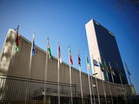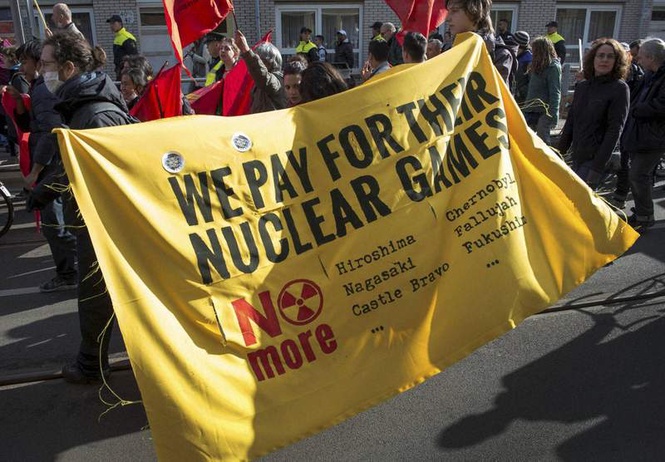
THE 2026 Review Conference (RevCon) of the Nuclear Non-Proliferation Treaty (NPT) concluded at the United Nations in New York on May 22 without adopting a final consensus document.
This is a major setback to the equitable regulation of the global nuclear domain, which is in considerable disarray due to the deep geopolitical discord among the major powers; the steady loss of trust about the intent and commitment of the five nuclear weapon states (NWS) towards disarmament; and the uncertainties induced by the emergence of new technologies, including AI (artificial intelligence) that can muddy the tenets of nuclear deterrence.
The inability to reach a consensus was no surprise. It marks the third consecutive review cycle (following 2015 and 2022) to end without an agreed-upon statement among the 191 NPT member states.
India, Pakistan and Israel are non-signatories to the NPT, while North Korea withdrew from the treaty in 2003. It is instructive that these four nations are nuclear weapon states, with Israel maintaining ambiguity about nuclear tests, unlike the other three.
The NPT, a very unequal treaty, came into force in 1970. It sought to segregate the five nuclear haves or NWS (nuclear weapon states) — the US, erstwhile USSR (now Russia), UK, France and China — from the rest of the world, which was expected to remain non-NWS (NNWS) in perpetuity. The five NWS are also the permanent members of the UN Security Council, the P5, deemed to be the executive apex of the UN system and responsible for global peace and security.
The NPT scaffolding was built around three pillars that sought to balance rights and obligations among the NWS and the NNWS — nuclear non-proliferation, disarmament and the peaceful use of nuclear energy.
The five NWS agreed not to transfer nuclear weapons or help others acquire them, while the NNWS agreed not to acquire or develop nuclear weapons. The objective was to stop the spread of nuclear weapons beyond the original five.
The disarmament pillar was framed as the NWS committed to pursue negotiations “in good faith” towards nuclear disarmament, leading to general and complete disarmament. This is the Article VI obligation and the reason why NNWS agreed to forgo acquiring the apocalyptic nuclear weapon capability — the onerous promise by the NWS that existing arsenals would eventually be reduced to zero.
The third pillar is the peaceful use of nuclear energy, wherein all parties have the “inalienable right” to develop nuclear energy for peaceful purposes. In return, non-nuclear states must accept IAEA (International Atomic Energy Agency) safeguards to verify that enriched material is not being diverted towards weapons.
In essence, the NPT bargain was basically a template that was imposed on the NNWS by the “first five”, whose diktat to the rest of the world was: you are not to build bombs; you get help with peaceful nuclear energy and we, the countries that have bombs, will work to get rid of them.
Regrettably, all three pillars have been weakened or distorted over the decades. The most blatant transgression was in relation to proliferation. The five NWS closed ranks to allow vertical proliferation of their respective arsenals, but growled in unison to prevent horizontal proliferation. The first violation of the NPT was the covert assistance provided by NWS to enable Israel, Pakistan and North Korea to acquire nuclear weapons during the Cold War decades.
The disarmament commitment and the pledge by the NWS not to use or threaten to use their nuclear weapon capability against NNWS have also been tainted. In recent years, this has been evident in the actions of Russia and the US in the Ukraine and Iran wars, respectively.
Both Ukraine and Iran have revealed the manner in which the core NPT provisions have been sullied. Paradoxically, Ukraine, which had nuclear weapons when it was part of the USSR, became a de facto NWS when the Cold War ended in December 1991; it was prevailed upon to renounce this status and become a NNWS. Solemn pledges were made that its sovereignty would not be violated, but then the February 2022 Russian invasion happened. And in the early stages of the war, Moscow engaged in not-so-subtle nuclear sabre-rattling.
Iran, which is a signatory to the NPT as a NNWS and had accepted IAEA safeguards under the (P5 plus 1) negotiated nuclear deal during the Barack Obama years, was blatantly attacked by the US and Israel on “trumped-up” charges earlier this year. The “inalienable right” of a NNWS to peaceful nuclear pursuit is in tatters.
India has no de jure locus apropos of the NPT since it is a non-signatory, but it has a de facto dialectical relationship with the global nuclear order. Since the 1950s, when Jawaharlal Nehru was at the helm, India was in the vanguard of global disarmament advocacy and contributed to the Partial Test Ban Treaty.
However, Delhi was cast as a nuclear outlier by the US till it became a nuclear weapon state in May 1998 and was then accorded an exceptional status in late 2008. This extraordinary modus vivendi was enabled in large measure by then US President George W Bush; it has given India a distinctive perch in the global nuclear architecture.
The 2026 RevCon ended on a predictably disappointing note, but the failure underscored the need to restore the sanctity of deterrence norms — it is more urgent now than ever before. The US, Russia and China have abdicated their responsibility in different ways. Alas, they are no longer the guardians they were expected to be. The world needs resolute stakeholders to repair the NPT pillars in an equitable, empathetic and consensual manner.
In the mid-1960s, the Indian representative to the Eighteen-Nation Committee on Disarmament (ENDC) in Geneva, Ambassador VC Trivedi, described the nascent NPT as a means to “disarm the unarmed.”
Sixty years later, the NPT should not morph into a treaty aimed at destroying the unarmed.