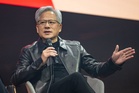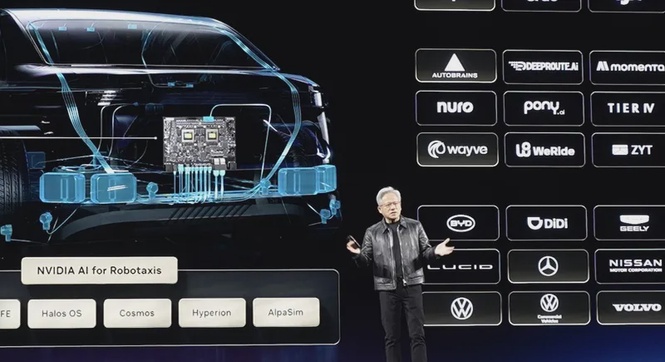
Nvidia's board met late on November 11 to decide whether to remove chief executive Jensen Huang, as the world's most valuable chipmaker reeled from reports of a second extramarital affair involving its Taiwan-born co-founder. Nvidia shares slid more than 8% in after hours trading.
A source familiar with the matter told Reuters that directors were meeting to decide whether to oust Huang. The Wall Street Journal had first reported that the company was preparing to fire him. Nvidia did not immediately respond to requests for comment.
The turn is sharp. As recently as November 8, the board had launched an independent investigation into whether Huang had been targeted by a foreign intelligence operation while saying it had "confidence in Jensen and his leadership team."
What The New York Times Reported About A Second Affair
The latest blow came from a New York Times report that Huang, 63, had a relationship with Kimberly Powell, 48, Nvidia's vice president of healthcare, who reports to him. Both are married to other people, Axios reported, citing the Times.
According to the Times account relayed by Axios, the two were seen being affectionate at a hotel during Nvidia's annual developer conference in San Jose in March. A bystander recorded the interaction, and Huang's security team offered the person a nondisclosure agreement. Reached by phone and asked about Powell, Huang said, "I don't think you should be talking to me directly," and hung up, the Times reported, according to Reuters. Nvidia declined to comment, and Powell did not respond. Reuters said it could not immediately verify the report.
Peter Jaworski, a business ethics professor at Georgetown University, told Axios that it would be hard for Huang to survive. "You can't have a relationship like this with a direct report," he said. "Does the CEO get fired? In this situation that's probably the move to make."
How The Spy Allegations Started The Crisis
The scandal began with reports that Huang had a relationship with Alice Huang, a Chinese tech executive and former executive at the Singapore based data center company Megaspeed, whom US intelligence officials determined had been recruited by China's Ministry of State Security, Al Jazeera reported. US officials have not offered evidence for the claims, and Alice Huang has not commented publicly.
China's Ministry of Foreign Affairs has called the allegations "entirely groundless, speculative and intended to smear and malign China." According to Reuters, US intelligence had been probing Alice Huang over her alleged role in facilitating shipments of Nvidia chips to Chinese firms.
In a memo to employees on November 8, Jensen Huang admitted being unfaithful to his wife and said he took "full responsibility," without giving details. The board has hired the law firm Wachtell, Lipton, Rosen & Katz to handle its investigation. Huang also faces a possible congressional subpoena if he does not agree to a closed door briefing for US lawmakers.
Taiwan Bars The Alleged Spy From Returning
The affair has also drawn in Taiwan, where Huang was born and where Nvidia's most important suppliers are based. Alice Huang had entered Taiwan on a Hong Kong passport, and her entry permit has now been revoked, the Taipei Times reported.
"As far as we understand, Alice Huang's permit has been revoked, meaning it is impossible for her to enter Taiwan again," Interior Minister Liu Shyh-fang told lawmakers on November 11. "If we had known she was a spy, we most likely would never have let her in." Liu said the government would review its screening before entry, its checks during visits and its penalties afterward.

Taiwanese economists have so far played down the risk to the island's AI supply chain. Chang Chien-yi, president of the Taiwan Institute of Economic Research, said on November 9 that many orders for the first half of 2027 had already been placed. "For the AI supply chain as a whole, I don't expect any major impact," he said, according to Focus Taiwan. That day the Taiex rose 5.27%, with TSMC up 5.85% and Hon Hai, also known as Foxconn, up 8.02%.
How Much Market Value Nvidia Has Lost
If the after-hours losses hold, Nvidia will have shed about US$600 billion in market value since the board announced its investigation, according to Reuters. Axios put the loss at about US$1 trillion since the Times first reported on October 29 that Huang had a "close relationship" with a suspected spy. Before the latest slide, Nvidia was valued at roughly US$4 trillion.
The shock spread across the AI trade. Nasdaq futures fell 1%, CoreWeave dropped 6% after hours and Micron fell nearly 2%, while rivals AMD and Broadcom rose 4% and 3%, Reuters reported. Asian markets were steadier on the morning of November 12, with modest gains in Japan, South Korea and Taiwan outweighing a 1.2% drop in Hong Kong, according to a Bloomberg markets wrap.
Investors worry less about demand for Nvidia's chips than about the web of companies it finances. "Nvidia's role at the heart of financing for much of the sector means that the prospect of a sudden change of management carries risks well beyond those for the company alone," wrote Bloomberg's Garfield Reynolds. Nick Ferres, chief investment officer at Vantage Point Asset Management in Singapore, told Reuters: "They are financing their customers. In these types of booms or bubbles, sometimes all it takes is a slowdown to shift it into the bust phase."
Dan Ives of Yorkville Ives told clients he values Nvidia at US$300 a share with Huang as CEO and US$225 without him, Al Jazeera reported. "Jensen is Nvidia; without him, the company loses its central, animating spirit," said Jay Goldberg, a senior analyst at Seaport Research Partners.
Who Could Replace Jensen Huang
Under Nvidia's bylaws, a majority of its 11 directors can remove Huang "with or without cause," and the board considers every member except Huang independent, according to Reuters. Huang owns only about 3.6% of the company, and Nvidia has no dual class shares to protect him.
There is no obvious successor. Bloomberg reported, according to Reuters, that the board has been working with an outside firm to identify possible replacements. Armina Rosenberg of Minotaur Capital told Reuters that Chief Financial Officer Colette Kress would be the natural interim choice, but that the bigger question is who would lead the technology roadmap. On the prediction market Polymarket, the odds that Huang would resign or be removed by year end jumped to 88%, with Ian Buck, who runs the data center business, favored to succeed him.
Writing in Time, Yale management professor Jeffrey Sonnenfeld and his co-authors argued that the board is "finally doing the right thing" by moving to oust Huang. They named Buck and Kress as strong interim candidates, floated a co CEO arrangement, and suggested outside figures such as Apple's Tim Cook and former Google chief Eric Schmidt for the long term. They also faulted the board for letting Huang run the company with some 60 direct reports and no clear succession plan.
What Comes Next For Nvidia
The leadership crisis lands days before Nvidia reports quarterly results on November 17. US President Donald Trump has said he had not discussed the allegations with Huang but has voiced support for him. Separately, Axios reported that Commerce Secretary Howard Lutnick had stalled a crackdown on companies suspected of diverting Nvidia chips to China, according to Reuters.