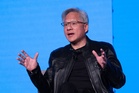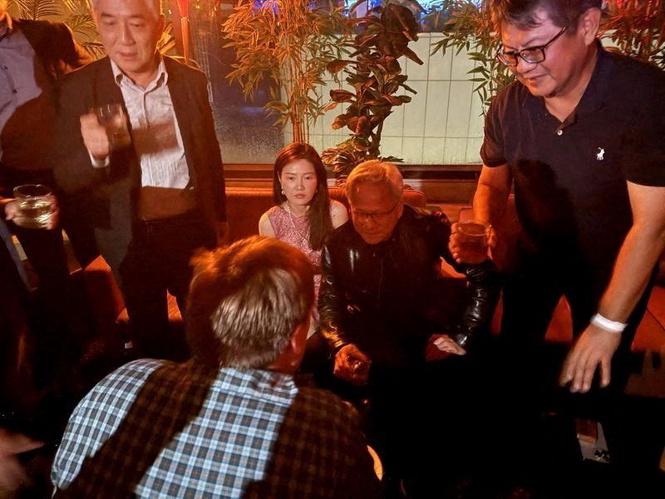
WASHINGTON, Nov 10 - US President Donald Trump said yesterday that the FBI was investigating Nvidia CEO Jensen Huang's relationship with a Chinese businesswoman suspected of spying for Beijing, as the world's most valuable chipmaker faced mounting scrutiny over the allegations.
Trump said he was "amazed" by the allegations involving Huang, one of his closest allies in Silicon Valley, and had spoken to the Nvidia chief earlier.
"I asked him that question, 'Did you have any idea that she was a spy?' He said, 'I had no idea that she was a spy,' and I really believe him," Trump told reporters at a White House briefing.
"I know the FBI is looking into it," Trump said. "I think that he'll be in good shape," he added.
Nvidia shares closed more than four per cent lower yesterday, hitting a seven-month low after the company's board launched an internal investigation into whether Huang had been targeted by a foreign intelligence operation.
The probe, announced on Sunday, followed a New York Times report linking Huang to a Chinese businesswoman whom US intelligence officials reportedly believed had shared information with Beijing.
The investigation has raised questions about the future of the 63-year-old executive, given Nvidia's position as the world's most valuable chipmaker and Huang's pivotal role in driving the artificial intelligence (AI) boom.
Huang told Nvidia employees that he had been unfaithful to his wife but did not disclose details of the relationship.

Known for his trademark leather jacket, Huang enjoys rock-star status worldwide, particularly in Asia, where he frequently mingles with fans, poses for selfies and signs autographs.
He is Nvidia's fifth-largest shareholder, holding a stake of approximately 3.6 per cent, according to LSEG data, and maintains tight control over the company through an unusually flat management structure in which dozens of executives report directly to him.
Unlike Mark Zuckerberg's Meta Platforms or Elon Musk's SpaceX, however, Nvidia does not have a dual-class share structure that would give its co-founder majority voting control.
The New York Times reported that Trump had been briefed on Huang's relationship with the woman and allegations that she was providing information to the Chinese government, but chose not to act on the intelligence.
China rejected the allegations.
"The so-called Chinese spy narrative is purely a groundless accusation, slander, and a smear," Chinese Foreign Ministry spokesperson Guo Jiakun told reporters in Beijing.
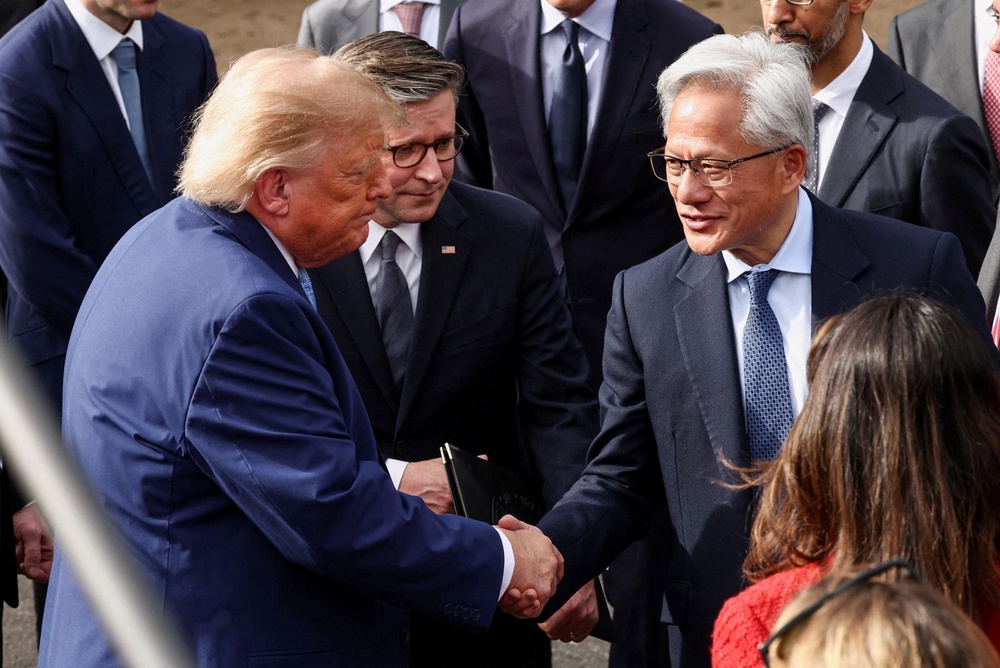
Huang's close relationship with Trump, dating back to at least 2025, has coincided with several favourable policy developments for Nvidia.
Over the past two years, Huang has repeatedly voiced support for the Trump administration's agenda and become a regular presence in Washington as Nvidia sought approval to sell advanced AI chips to China.
Trump has also publicly praised Huang, awarding him the nation's highest honour for scientific achievement in October.
On the same day, Trump disclosed that he had bought up to US$1.6 million and sold up to US$1 million worth of Nvidia shares during the summer.
Nvidia board backs Huang
Nvidia said its board retained confidence in Huang, who is widely regarded by Wall Street analysts as one of the most influential figures driving the AI investment boom.
While analysts acknowledged uncertainty surrounding succession planning, most did not expect the investigation to force the longtime CEO to step down.
"Nvidia is not an ordinary company and Jensen is not an ordinary CEO; he is Nvidia, clearly sets the long-term strategy and direction, and pulls most of the company's strings himself," said Bernstein analyst Stacy Rasgon.
Meanwhile, Nvidia shareholders filed a proposed class-action lawsuit against Huang and the company yesterday, accusing them of defrauding investors by concealing Huang's ties to a suspected Chinese spy.
Lawmakers and advocates told Reuters that the allegations could increase pressure on Congress to tighten restrictions on China's access to advanced AI chips.
US House of Representatives Democratic leader Hakeem Jeffries said Congress needed more answers and called for the House to pass an annual defence bill containing restrictions on chip sales to China.

The New York Times reported last month that Huang had been involved in a relationship with Alice Huang, an unrelated former executive at Singapore-based company Megaspeed, whom US authorities had investigated and concluded was a Chinese intelligence asset.
Megaspeed did not immediately respond to a request for comment yesterday, which was a public holiday in Singapore.
Alice Huang did not respond to the New York Times when it first reported her relationship with Huang last month, while Reuters was unable to determine her whereabouts to seek comment on yesterday.