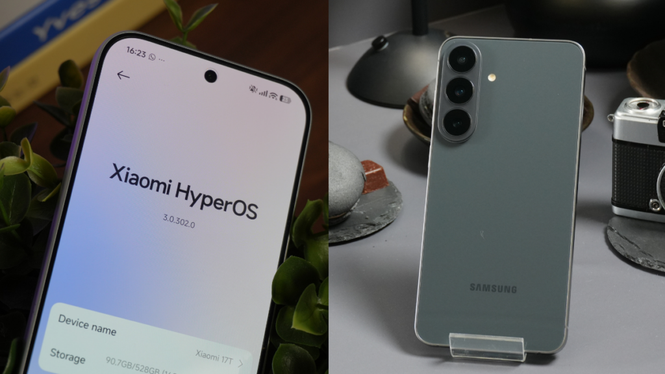
It seems that Samsung and Xiaomi, two of the biggest Android smartphone manufacturers in Malaysia, took very different approaches to rising memory costs in 2026. Samsung absorbed most of the increase to keep prices stable, while Xiaomi passed more of the cost to consumers to protect its margins.
According to Omdia analyst Sheng Win Chow, Samsung’s mobile division posted its first-ever quarterly operating loss in Q2 2026, losing KRW700 billion (around RM2.1 billion) on KRW33.2 trillion in revenue. Xiaomi meanwhile remained profitable with an 8.5% smartphone gross margin, although its global smartphone shipments fell 26% year-on-year to 31.2 million units.
Curiously, while both companies have been dealing with sharply higher DRAM and NAND costs since 2025, their pricing strategies were almost opposite.
As shown by Sheng Win, the landing cost of the Samsung Galaxy A27 5G jumped by approximately 90% compared to its predecessor, from RM594 to RM1,132. Despite this, its retail price only increased 7%, from RM1,399 to RM1,499. The dealer buying price also rose by around 7%, allowing retailers to maintain roughly a 10% margin.
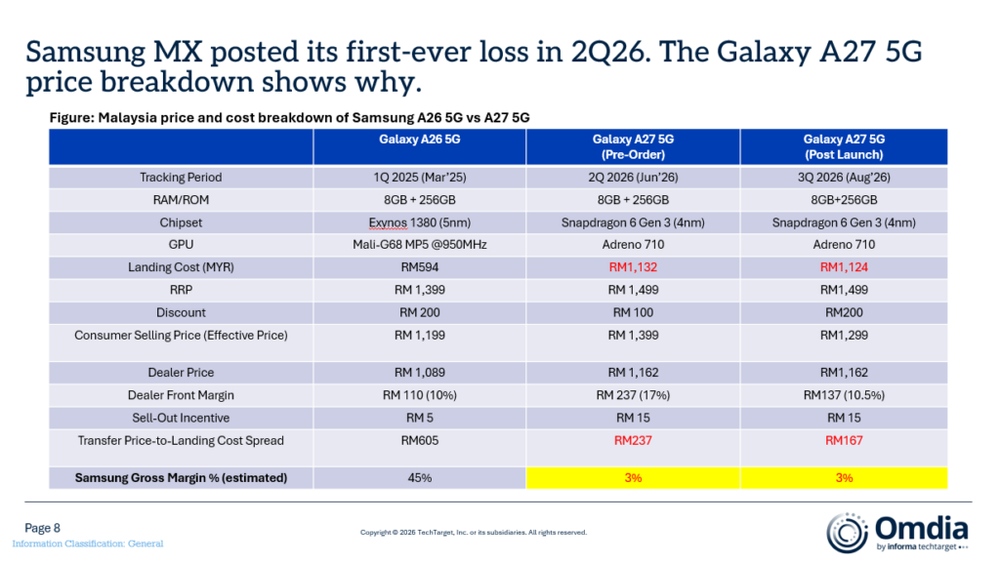
This meant Samsung’s gross margin on the model collapsed from 45% to just 3%, effectively forcing Samsung to absorb most of the cost increase rather than passing it on to buyers.
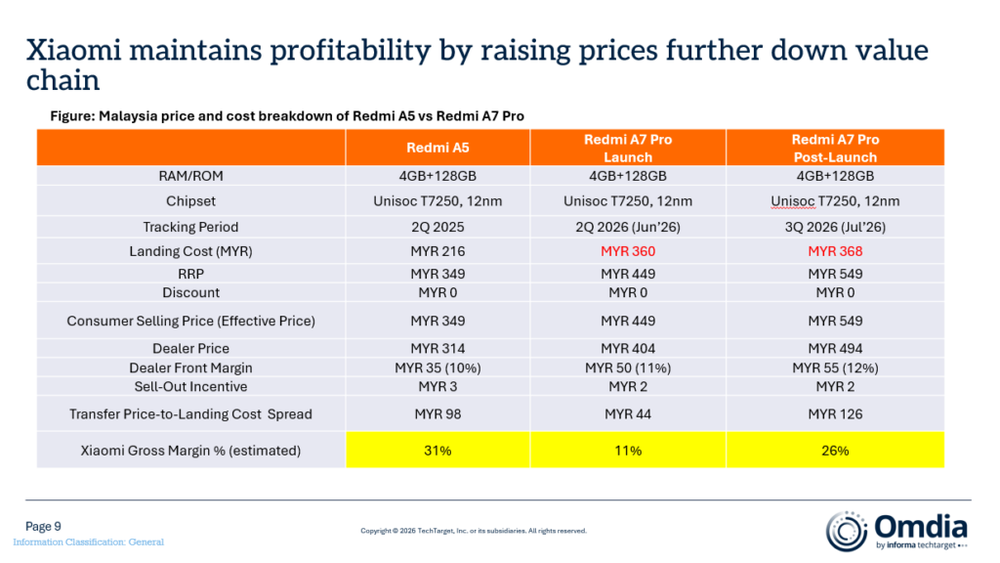
Xiaomi though went the other way, with the landing cost of the Redmi A7 Pro hiked by around 70% compared to its predecessor from RM216 to RM368, but its RRP jumped from RM349 to RM549 after two price increases within the first month. Its dealer price also rose from RM314 to RM494, with dealer margins increasing from 10% to 12%.
The strategy helped Xiaomi protect profitability, but came at the expense of shipments. Its global market share fell from 15% to 11%, while Oppo and Vivo also saw shipments decline 17% and 18% respectively as brands overall prioritised margins over volume.
Samsung though has an advantage that most competitors don’t in that it also makes memory. While higher DRAM and NAND prices hurt its smartphone business, they helped Samsung’s semiconductor business achieve record profitability; Samsung Electronics reported KRW89.5 trillion in operating profit for Q2 2026.
The bigger question is whether consumers will continue accepting higher smartphone prices. The second half of 2026 will show whether smartphone makers can continue passing memory costs to consumers, or whether weaker demand eventually forces them to absorb more of the pain.
Read more of our articles below!
Omdia: Malaysians bought 23% fewer smartphones but paid 38% more for them in 2026
Buy the upcoming Apple foldable or iPhone 18 Pro? Or just get the iPhone 17 Pro instead?

The post Omdia: Samsung absorbed memory crisis while Xiaomi maintained its margins appeared first on Price Shop Malaysia.