More than a third of households with solar panels could have earned more selling electricity to the grid than they spent buying it over the summer, according to new research.
An analysis of 1,281 solar households by MakeMyHouseGreen found that 35.4 per cent could have earned more from exporting electricity than they spent importing it between July and September, including standing charges, if they had been on the cheapest compatible electricity tariffs assessed.
However, just 16.3 per cent would have achieved the same result on a standard price-cap tariff, assuming an export payment of 8p per kilowatt hour (kWh).
The findings suggest that choosing the right electricity tariff could make a considerable difference to the savings solar panel owners achieve.
According to the report, the typical household analysed could have saved an additional £63 over the three-month period simply by switching to a more favourable tariff.
The results come after an unusually sunny summer boosted solar electricity generation across the UK. MakeMyHouseGreen estimates that solar panels produced 13.6 per cent more electricity than during an average summer, rising to 19.2 per cent above average in London and the South East.
Read more: Best solar panels, compared
Interested in solar? Use our free tool to get a quote
How to earn more from your solar panels
While solar panels can reduce electricity bills by generating power that would otherwise be bought from the grid, homeowners can also earn money by exporting surplus electricity through the Smart Export Guarantee (SEG).
However, the amount suppliers pay for exported electricity varies significantly, making your tariff choice an important factor when it comes to maximising your savings.
Compare import and export tariffs
Rather than simply choosing the supplier offering the highest export rate, solar owners should consider how much they pay for electricity when their panels aren't generating enough to meet demand. A higher export rate might not compensate for more expensive imported electricity.
Consider a time-of-use tariff
Some tariffs offer cheaper electricity overnight or during periods of lower demand. Households with battery storage can potentially take advantage by charging their batteries when electricity is cheaper and using that stored power during more expensive periods.
Make the most of battery storage
A home battery allows homeowners to store surplus solar electricity rather than immediately exporting it. This can reduce the amount of expensive grid electricity needed in the evening. However, whether storing or exporting electricity makes better financial sense depends on the rates available, battery efficiency and household consumption.
Review your electricity usage
Checking smart meter readings and solar generation data can help homeowners understand when they import and export electricity. This information makes it easier to compare tariffs based on their actual usage patterns rather than on headline rates alone.
The research found that the most economical tariff combination for many of the households analysed included cheaper overnight electricity, highlighting the potential benefits for homeowners with batteries.
Could solar panels eliminate your electricity bill?
Although the findings suggest some solar households could earn more from exporting electricity than they spend buying it during summer, this doesn't necessarily mean they will make money over the course of a whole year.
Solar generation typically falls considerably during winter, which is also when households tend to use more electricity.
It’s also worth noting that these figures are modelled estimates rather than actual electricity bills, and 93 per cent of the households analysed had battery storage. The calculations also exclude the upfront cost of installing solar panels and batteries.
Nevertheless, the findings suggest that homeowners with existing solar installations could be missing out on additional savings if they haven't recently reviewed their electricity tariffs.
Read more: Best solar panel installers, explained
The solar panels we’d recommend
SunPower Maxeon 7
Why we love it
- Industry-leading 40-year warranty
- Excellent long-term power retention
- High efficiency and strong per-panel output
Take note
- Premium pricing
- Over-spec for households with modest energy needs
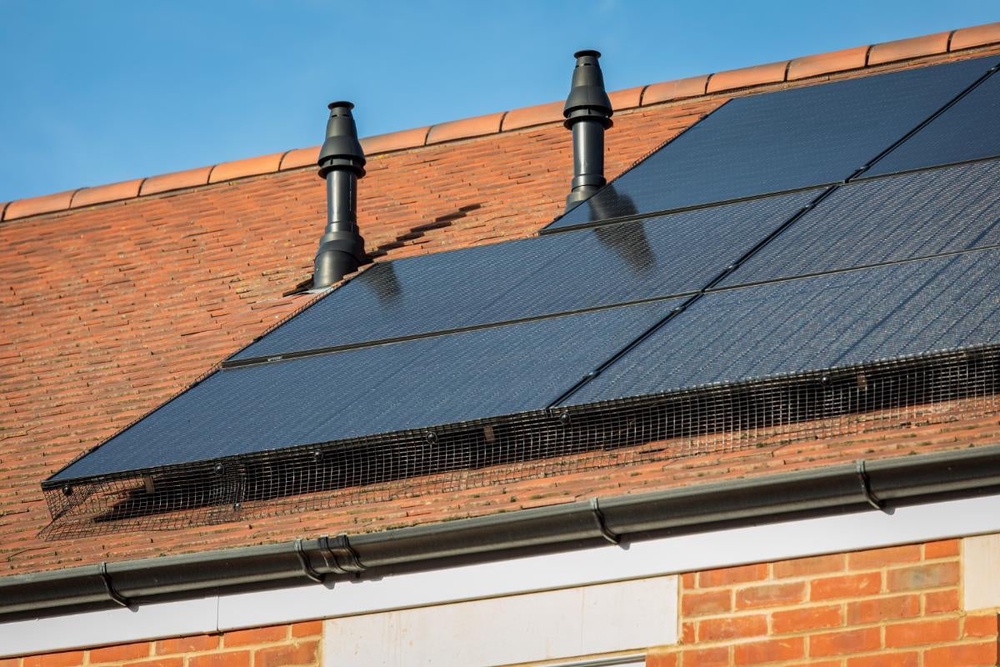
What sets the Maxeon 7 apart is its Interdigitated Back Contact (IBC) cell design. Unlike conventional panels, all electrical contacts sit behind the cell, reducing resistance and improving durability. This design also makes the panel more resistant to micro-cracks, corrosion, and heat-related efficiency loss – key factors over a 30 to 40 year lifespan.
Degradation performance is among the best we’ve seen. After three decades, the Maxeon 7 is expected to retain more than 90 per cent of its original output, meaning it continues generating meaningful savings long after many panels have declined.
The high output per panel makes it suitable for homes with limited roof space, while its relatively light weight simplifies installation. In real-world use, installers consistently cite reliability and consistency as standout strengths.
Installers and homeowners regularly praise SunPower panels for long-term reliability and low fault rates. Reviews tend to highlight peace of mind, consistent generation, and strong aftercare support when installed through approved partners.
Who should choose the SunPower Maxeon 7?
The SunPower Maxeon 7 is best suited to homeowners who want a premium solar panel and are comfortable paying more upfront for long-term certainty. Its main advantage isn’t just high efficiency, but the combination of strong output, low degradation and unusually long warranty cover.
This makes it a strong choice if you expect to stay in your home for many years, have limited roof space or want to maximise lifetime generation from a smaller system. It may be harder to justify if you have modest electricity use or a large, uncomplicated roof where a cheaper panel could still generate enough power.
Ultimately, you should choose the SunPower Maxeon 7 over the other panels in this guide if you want the strongest long-term warranty and are willing to pay more for peace of mind. It is the best fit for homeowners planning to stay in the same property for many years, or those who want a premium panel with excellent output retention. However, if upfront cost is your main concern, DMEGC or LONGi may offer better value.
Key specifications
- Price per kW, installed: About £1,250
- Efficiency: 24 per cent
- Wattage per panel: 475W
- Type: N-Type
- Degradation: 90.8 per cent after 30 years
- Warranty: 40 years (product and performance, with registration and approved installer)
- Dimensions: 1.79m x 1.04m x 0.04m
- Weight: 21kg
Read the full SunPower Maxeon 7 solar panel review
Buy now £1250, Get quote now
DMEGC Infinity
Why we love it
- Strong long-term performance for the price
- Good warranties and proven durability
- Excellent value as a long-life option
Take note
- Not the very highest efficiency
- Degradation slightly behind premium leaders
The key strength of the DMEGC Infinity panel is its balanced degradation profile. While it doesn’t quite reach the 90 per cent benchmark of the very top performers, retaining more than 87 per cent output after 30 years is still well above the industry average.
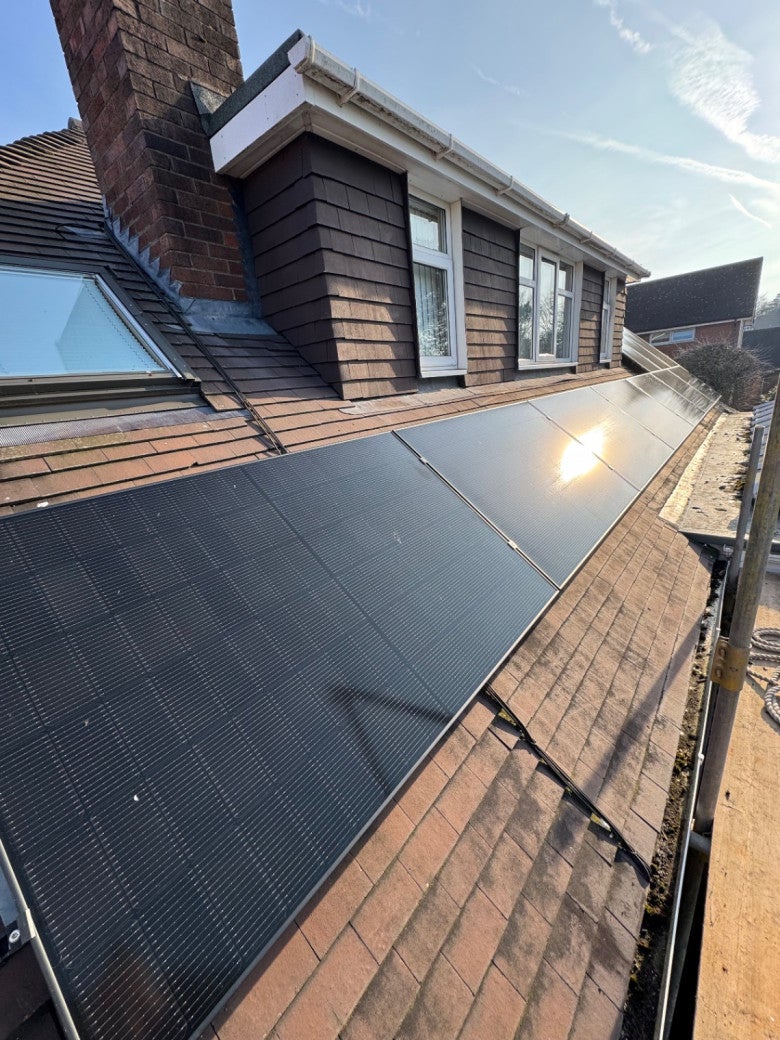
Its N-type cells slow long-term performance loss and reduce light-induced degradation, which is a common issue with older P-type panels. Combined with a robust frame, anti-glare coating, and solid heat tolerance, the Infinity is well-suited to long-term UK use.
Installers often highlight the panel’s consistency rather than any single standout metric, which is exactly why it works so well for a wide range of homes.
DMEGC panels tend to be reviewed positively when installed by reputable UK installers, with customers noting steady generation and few post-installation issues. Feedback commonly reflects satisfaction rather than flashiness.
Paul Evans, head of renewables at solar panel fitter Glow GreenBeing able to trust in the longevity of a company that has been around as long as DMEGC, its skills in electrical manufacturing and as a Tier-1 solar manufacturer, gives us peace of mind that we are supplying our customers with quality.
Who should choose the DMEGC Infinity?
The DMEGC Infinity is a good fit for homeowners who want a reliable, long-lasting panel without moving into the most expensive part of the market. It doesn’t have the highest efficiency figure in this guide, but it performs strongly across the areas that matter for most homes: output, warranty cover, degradation and installed cost.
That makes it a sensible option if you have enough roof space for a standard domestic solar array and want a panel that delivers steady generation over decades. It is less about chasing the highest specification and more about getting a dependable system at a fair price.
You should buy the DMEGC Infinity if you want a strong all-rounder that balances price, performance and long-term durability. It doesn’t beat SunPower on warranty or Perlight on efficiency, but it’s likely to make sense for more households because it offers dependable performance without the highest installed cost. This is the panel to consider if you want long-term value rather than the most premium specification.
Key specifications
- Price per kW, installed: £795 to £1,195
- Efficiency: 23 per cent
- Wattage per panel: 440W to 460W
- Type: N-Type
- Degradation: 87.4 per cent after 30 years
- Warranty: 25 years product, 30 years degradation
- Dimensions: 1.76m x 1.13m x 0.03m
- Weight: 24.5kg
Read the full DMEGC Infinity solar panel review
Buy now £795, Get quote now
LONGi Hi-MO X10
Why we love it
- High efficiency for the price
- Strong long-term warranty
- Sleek all-black design
Take note
- Not bifacial
- Lower retained output than some premium panels
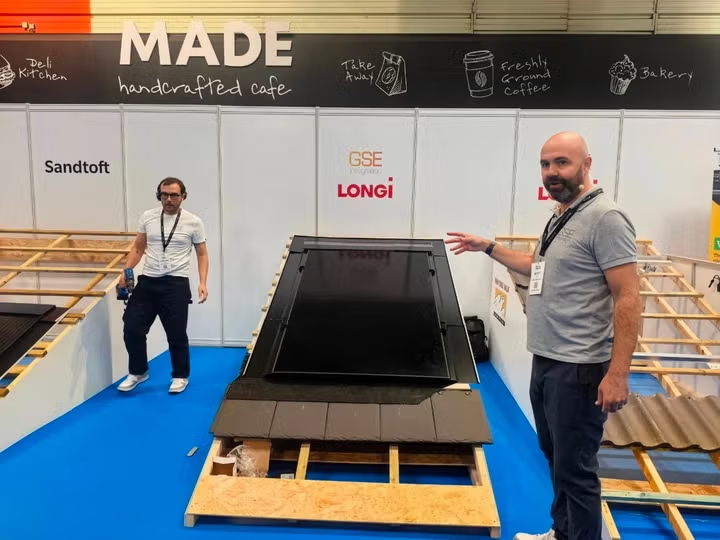
The Hi-MO X10’s standout feature is LONGi’s HPBC 2.0 back-contact technology. This moves the electrical contacts to the rear of the solar cell, leaving more of the front surface free to capture sunlight. The result is a high-efficiency panel with a clean all-black finish and no visible front grid lines.
The Hi-MO X10 offers a 485W output and efficiency of up to 24 per cent, making it a strong option for homeowners who want good generation from a limited amount of roof space. LONGi also highlights the panel’s performance in lower-light conditions, which is useful for UK homes where cloud cover, winter daylight and roof orientation can all affect output.
Long-term performance is another selling point. LONGi states that the panel has one per cent first-year degradation and retains 88.85 per cent of its original output after 30 years, which is a solid long-term guarantee.
Its all-black design also helps it blend into the roof more discreetly than panels with visible silver lines or busbars, which may appeal if you are concerned about how a solar installation will look from the street.
As a budget pick, the LONGi Hi-MO X10’s advantage is that it combines strong efficiency, a major global brand and a long warranty without the same premium positioning as more specialist panels. However, as with any solar panel, the final value will depend on the installed quote rather than the panel specification alone.
Who should choose the LONGi Hi-MO X10?
The LONGi Hi-MO X10 is best for homeowners who want high efficiency and modern back-contact technology, but do not necessarily want to pay for the most premium panel in the guide. Its 485W output and clean all-black design make it a strong option for homes where roof space, appearance and long-term performance all matter.
It’s also worth considering if you want a panel from a major global manufacturer with a long performance warranty. However, because installed prices can vary by installer and system size, it is important to compare quotes carefully rather than choosing it on specification alone.
The LONGi Hi-MO X10 is the best solar panel to choose from our list if you want high efficiency and modern back-contact technology without moving into premium-panel pricing. It’s a particularly good alternative to SunPower or Perlight if you have limited roof space but still need to keep costs under control. The main trade-off is that the final value will depend heavily on the installed quote, so it’s worth comparing it carefully against DMEGC and Jinko.
Key specifications
- Price per kW, installed: £1,300 to £1,600
- Efficiency: Up to 24 per cent
- Wattage per panel: 485W
- Type: N-type back-contact / HPBC 2.0
- Degradation: 88.85 per cent after 30 years
- Warranty: 30 years product and performance warranty
- Dimensions: 1.8m x 1.13m x 3cm
- Weight: 21.6kg
Buy now £1300, Get quote now
Perlight Black Grid
Why we love it
- Class-leading efficiency (26 per cent)
- High power output (500W per panel)
- Long 30-year warranty
- Competitive price compared with other high-performance panels
Take note
- Degradation is weaker than its rivals
- Not a Tier-1 manufacturer, though established globally
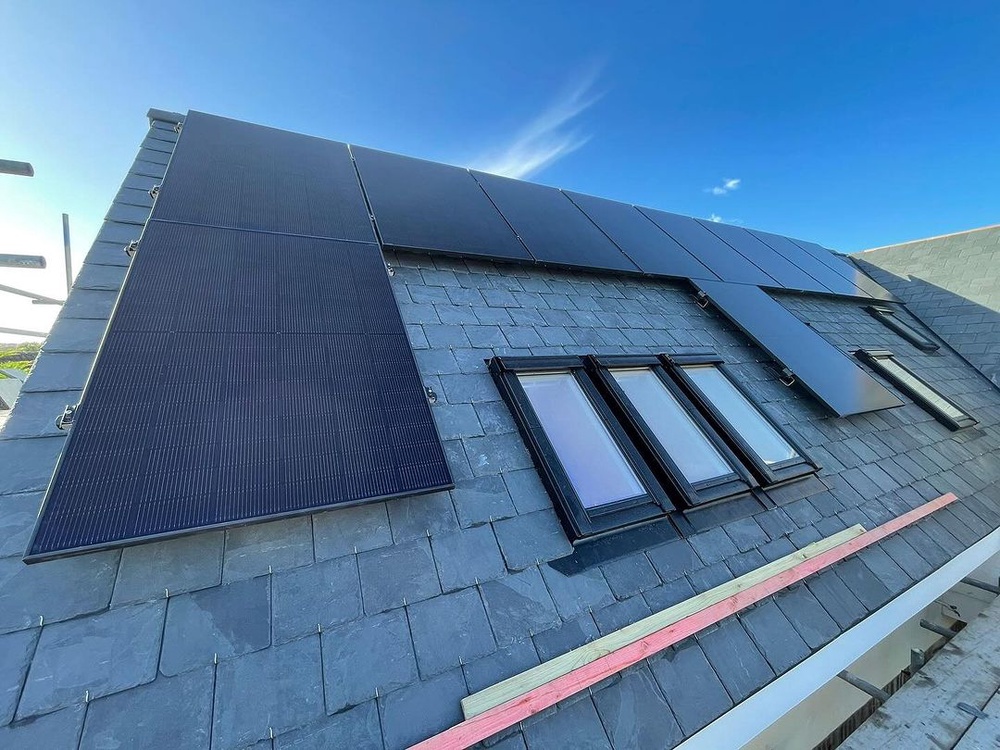
The key differentiator here is power density. With both high efficiency and high wattage, the Black Grid produces more electricity per square metre than any other panel listed, which makes it a favourite among many of the best solar panel installers.
Its bifacial construction and reinforced frame improve resilience, while the long 30-year warranty adds confidence. Although degradation is slightly weaker than some rivals, overall lifetime output remains strong due to the high starting efficiency.
Perlight panels are frequently positively mentioned by installers for build quality and output. Consumer reviews tend to reflect satisfaction with the generation rather than brand loyalty.
Paul Evans, head of renewables at solar panel fitter Glow GreenA 30-year product warranty is hard to come by in any product, but Perlight offers one of the longest warranties available in the market.
Who should choose the Perlight Black Grid?
The Perlight Black Grid is best for homeowners who need to maximize energy generation from their available roof space. Its high efficiency and 500W output mean each panel can contribute more to the overall system size, which is useful if your roof is small, has awkward sections or cannot fit as many panels as you would like.
It may also appeal if your household electricity demand is likely to rise, for example, because you plan to add an electric vehicle charger, a heat pump, or battery storage. In those cases, a higher-output panel can help you build a more capable system without needing more roof area.
If your priority is generating as much electricity as possible from each square metre of roof space, then the Perlight model is the best solar panel for you. It is the strongest option here for efficiency and wattage, which may justify the cost if your roof is small, awkward or partly restricted. However, if you are more focused on brand scale or long-term degradation, SunPower, DMEGC or Aiko may be a better fit.
Key specifications
- Price per kW, installed: £895 to £1,195
- Efficiency: 26 per cent
- Wattage per panel: 500W
- Type: N-Type
- Degradation: 87.4 per cent after 30 years
- Warranty: 30 years on product and performance
- Dimensions: 1.76m x 1.13m x 0.03m
- Weight: 20.9kg
Read the full Perlight Black Grid solar panel review
Buy now £895, Get quote now
Read MoreWhat are the different types of solar panels? Rooftop, plug-in and PV technologies explained
Could your roof save you £950 a year? The areas in the UK where solar pays off fastest
Are solar panels worth installing in the UK?
I’m an energy expert – here’s my verdict on plug-in solar panels
How long solar panels last in the UK: Lifespan, warranties and replacement explained