
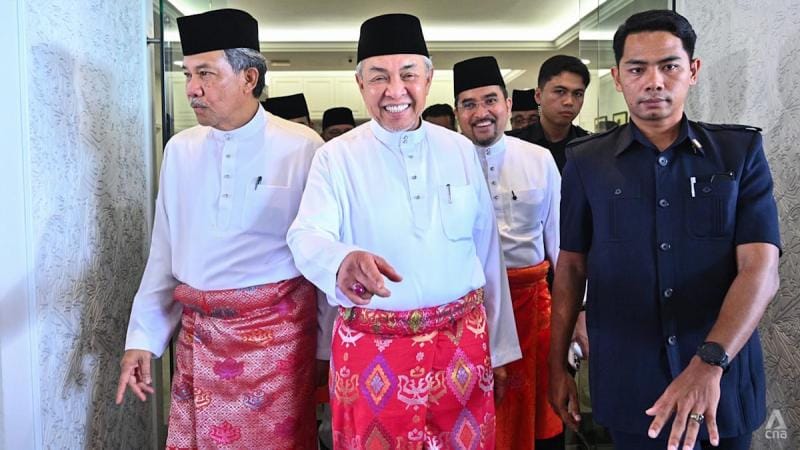
The political atmosphere in Malaysia is heavy with anticipation, mirroring a broader, global exhaustion with establishment politics. From the sudden leadership shakeups in Western democracies to the silent frustrations simmering across Southeast Asia, voters are no longer pacified by cosmetic adjustments. In Kuala Lumpur, this restlessness is palpable. The grand halls of the World Trade Centre are filled once again as the United National Malays Organisation (UMNO) commences its annual branch and divisional conferences running from June 1 to July 12, 2026. Yet, beneath the traditional displays of solidarity and the sea of red shirts, a persistent whisper echoes through the grassroots: Tukar Presiden (Change the President). To many casual observers and fatigued party loyalists, removing Datuk Seri Dr. Ahmad Zahid Hamidi feels like the ultimate antidote to UMNO's structural decline. However, a deeper institutional analysis suggests that shifting the figurehead at the top is merely a temporary fix for a deeply rooted, systemic crisis.
For nearly eight decades, UMNO operated not just as a political party, but as the central pillar of Malay political identity and state patronage. Today, entering its 80th year of existence, the party finds itself structurally compromised. As Zahid Hamidi himself noted in his opening remarks for the 2026 divisional conferences, the party can no longer survive solely on the romanticism of its historical legacy. The demands of contemporary governance require real adaptability. Yet, the underlying assumption that a simple change in leadership will miraculously restore UMNO’s dominance ignores the deep social, cultural, and structural changes that have permanently altered the Malaysian political landscape.
The Illusion of the Executive Silver Bullet
The desire to swap out a party president during times of electoral hardship is a natural human reaction to organizational failure. It is far simpler to blame a single leader than to dissect a complicated network of institutional flaws. Within UMNO's current ecosystem, the push to contest the top two positions in the upcoming party elections is gaining serious traction among the grassroots. This sentiment was recently highlighted by internal calls from divisional leaders demanding that the leadership elections proceed without postponement.
An institutional analysis reveals that the presidency of UMNO is not a solitary dictatorship; it is the focal point of an extensive web of patronage. For decades, the president's primary role was to manage resources and distribute state rewards to regional "warlords" in exchange for absolute loyalty. Therefore, changing the president without dismantling this underlying system simply changes the person distributing the favors, while leaving the transactional culture completely intact.
Furthermore, the party's current strategy appears focused on short-term electoral gains rather than long-term internal restructuring. Observers note that Barisan Nasional (BN) is heavily prioritizing tactical victories, such as pushing for early state elections in Johor and Melaka in the second half of 2026. The goal is clear: use regional strongholds to build momentum ahead of the 16th General Election (GE16). However, relying on these localized electoral strategies to mask structural weaknesses is a risky gamble. Winning a state poll through low voter turnout or superior local machinery does not mean the party has fixed its deeper existential crisis.
The Changing Face of Malay Political Culture
The cultural shifts happening within the Malay electorate present an even greater challenge to UMNO than its internal politics. The assumption that the rural Malay vote remains a reliable, homogenous block for UMNO is fundamentally outdated. Over the past decade, rapid urbanization, higher education levels, and the rise of digital media have created a more discerning and demanding demographic.
The political monopoly UMNO once enjoyed over the defender-of-the-faith narrative has been broken. The rise of Perikatan Nasional (PN), driven by the combined appeal of PAS and Bersatu, has offered Malay voters an alternative platform that combines conservative cultural identity with a cleaner, anti-corruption image. This shift was starkly evident in past elections where traditional UMNO strongholds fell to opposition candidates, proving that identity politics alone can no longer guarantee victory.
"UMNO is no longer the sole gatekeeper of the Malay soul. The modern voter requires a modern social contract, not just appeals to historical gratitude."
Consequently, a new UMNO president would still face the difficult task of appealing to a fractured demographic. The younger generation of Malay voters is less motivated by historical loyalty to the party that secured independence, and far more concerned with tangible economic issues:
- Job security in a volatile global economy
- Affordable housing in urban centers
- The rising cost of living and inflation
A fresh face at the top cannot solve these complex issues without a complete overhaul of the party's policy platform.
The Strategic Dilemma of Coexistence
UMNO’s current positioning within the Madani unity government adds another layer of complexity to its internal crisis. The party is trapped in a difficult balancing act, trying to maintain its identity as a champion of Malay interests while sharing power with traditional rivals like Pakatan Harapan (PH) and the Democratic Action Party (DAP). This ideological compromise has deeply alienated a significant portion of its traditional grassroots base.
This friction is becoming increasingly visible. Recent political events, such as the intense debates at the Pakatan Harapan Convention over electoral seat strategies, highlight the fragile nature of this governing coalition. When regional leaders like Johor Menteri Besar Datuk Onn Hafiz Ghazi declare that Barisan Nasional intends to contest state elections independently, it signals a desperate attempt by UMNO to reclaim its independence and appease its disgruntled supporters.
This structural dilemma exists independently of who holds the presidency. A new leader would face the exact same choice: remain part of a diverse coalition and risk further diluting the party’s brand, or go solo and risk total electoral isolation. The problem is institutional, not personal.
Deconstructing the Rhetoric of Change
Real reform requires a fundamental shift in how power is organized and exercised within the party. True change would mean shifting from a personality-driven entity to an idea-driven institution. For UMNO to genuinely revitalize itself, it must look beyond leadership swaps and address its deeper structural flaws.
The current focus on simply changing the president keeps the party trapped in a cycle of surface-level fixes. It allows the broader organization to avoid the painful, necessary work of internal reform by treating the leader as a convenient scapegoat for wider systemic failures.
What do you think? I’d love to hear your opinion in the comments section.
Ultimately, the preoccupation with tukar presiden serves as a distraction from the real challenges facing Malaysia's oldest political party. The decline of UMNO is not a story of a single flawed leadership tenure; it is the story of an outdated political model struggling to survive in a modern, pluralistic democracy.
The path forward requires an honest confrontation with the party's structural realities. Swapping the face on the billboard will achieve very little if the underlying machinery remains broken. Until the party embraces deep internal democracy, abandons its reliance on patronage, and formulates a modern vision that resonates with a changing electorate, any change in leadership will just be empty rhetoric. UMNO's survival depends not on finding a new savior, but on building a completely new institution.
The choices made in the coming months will shape the country's political landscape for a generation. The grassroots are demanding answers, and the old formulas are no longer working.
AM World (tameer.work88@gmail.com) is a content creator under the Newswav Creator programme, where you get to express yourself, be a citizen journalist, and at the same time monetize your content & reach millions of users on Newswav. Log in to creator.newswav.com and become a Newswav Creator now!
The User Content (as defined on Newswav Terms of Use) above including the views expressed and media (pictures, videos, citations etc) were submitted & posted by the author. Newswav is solely an aggregation platform that hosts the User Content. If you have any questions about the content, copyright or other issues of the work, please contact creator@newswav.com.