The report also examined the Pan Borneo Highway Project in Sarawak, where 10 work packages had been fully completed as of March 31, while another, WP11, had reached 99.9% completion.
PETALING JAYA: More than a decade after the Pan Borneo Highway Project in Sabah was planned, only four of its 35 work packages have been completed, while variation orders worth RM513.99 million were approved beyond the prescribed authority limit, according to the Auditor-General’s Report 2/2026.
Auditor-General Datuk Seri Wan Suraya Wan Mohd Radzi said the Sabah Phase 1 project, planned in 2015, comprises 35 work packages covering 706km but remained incomplete as of March 31 this year.
READ MORE: Pan Borneo Highway identified as Sarawak’s top accident hotspot: Minister
READ MORE: Recovery plan submitted for delayed Pan Borneo Sabah work package
“Only four work packages, or 11.4%, with an original cost of RM567 million had been completed, while the remaining 31 work packages, or 88.6%, valued at RM16.319 billion, were still under implementation,” she said in a statement.
Of the 31 work packages still under implementation, nine were classified as sick projects, 13 were behind schedule and nine were ahead of schedule.
Wan Suraya said one of the serious irregularities identified in project management involved approvals for variation orders exceeding the authority limit, amounting to RM513.99 million.
The audit also found delays in claims for utility costs for completed projects, involving RM41.37 million.
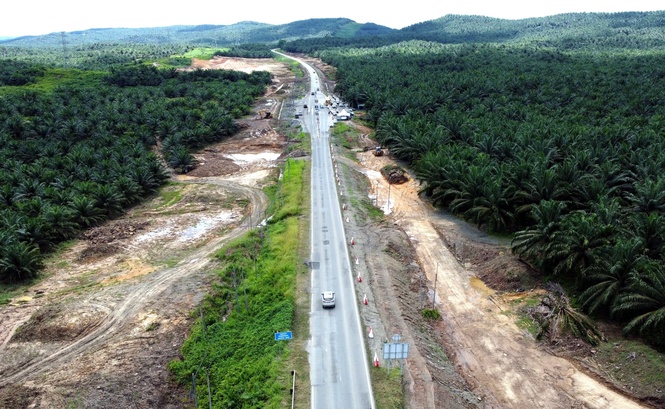
The report also examined the Pan Borneo Highway Project in Sarawak, where 10 work packages had been fully completed as of March 31, while another, WP11, had reached 99.9% completion.
However, Wan Suraya said the achievement of the Sarawak project’s objectives could not yet be assessed as the project had not been fully completed.
The audit found weaknesses in contract management and governance, including inefficient management of utility relocation and reinstatement claims amounting to RM1.780 billion that had yet to be implemented.
It also found that RM32.07 million had been paid for the Project Information Management System, but the system could no longer be accessed after the agreement expired.