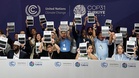
AS the international community convenes in Antalya, Türkiye, for the 31st Conference of the Parties to the United Nations Framework Convention on Climate Change (UNFCCC COP31), the Mediterranean littoral assumes significance far beyond its function as a diplomatic venue. Situated at the geographic and geopolitical nexus of Europe, Asia and the Middle East, Türkiye embodies an institutional bridge across developmental divides. For the Philippines and the broader Association of Southeast Asian Nations (Asean), however, the deliberations in Antalya carry immediate existential consequences. Coinciding with the Philippines’ 2026 Asean chairship under the thematic framework “Navigating Our Future, Together,” COP31 represents a critical inflection point in which multilateral climate governance must transition from rhetorical consensus to measurable, ground-level impact.
Historically, global climate regimes have demonstrated substantial capacity for normative declaration while exhibiting persistent implementation deficits among climate-vulnerable populations. Building upon the New Collective Quantified Goal established at COP29 in Baku and the updated Nationally Determined Contributions articulated at COP30 in Belém, the Antalya summit must be evaluated against a singular criterion: verifiable execution that materially improves conditions at the community level. Even the institutional compromise that yielded COP31’s governance structure, which resolved a prolonged hosting impasse between Türkiye and Australia as co-presiding partners over negotiations, illustrates how diplomatic pragmatism can overcome multilateral inertia. Nevertheless, procedural resolutions within plenary chambers remain insufficient if their outcomes remain confined to negotiating texts rather than translating into tangible resilience on the ground.
For the Philippines, COP31 presents a confluence of moral authority and institutional stewardship. As a hyper-vulnerable archipelagic state repeatedly exposed to compounding hydrometeorological hazards, the country possesses compelling normative standing; as Asean chairman, it exercises regional convening power to articulate a cohesive Southeast Asian position. Central to this diplomatic agenda is the imperative to accelerate the operationalization of the Loss and Damage Fund and secure predictable, non-debt-creating climate finance. Administrative bottlenecks and protracted disbursement architectures undermine the very premise of climate justice. When extreme cyclonic events inundate coastal settlements or prolonged El Niño-induced droughts destabilize agricultural productivity, vulnerable populations cannot subsist on policy frameworks; they require structural coastal defenses, last-mile early warning dissemination, heat-resilient cultivars and rapid liquidity mechanisms capable of restoring livelihoods without deepening sovereign or household debt.
Equally crucial is bridging the persistent chasm between global financial pledges and localized delivery mechanisms. Too often, international climate capital stalls within multitiered accreditation processes, leaving municipal authorities and rural cooperatives without direct access to adaptation grants. True implementation requires decentralizing financial flows, simplifying fiduciary criteria for high-risk jurisdictions and embedding community-led vulnerability assessments into national investment pipelines. Only when global pledges translate into strengthened drainage infrastructure, rehabilitated watersheds and localized disaster risk reduction programs will multilateral diplomacy earn the trust of citizens living on the climatic frontlines.
The Asean Common Carbon Framework
This insistence on empirical substance applies equally to Southeast Asia’s emerging architecture for regional carbon markets and clean energy integration. At COP31, bolstered by the renewal of the Memorandum of Collaboration under the Asean Common Carbon Framework (ACCF) and the formal entry of Philippine private-sector representation as an observer, Asean stakeholders have advanced efforts to harmonize cross-border carbon trading alongside regional grid interconnectivity via the Asean Power Grid. While the ACCF represents a constructive institutional step toward mobilizing transitional capital, market mechanisms remain only as credible as their underlying scientific rigor.
Achieving international legitimacy and genuine ecological additionality requires uncompromising precision in estimating anthropogenic emissions and biological carbon removals. Without standardized, empirical Measurement, Reporting and Verification protocols grounded in robust atmospheric observation, remote sensing and ecological science, carbon markets risk transacting over-credited baselines rather than delivering net climate mitigation. Every traded credit and newly integrated megawatt of renewable capacity must correspond to verified biophysical gains, including restored watersheds, intact mangrove buffers and reliable, affordable energy access for marginalized households.
Ultimately, the efficacy of COP31 will not be adjudicated through the formal adoption of an Antalya cover decision or the eloquence of ministerial statements. Rather, it will be measured in the socio-ecological resilience of agrarian communities in Central Luzon, coastal fisherfolk in the Visayas, deltaic populations along the Mekong and small island states across the Pacific. Multilateral pledges cannot remain static artifacts of diplomatic negotiation; they must become living instruments of protection that safeguard harvests, preserve ecosystems and uphold human dignity in the face of accelerating planetary disruption.
As the Philippines guides Asean through an era of escalating climatic volatility, the mandate before negotiators in Antalya is unequivocal: close the chasm between global commitments and local realities. By eliminating bureaucratic friction, anchoring carbon governance in rigorous scientific verification and channeling resources directly to frontline communities, COP31 can transform multilateral diplomacy from an exercise in aspiration into an instrument of enduring human security.
The author is a world-renowned science diplomat and multi-awarded scientist, honored as “The Father of Asian Science Diplomacy” and “The Global Guru of Resiliency and Sustainability.” A distinguished UN Laureate, he stands as the first Filipino recipient of numerous global awards and fellowships, a visionary leader continuously advancing sustainability, resilience and human dignity at the intersection of science, governance and international policy.