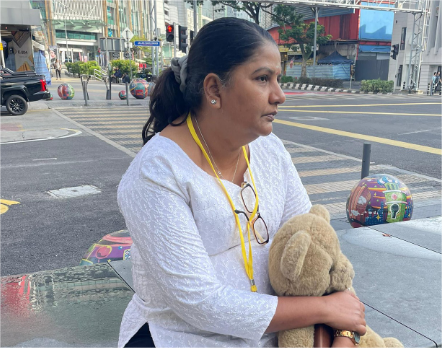
There are pains that come with loud endings slammed doors, raised voices, legal battles, the cold echo of divorce. And then there are pains that never end, that do not announce themselves, that simply sit in the chest like a permanent monsoon cloud. Indira Gandhi’s story is not just a legal case or a headline that resurfaces occasionally for clicks and outrage. It is a living chronicle of a mother’s heart being asked to survive the impossible day after day, year after year, sixteen long years of waiting, wondering, and whispering a child’s name into silence.
Divorce is already a personal apocalypse. It dismantles the everyday architecture of family, rewriting futures with broken sentences and unfinished promises. For most mothers, the children become both the wound and the medicine the reason to keep breathing, to keep walking, to keep believing that life after heartbreak can still bloom. But Indira’s life did not follow the usual script of custody struggles and weekend visits. Her story veered into territory no mother should ever have to map.
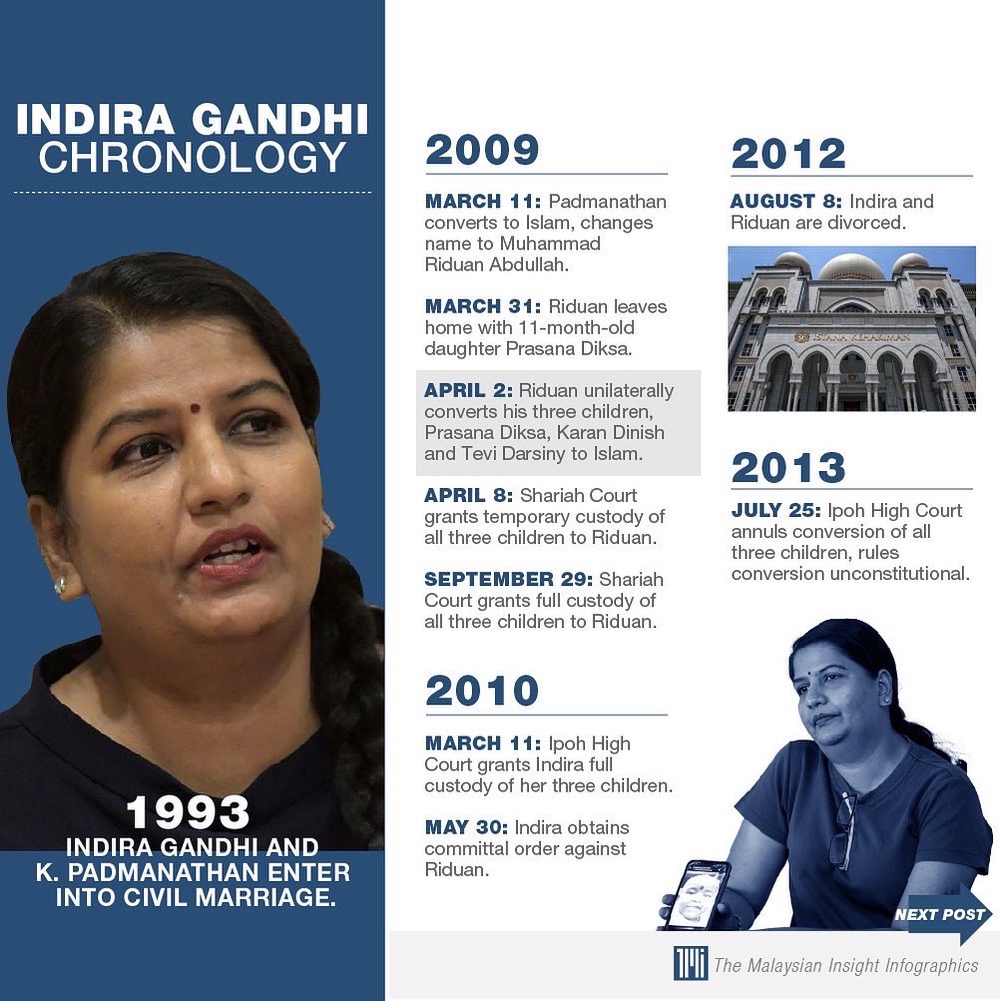
Her youngest daughter was taken from her when she was just 11 months old snatched at a moment of vulnerability, when a woman’s body was still healing, when her soul was still raw from childbirth. A baby, barely able to understand the world, was removed from the arms that carried her heartbeat, her scent, her first sense of safety. If that is not a form of kidnapping, then our moral compass has lost its north.
And so began a cycle of promises, court orders, rulings, and hope all orbiting one brutal constant: the missing child who is not dead, not gone, not vanished from the earth, but alive somewhere in the same country, surrounded by the same citizenship, the same laws, the same institutions that sworn to protect her.
Sixteen years. Let that sink in. Sixteen birthdays without a kiss on the forehead. Sixteen school years without a mother packing lunch, attending parent-teacher meetings, watching from the back of a hall. Sixteen years of imagining what she looks like now. Is her hair long? Does she smile like she used to as a baby? Is she doing well in school? Does she even remember the woman who gave her life?
Indira herself admitted a truth so raw it cuts to the bone she does not know how her daughter looks today, how she speaks, how she lives, whether she is well or lonely. For a mother, not knowing these everyday details is not just sorrow. It is a slow internal erosion. It is the kind of trauma that does not heal, only adapts to survive.
We cried as a nation when flight MH370 disappeared. Parents collapsed. Wives stared at empty beds. Children asked questions with no answers. We lit candles, laid flowers, gathered in silent vigils rituals of remembrance that honoured the missing and comforted the living. We felt that collective ache because the unknown is a special kind of torture. But here, right here on Malaysian soil, a mother lives that same horror except this time, the child is not lost in the ocean. She is not swallowed by clouds. She is here. Alive. Breathing. Existing. And yet unreachable. Year after year, while the nation remembers its missing with symbolism and ceremony, Indira’s pain does not rest. Her hope does not dim it bleeds forward, unpaused, unresolved, continuing in quiet agony that no candlelight can soothe.
What does that do to a human psyche?
What does it do to her two other children a brother and sister who grow up carrying a quiet ache, waking each day with the fragile hope that today might finally be the day their youngest sister comes home? They live suspended between belief and heartbreak, clinging to promises that repeatedly dissolve into delay. Each headline, each announcement, each new assurance briefly lifts their spirits, only for reality to pull them back into the familiar weight of disappointment. Hope becomes a cycle born, crushed, reborn, and broken again until even childhood feels exhausted. And when hope is shattered again and again, what shape does the future take for these young souls? Are their tomorrows still bright, or do they grow into adults shadowed by a tragedy they never chose? How does a young heart learn to dream when every pathway to reunion ends in silence, when every order from the highest authority echoes but never arrives?
In 2018, the Federal Court ruled in what should have been a triumphant moment of justice quashing the unilateral conversion of Indira’s children and affirming her right as mother to custody. It was a landmark decision, hailed as progress, a legal milestone. But what is a landmark ruling if it cannot bring a child home? What is victory if the battlefield still smells of unanswered prayers?
Her former husband converted himself and the children into Islam without her knowledge a move that ignited a firestorm of legal, religious, and moral debate. But beyond the ideological sparring, beyond the courtrooms and legal jargon, there exists a simpler truth: a mother was denied her child. A family was cut in half. And a little girl grew up without the arms that soothed her as an infant.
Here lies the bitter contradiction of it all. One side turned to faith, seeking guidance and solace, yet in the midst of this complexity, compassion seemed to lose its way, yet humanity itself was abandoned in the process. When civil law falters in protecting the suffering, and religion too cannot shield a mother from this lifelong wound, where does justice truly reside? Indira is left clinging to the last refuge so many broken souls turn to God. Faith becomes her final shelter, her quiet rebellion against despair. But even there, promises feel bruised, and prayers echo into uncertainty. So we must ask, painfully and honestly: when both civil authority and spiritual authority fail to safeguard human dignity, who truly stands guard over our shared humanity?
Indira continues to protest, continues to stand before crowds and cameras, continues to ask for the only thing that truly matters her daughter. Not revenge. Not fame. Not compensation. Just her child. The very simplicity of that demand makes the nation’s failure even louder.
We live in a country where the missing now come with payouts where silence is priced and unresolved disappearances conclude not with answers but with cheques. The High Court has ordered RM37 million to Pastor Raymond Koh’s family over state involvement in his abduction, and the government and police have been told to pay over RM3 million to the family of Amri Che Mat. Different names. Different wounds. Yet in Indira Gandhi’s case, there is no closure to quantify only a mother still standing, still pleading, still fighting for the return of her child. Different stories, different backgrounds, but the same grim arc: absence, then a financial settlement. Money moves fast. Justice arrives on crutches.
Is this who we are becoming? A nation that writes off human suffering with numbers on paper? Where the state absorbs moral failure as operational cost, and taxpayers foot the bill for institutional paralysis?
The cold reality is this: while compensation is issued, living costs climb, groceries shrink, and ordinary Malaysians stretch their salaries thinner every month. And yet, when the system falters, it is the same rakyat who pays twice once through emotional erosion of trust, and again through financial consequence.
Indira Gandhi’s case, however, is not about money. It is about dignity. It is about the timeless bond between mother and child, a bond older than any constitution, deeper than any legal code. A bond that should never be severed by manipulation, loopholes, or bureaucratic cowardice.
What kind of trauma does one endure, knowing that your child walks the same streets, breaths the same air, celebrates the same national holidays yet remains a stranger? What kind of strength does it take to continue hoping when hope has become a ritual of pain?
And what of the child herself? Raised away from her mother’s voice, shaped by narratives she did not choose, separated from the truth of her own beginnings. One day, when she learns the full story, when the fog of adulthood clears and identity begins to question its roots what will that realisation feel like?
Indira’s story is a mirror held up to our national conscience. It asks uncomfortable questions we keep dodging: Are we serious about child rights? Are we truly protecting women? Or are we simply outsourcing empathy to legal procedures and PR statements?
A society is measured not by how it treats the powerful, but by how it heals the helpless. And right now, the wound of this mother remains open, raw, and bleeding in the public memory a constant reminder that justice delayed is not just justice denied, but humanity eroded.
Sixteen years of suffering. Sixteen years of knocking on doors that open only into corridors of protocol. Sixteen years of public sympathy and private exhaustion. Yet, she stands. Because mothers do not quit. They endure. They ache. They keep fighting, even when their knees tremble, because love is stubborn like that.
This is not just Indira’s story. It is Malaysia’s moral checkpoint. A moment that forces us to ask: beyond laws and religion, beyond politics and power, do we still recognise the sacredness of a mother’s love?
Until her daughter returns, until her name is no longer spoken in protest but whispered in embrace, this case will remain a national scar visible, irreversible, and telling.
And maybe, just maybe, in acknowledging the depth of her pain, in truly seeing her not as a symbol but as a mother, we take the first step toward healing a justice system that has forgotten what compassion looks like.
Annan Vaithegi, write to awaken awareness, honor human resilience, and reflect on the ways law, faith, and society must protect dignity and hope.
Annan Vaithegi (annanvaithegi@icloud.com) is a content creator under the Newswav Creator programme, where you get to express yourself, be a citizen journalist, and at the same time monetize your content & reach millions of users on Newswav. Log in to creator.newswav.com and become a Newswav Creator now!
The User Content (as defined on Newswav Terms of Use) above including the views expressed and media (pictures, videos, citations etc) were submitted & posted by the author. Newswav is solely an aggregation platform that hosts the User Content. If you have any questions about the content, copyright or other issues of the work, please contact creator@newswav.com.