Malaysia’s healthcare system may soon face a new and uncomfortable reality: rising costs driven not by domestic policy failures, but by global instability.
Selangor Menteri Besar Dato' Seri Amirudin Shari has sounded an early warning - medical costs in the state could climb by as much as 15% to 25%, largely due to the ongoing conflict in West Asia and its ripple effects on global supply chains.
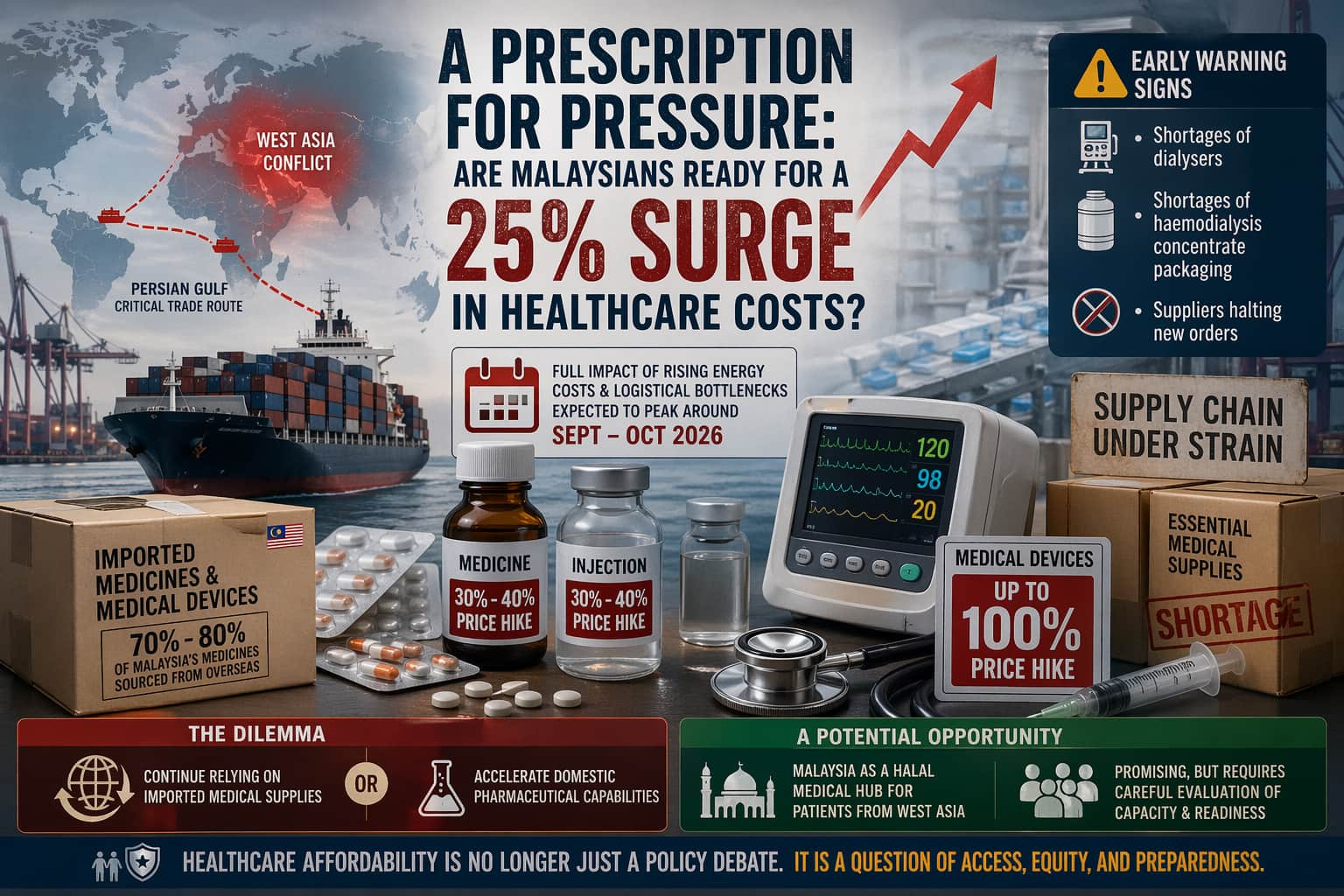
At the heart of this looming crisis lies a structural vulnerability. Malaysia imports a staggering 70% to 80% of its medicines. This heavy reliance on external sources leaves the country exposed to geopolitical tensions, particularly when key trade routes are disrupted. As conflicts intensify around the Persian Gulf - a critical artery for global shipping - delays, higher freight costs, and supply shortages become inevitable. For Malaysia, this translates directly into more expensive treatment and healthcare services.
Amirudin’s projection, reportedly based on analysis by an international bank, suggests that the true economic shock has yet to fully materialise. The impact of rising energy prices and logistical bottlenecks is expected to peak around September or October 2026, potentially hitting both public and private healthcare sectors simultaneously. This delayed effect is particularly concerning, as it gives policymakers limited time to prepare mitigation strategies.
The situation is further compounded by recent remarks from Health Minister Dato' Seri Dzulkefly Ahmad, who revealed that drug prices have already surged by 30% to 40%, with some medical devices experiencing price hikes of up to 100%. These are not marginal increases - they signal a systemic strain that could affect everything from routine treatments to critical care.
Early warning signs are already emerging on the ground. Reports indicate shortages of essential medical supplies, including dialysers and packaging materials for haemodialysis solutions. Some suppliers have even halted new orders, a move that reveals how fragile the supply chain has become. If left unchecked, such shortages could disrupt treatment schedules for patients with chronic conditions, particularly those requiring regular dialysis.
Amid this uncertainty, a contrasting opportunity has been raised by Michelle Ng Mei Sze (PH - Subang), who noted Malaysia’s potential to position itself as a halal medical hub for patients from West Asia. While the idea holds economic promise, it also raises a pressing question: can Malaysia’s healthcare system handle increased foreign demand when it is already under strain?
Amirudin himself has urged caution, emphasising the need for careful evaluation of healthcare capacity before aggressively pursuing medical tourism. The balancing act is delicate - chasing foreign revenue could inadvertently burden local patients if not managed prudently.
Ultimately, the projected rise in medical costs is more than just an economic issue; it is a test of resilience for Malaysia’s healthcare system. The country now stands in a dilemma - continue relying heavily on imported medical supplies, or accelerate efforts to build domestic pharmaceutical capabilities.
As global uncertainties persist, one thing is evidently undeniable: healthcare affordability in Malaysia is no longer just a policy debate. It is becoming a question of access, equity, and preparedness in an increasingly unpredictable world.
By: Kpost
Information Source:
Kpost (ckhorsk@gmail.com) is a content creator under the Newswav Creator programme, where you get to express yourself, be a citizen journalist, and at the same time monetize your content & reach millions of users on Newswav. Log in to creator.newswav.com and become a Newswav Creator now!
The User Content (as defined on Newswav Terms of Use) above including the views expressed and media (pictures, videos, citations etc) were submitted & posted by the author. Newswav is solely an aggregation platform that hosts the User Content. If you have any questions about the content, copyright or other issues of the work, please contact creator@newswav.com.