
M.Krishnamoorthy
A media coach, associate professor and an author
Want to write lively, persuasive, compelling, and impossible-to-ignore news or stories for newswav.com or any other news portals?
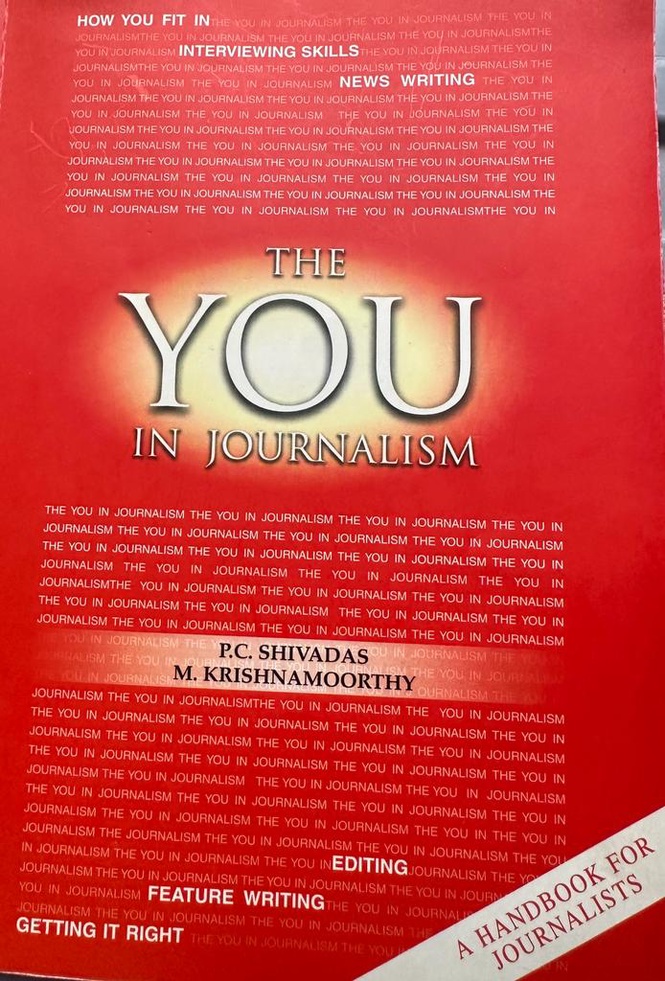
About 20 years ago, while working as a senior writer with The Star, I published my fourth book, The You in Journalism, which was used in colleges and universities by lecturers as a textbook.
Former New Straits Times Group Editor P.C. Shivadas and I co-authored the book, which sold as a bestseller then. In early 2000, I was also a part-time lecturer while working full-time as a journalist with The Star.
The You in Journalism used a lot of illustrations and graphics to encourage, motivate and attract more students to read the textbook with lots of writing tips.
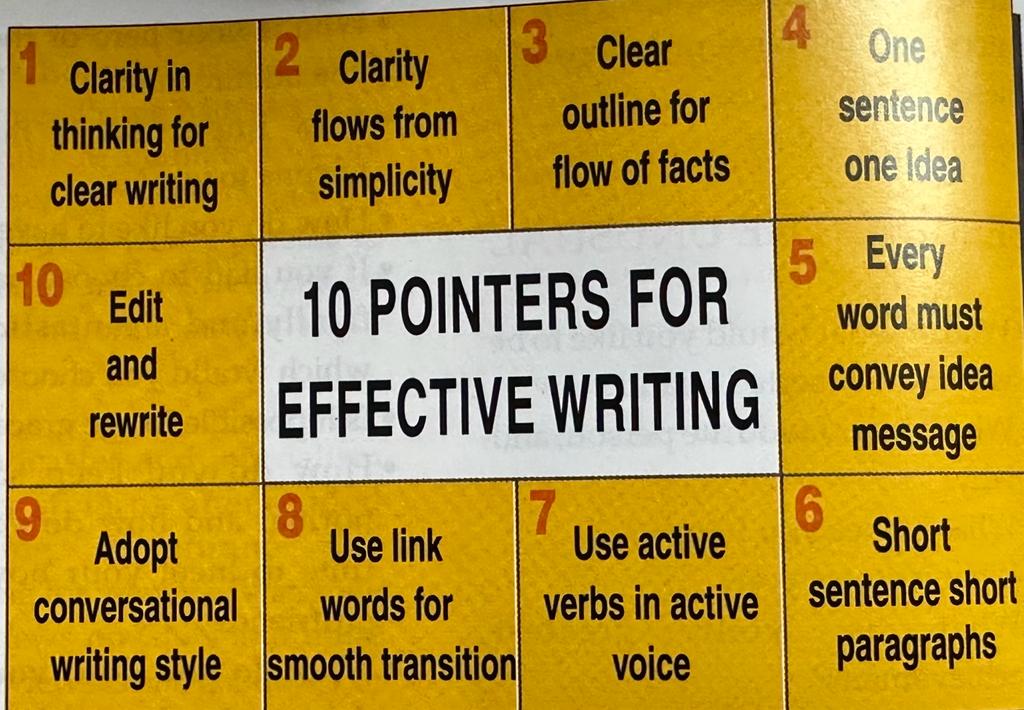
Page 56 of the 179-page book, listed 10 critical pointers for effective writing in an illustrative chart. (See picture)
- Clarity in thinking for clear writing
- Clarity flows from simplicity
- Clear outline for the flow of facts
- One sentence, one idea
- Every word must convey an idea and message
- Short sentence, short paragraph
- Use active verbs in active voice
- Use link words for a smooth transition
- Adopt a conversational writing style
- Edit and rewrite
Recently, I read an article by a writer and author, Minda Zetlin. She interviewed Estelle Erasmus, a prolific writer and former magazine editor, writing professor at New York University, and author of the new book Writing That Gets Noticed.
Erasmus gave tips to new writers and published authors, to make their writing stand out. Briefly, here's some of her best advice.
1. Get straight to the point.
"You want to get to the hook of what you're writing about," Erasmus says. "Everyone's busy these days," she adds. "The attention span is so much shorter than it was when I started in this business. So, you want to be concise and quickly get to the point."
2. Consider using bullet points.
Bullet points are only appropriate for some types of writing--for example, they generally aren't used in personal essays or most news articles. But in the right situation, they can be a powerful tool.
3. Make sure you have a compelling title.
Titles and headlines are significant because that's how some people will decide whether or not to read what you wrote.
4. Use numbers.
One way to make your title more compelling is to use a number (something we often do at Inc.com). "'50 Ways to make an Impact" is an example of this approach.
5. Reference someone or something in the news.
"You can make a provocative statement," Erasmus says. "A therapist wrote a piece called 'How John Mayer helped me become a better therapist.' There are ways of bringing more attention to your pieces by connecting them to something provocative."
6. Consider starting with an anecdote or a quote.
"Start your piece with a dramatic or compelling anecdote," Erasmus says. If you're writing about a medical topic, consider starting with the story of someone with the condition. Or with a surprising or compelling quote from an expert about what you're writing.
7. Make every sentence count.
"Make sure every sentence has a point and moves the piece forward," she advises.
8. Use active language.
It's way too easy, even for experienced writers, to fall into the trap of using passive language. "Our new product is beneficial to customers in various ways" is an example of passive writing. "Our new product benefits customers..." is active, and more compelling.
9. Get rid of clichés.
"I used to use clichés like they were going out of style, but now I wouldn't touch one with a ten-foot pole."
10. Remove "filler" words.
"You're trying to get noticed with your writing," Erasmus says. "So, you want to get rid of 'filler' words like 'it will be,' 'there will be,' 'it was,' 'it wasn't,' 'there are,' and so on. She suggests trying an online grammar checker--often, the software will flag wordy sentences and suggest improving them.
11. Vary sentence length.
Short sentences are great. They convey movement, Erasmus says. But only a few in a row. That can make your writing feel choppy. So, to create writing with a natural flow, try varying your sentence length, with some longer ones interspersed with shorter ones.
12. Pay close attention to the last word of a sentence.
This is a bit of an advanced technique, and you don't need to do it all the time, but it can be very effective: Use the last word of a sentence to draw the reader into the next sentence. Erasmus describes in her book as an example: "Because Emily was arrested, she didn't come to work." To strengthen the writing, Erasmus suggests a change to "Emily didn't come to work because she was arrested." The following sentence is: "The cop booked her into the precinct for shoplifting."
"So 'arrested' is the ending of the first sentence, and ‘the cop’s-obviously the person doing the arresting--is the beginning of the next," Erasmus explains. That can help you keep your reader's attention and pull them through the piece.
13. Be specific.
"The mark of an amateur is someone who writes very broadly and doesn't use specifics," she says. So, instead of writing, "This is a beautiful and evocative painting," try saying exactly why you see it that way. "With glistening sand and an endless turquoise ocean, this painting evokes a summer day at the beach."
14. Use sensory language.
The example above uses visual description to engage the reader, but remember that they also have other senses. "Research has shown that if you use sensory language, which is touching, tasting, smelling, feeling, it paints a picture for the reader and gets them involved," Erasmus says. Sensory writing is not confined to narrative writing like fiction or essays. "Whatever you're writing about, you can involve the senses."
15. Be authoritative.
Too often, Erasmus says people use qualifiers that make what they are writing seem less definite. "Don't vacillate. Don't say 'I think' or 'it could be.' Especially if you are trying to be a thought leader and build a platform, you want to be the authoritative presence your followers or clients rely on."
16. Find your voice.
You have your unique speaking voice, not only in its sound quality but in your choice of words and phrases. It's a great idea to have your unique voice come out in your writing.
How do you find your voice? "Record yourself, listen to how you speak, and use that in your writing," she says. "And you can read pieces by writers you admire and think of how they showcase their voices. You can tweak that to showcase your voice."
17. Come full circle.
It's always great to end a piece when appropriate by bringing the reader back to where they began, which Erasmus calls "circling back." She explains: "Maybe you're writing from a conference, and you give an example from the beginning of the conference. Then, you share many tips and advice from the conference.”
Those reading this article will be inspired and get tips on easy writing articles or stories for submission to magazines and online portals.
Reference: Inc.com
Freelance Writer M. Krishnamoorthy (www.imkrishna.net) is a media coach, associate professor and undercover journalist. He has freelanced with Bernama, NST, The Star, and Malaysiakini. He also freelances as a fixer/coordinator for CNN, BBC, German and Australian Television networks and the New York Times. As an undercover journalist, he has highlighted society's concerns going undercover as a beggar, security guard, blind man, disabled salesman and Member of Parliament.
M. Krishnamoorthy is a content creator under the Newswav Creator programme, where you get to express yourself, be a citizen journalist, and at the same time monetize your content & reach millions of users on Newswav. Log in to creator.newswav.com and become a Newswav Creator now!
The User Content (as defined on Newswav Terms of Use) above including the views expressed and media (pictures, videos, citations etc) were submitted & posted by the author. Newswav is solely an aggregation platform that hosts the User Content. If you have any questions about the content, copyright or other issues of the work, please contact Newswav.