
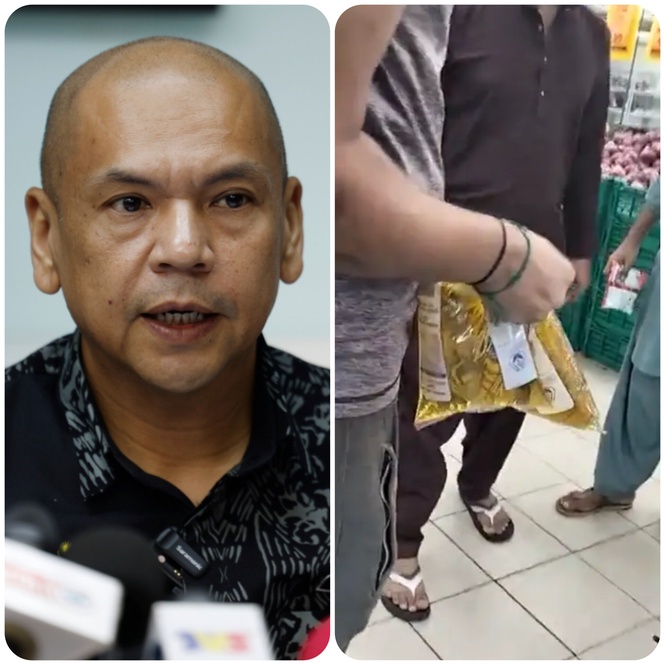
In recent days, a video has gone viral on social media, sparking intense debate by netizens about whether foreign workers in Malaysia are permitted to buy subsidised cooking oil.
Apparently, foreign workers in Malaysia are not banned from buying subsidised cooking oil.
The controversy began when a video showed a local man confronting two Pakistan nationals in a supermarket, accusing them of being foreign workers trying to purchase subsidised cooking oil packed in polybags. The man argued that this oil, subsidised by Malaysian taxpayers, should be reserved exclusively for Malaysians. He insisted that foreign workers should opt for bottled oil instead.
"Are you Malaysian? So, why are you taking it? We pay taxes. Do you pay taxes? If you're in your country, you can buy whatever you want. This subsidised oil is what Malaysians paid for, our taxes," the man shouted, ultimately forcing the men to return the packets to the shelf.
This incident is not isolated. Earlier in January, another video surfaced showing a local man confronting Bangladeshi and Nepali nationals in another supermarket for attempting to buy subsidised cooking oil. He questioned their citizenship and threatened potential consequences if they were caught purchasing these subsidised items.
Such videos frequently appear online, prompting heated discussions among netizens. Many argue that foreign workers should not have access to subsidised goods intended for Malaysian citizens. Some have even suggested that cashiers should refuse to scan subsidised items for foreigners, criticizing store management for lacking measures to prevent such sales.
Despite these strong sentiments, the legal reality is different. According to Malaysia's Domestic Trade and Cost of Living Ministry (KPDN) and Minister Datuk Armizan Mohd Ali, there is no official restriction preventing foreigners from purchasing subsidised cooking oil. Foreign workers in Malaysia have the same rights as citizens regarding these purchases, including adherence to the same purchase limits.
A specific case from September last year cited in these debates involved the Johor Domestic Trade and Cost of Living Ministry (KPDN) director, Lilis Saslinda Pornomo. The ministry took action against a supermarket for not maintaining proper records of subsidised items and not for selling these items to foreigners. This distinction is crucial yet often overlooked in public discourse.
Regarding RON95, the law clearly states that it is not intended for foreign-registered vehicles. However, a foreigner living and working in Malaysia who owns a Malaysia-registered vehicle is permitted to refuel with the subsidised fuel.
These viral videos and the ensuing debates highlight the broader issue of how foreign workers are perceived and treated in Malaysia. While some locals view the subsidies as a privilege solely for citizens, it is essential to recognize that foreign workers also contribute significantly to the country’s economy and society. Ensuring fair treatment and understanding the legal and human rights of all residents is crucial for fostering an inclusive community.
By: Kpost
Information Source:
Kpost is a content creator under the Newswav Creator programme, where you get to express yourself, be a citizen journalist, and at the same time monetize your content & reach millions of users on Newswav. Log in to creator.newswav.com and become a Newswav Creator now!
The User Content (as defined on Newswav Terms of Use) above including the views expressed and media (pictures, videos, citations etc) were submitted & posted by the author. Newswav is solely an aggregation platform that hosts the User Content. If you have any questions about the content, copyright or other issues of the work, please contact Newswav.

