.jpg)
By Mihar Dias January 2026
Lunch with a former Pakistani ambassador from the Badawi years and a recently retired state governor is not exactly small talk. You don’t discuss weather. You discuss power.
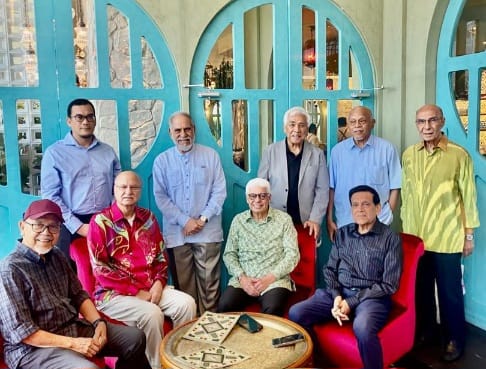
Between mouthfuls of briyani rice, nostalgia gave way to anxiety. From the quieter diplomacy of Abdullah Ahmad Badawi’s era to today’s Madani government navigating a world where big powers no longer persuade — they pressure.
The topic that kept resurfacing was the Agreement on Reciprocal Trade (ART) with the United States. https://www.miti.gov.my/ART
On paper, ART is sold as a smart, defensive move. It spared Malaysia from heavy US tariffs, protected billions in exports and carved out exemptions for more than 1,700 products.https://www.miti.gov.my/index.php/pages/view/ART
MITI frames it as pragmatic diplomacy — a shield against Washington’s protectionist wave. https://www.miti.gov.my/index.php/pages/view/ART
But in geopolitics, shields often come with chains.
Because alongside ART came a not-so-subtle reminder from the US ambassador that Malaysia cannot simply walk away without “repercussions”.https://www.freemalaysiatoday.com/category/nation/2025/10/
That word — repercussions — has become the modern diplomatic equivalent of “or else”.
No tanks. No troops. Just economic pressure, regulatory headaches and sudden diplomatic cold shoulders.https://www.cfr.org/backgrounder/us-economic-sanctions
The former ambassador reserved his comments about helicopters swooping in under cover of darkness to kidnap PMX, Venezuela-style if Malaysia dared to renegade on ART.
But everyone laughed a nervous laugh. Then everyone went quiet.
Because while the image was absurd, the power imbalance wasn’t.
From Trade Agreement to Strategic Leverage
MITI assures Malaysians that ART does not override domestic laws, Bumiputera safeguards or Parliament’s authority. https://thesun.my/news/malaysia-news/malaysia-affirms-art-trade-pact-does-not-override-domestic-laws
Technically, that may be true.
But geopolitics is rarely about technicalities.
ART goes beyond tariffs into regulatory cooperation, market access and future commitments. https://www.miti.gov.my/ART
It nudges Malaysia into closer alignment with US trade norms — today voluntarily, tomorrow by expectation.https://ustr.gov/trade-agreements
That is how leverage works.
First it is “mutual benefit”.
Then it becomes “consistency”.
Before long it feels like obligation.
Enter China, Holding the Bigger Wallet
While Washington waves repercussions, Beijing waves trade figures.
China remains Malaysia’s largest trading partner year after year. https://www.miti.gov.my/index.php/pages/view/652
Electronics, manufacturing inputs, infrastructure projects and tourism flows bind both economies tightly. https://www.scmp.com/economy/china-economy/article/
Then comes palm oil.
The United States barely imports Malaysian palm oil. https://oec.world/en/profile/bilateral-product/palm-oil/reporter/mys
China, however, is one of the largest buyers. https://oec.world/en/profile/bilateral-product/palm-oil/reporter/mys/partner/chn
Which means if Malaysia tilts politically, the sector most exposed is not US exports — but palm oil and rural livelihoods.
China doesn’t need ultimatums.
It just needs to buy less.
The Myth of Neutrality in 2026
Malaysia once perfected being friendly with all sides. https://www.mfa.gov.my
Badawi’s era thrived on soft diplomacy and multilateral balance. https://www.britannica.com/biography/Abdullah-Ahmad-Badawi
Today’s world no longer allows that comfort.
The US wants loyalty disguised as partnership.https://foreignpolicy.com
China expects alignment disguised as commerce. https://www.brookings.edu/articles/chinas-economic-statecraft
Neutrality is now viewed as hesitation.
Independence is seen as inconvenience.
ART: Protection or Price Tag?
Supporters argue ART saved jobs and safeguarded over RM200 billion in exports. https://thesun.my/news/malaysia-news/malaysias-rm200-billion-us-exports-secured-with-art-trade-deal
That is likely true.
But it also revealed Malaysia’s new negotiating reality — not from strength, but from exposure.
Every agreement now carries geopolitical weight.
Every trade policy has strategic consequences.
The Cynical Conclusion
Malaysia is not being courted.
It is being managed.
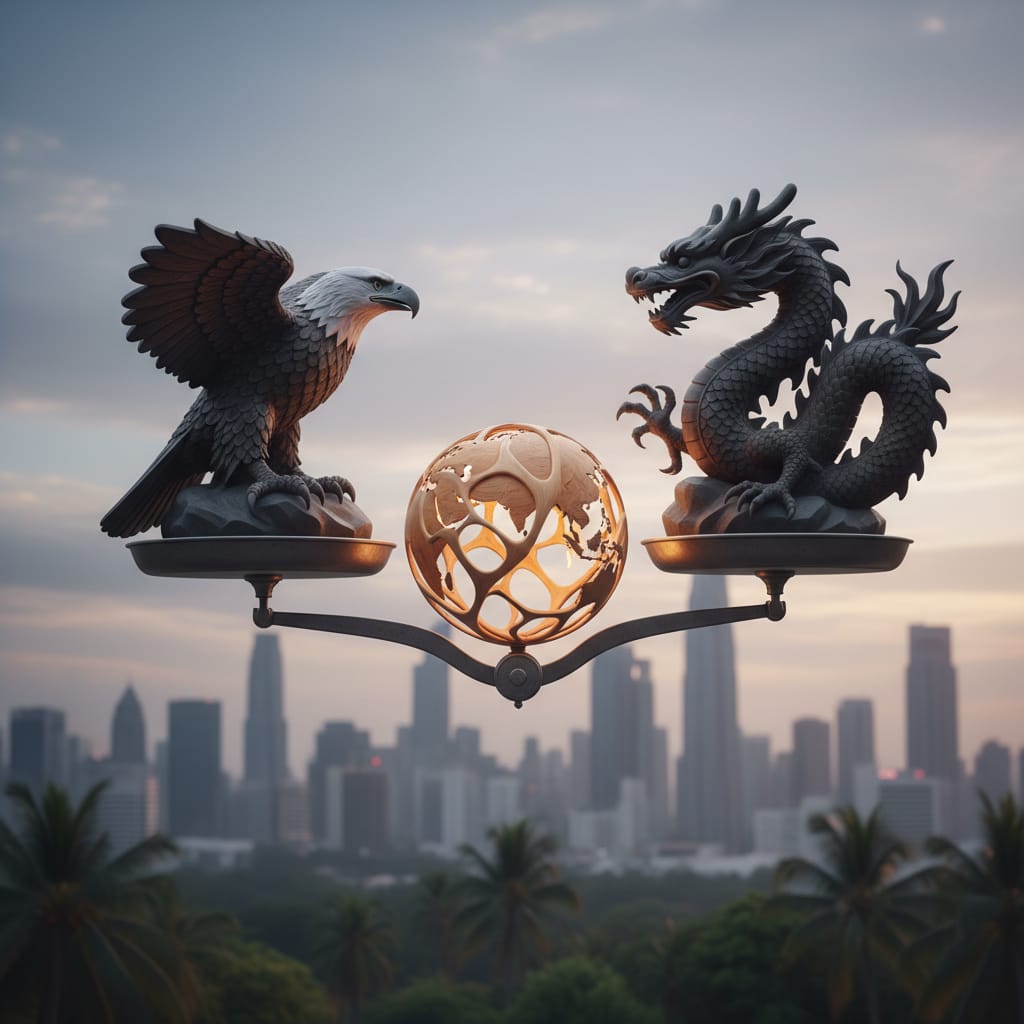
Squeezed between Washington’s warnings and Beijing’s economic gravity, the Madani government’s challenge is no longer just governance — it is navigating power.
You can call ART a shield.
But shields held too long often become shackles.
And when both sides pull, the country in the middle doesn’t get to stand tall.
It only chooses which pressure hurts less.
In today’s geopolitics, the fence is electrified.
Mihar Dias (mihardias@gmail.com) is a content creator under the Newswav Creator programme, where you get to express yourself, be a citizen journalist, and at the same time monetize your content & reach millions of users on Newswav. Log in to creator.newswav.com and become a Newswav Creator now!
The User Content (as defined on Newswav Terms of Use) above including the views expressed and media (pictures, videos, citations etc) were submitted & posted by the author. Newswav is solely an aggregation platform that hosts the User Content. If you have any questions about the content, copyright or other issues of the work, please contact creator@newswav.com.