
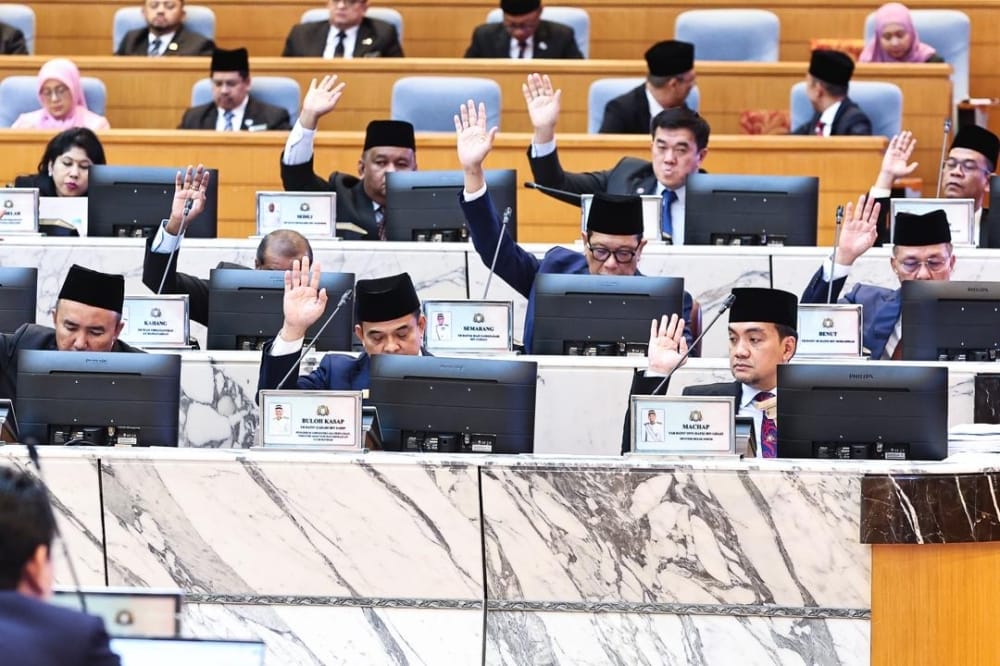
The hallowed halls of the Bangunan Sultan Ismail in Kota Iskandar have seen many debates, but the one that unfolded in the first week of May 2026 may be remembered as the moment Johor’s democratic fabric was stretched to its limit. While the Johor state assembly successfully passed a bill to amend the state constitution to allow for the appointment of five unelected assemblymen, the move has ignited a fierce constitutional debate that is rapidly spreading beyond the southern state’s borders. For critics, this is not a policy update; it is a "backdoor" entry that challenges the very essence of a mandate chosen by the people.
The Amendment: Expanding the House or Diluting the Mandate?
The legislative bombshell was dropped by Johor Menteri Besar Datuk Onn Hafiz Ghazi, who proposed amending Article 15 of the Johor State Constitution 1895. The goal? To increase the number of seats from 56 to 61 by adding five appointed members who have never faced a ballot box. According to the state government, these individuals would be "calibre professionals" representing sectors like technology, the economy, and civil society, intended to sharpen the quality of state policy.
However, the Federal perspective is significantly more skeptical. High-ranking officials, including Minister Nga Kor Ming, have slammed the decision, describing it as fundamentally undemocratic. The core of the argument is simple but profound: Article 43 of the Federal Constitution implies that representatives must be chosen by the people. By creating a path where individuals can hold the title of "The Honorable" (Yang Berhormat), draw a state salary, and exercise voting power in the assembly without winning a single vote, Johor is accused of bypassing the front door of democracy.
The Legal Quagmire: Is It Unconstitutional?
The debate centers on whether a state has the right to alter its legislative composition in a way that contradicts the "Spirit of the Federation." While states like Sabah, Terengganu, and Pahang have already implemented similar systems, the timing and scale in Johor have raised red flags.
Constitutional experts are now dissecting the legality of unelected members having the same status as those who fought grueling election campaigns. Critics argue that while the Johor constitution allows for amendments with a two-thirds majority which the government secured with 40 votes the fundamental principle that sovereignty lies with the voters cannot be ignored. The concern is that if this trend continues, the State Legislative Assembly (DUN) could slowly transform into a council of appointees rather than a house of representatives.
Comparative Insight: The Appointed ADUN Landscape (2026)
| State | Status of Appointed ADUNs | Core Argument For | Core Argument Against |
|---|---|---|---|
| Johor | Approved May 2026 (5 Seats) | To include experts in tech and economy. | ‘Backdoor’ entry; dilutes voter mandate. |
| Sabah | Long-standing (6 Seats) | Ethnic and minority representation. | Potential to tilt the balance of power. |
| Pahang | Approved 2020 (5 Seats) | Expanding legislative input. | Lack of direct accountability to rakyat. |
| Terengganu | Active (Non-voting roles) | Religious and professional expertise. | Blurring of executive and legislative lines. |
The Timing Problem: Why Now?
One of the most stinging criticisms from the opposition led by Perikatan Nasional (PN) and MUDA is the timing of this move. With the state assembly’s term nearing its end, the introduction of appointed seats is seen by many as a strategic move to consolidate power rather than a genuine effort to improve governance.
Amanah’s Fadhli Umar Aminolhuda pointed out a glaring irony: while the state creates "shortcut" seats for five individuals, it ignores the massive malapportionment in existing constituencies. Areas like Skudai and Kota Iskandar have nearly 100,000 voters, while others have less than 20,000. For many, the priority should be redrawing boundaries to ensure every vote carries equal weight, not hand-picking five new colleagues to sit on the plush benches of the assembly.
Social Analysis: The Devaluation of the Vote
Culturally, Malaysians take great pride in the act of voting. The ink on the finger is a symbol of ownership over the nation’s future. When a government introduces a mechanism that allows "The Honorable" status to be granted via a signature rather than a ballot, it risks alienating the youth.
For a young voter in Johor Bahru, the message is discouraging: "Your vote chooses 56 people, but the government can simply choose five more." This creates a perception of a 'political elite' class that doesn't need to knock on doors, kiss babies, or listen to the grouses of the pasar malam to gain power. It risks turning the DUN into a corporate boardroom rather than a people's parliament.
Institutional Impact: A Dangerous Precedent?
If Johor’s model goes unchallenged, what stops other states from increasing their appointed quotas? Could we see a future where 20% or 30% of an assembly is unelected? This is the "slippery slope" that has legal observers worried. The institutional check and balance of a state assembly relies on members being accountable to their constituents. An appointed ADUN has no constituents to answer to, only the appointing authority.
The Johor state government maintains that these members will undergo a vetting process and possess "high calibre," but "calibre" is a subjective term. Without the objective test of an election, there is no way for the public to remove an appointee who fails to perform or who acts against the public interest.
What do you think? I’d love to hear your opinion in the comments section.
The debate over Johor’s appointed ADUNs is more than a legal squabble; it is a battle for the soul of our democratic process. While there is a valid argument for wanting more experts in the room when debating complex laws on technology or the economy, there are existing ways to achieve this without granting them legislative power. We have select committees, expert panels, and special advisors all of whom can provide "calibre" input without infringing on the sanctity of the electoral mandate.
By choosing to amend the constitution to create these seats, the Johor government has inadvertently signaled that the wisdom of the people is no longer sufficient. It suggests that the voters might not know how to choose the "right" kind of experts, so the state must do it for them. This paternalistic approach is a dangerous departure from the "Bangsa Johor" spirit of unity and mutual respect. If we allow the "backdoor" to be opened even an inch, we may find that eventually, the front door the one used by the rakyat no longer matters at all.
As we look toward the next general election, we must ask if this is the kind of precedent we want to set for the next generation of Malaysians. Should power be earned through service and consensus, or should it be granted through patronage and proximity to the palace of power? The answer will define not just Johor’s future, but the future of our entire federation.
AM World (tameer.work88@gmail.com) is a content creator under the Newswav Creator programme, where you get to express yourself, be a citizen journalist, and at the same time monetize your content & reach millions of users on Newswav. Log in to creator.newswav.com and become a Newswav Creator now!
The User Content (as defined on Newswav Terms of Use) above including the views expressed and media (pictures, videos, citations etc) were submitted & posted by the author. Newswav is solely an aggregation platform that hosts the User Content. If you have any questions about the content, copyright or other issues of the work, please contact creator@newswav.com.