Every few years, Malaysians return to the same conversation whenever a local film fails to leave a lasting impression. We ask why our cinemas rarely produce stories that resonate across borders, why our films struggle to compete with the creative confidence seen in India, South Korea, Thailand, Indonesia or even the increasingly sophisticated world of independent digital creators. The answers are almost always familiar. Some blame budgets, others point to government funding, marketing, piracy or audience preferences. While each explanation carries some truth, they often distract us from a far more uncomfortable reality. The challenge facing Malaysian cinema today is no longer merely about money or technology. It is about whether we still possess the courage to tell stories that dare to think differently.
Technology has never been more accessible than it is today. If Sony introduces a new cinema camera tomorrow, Malaysian filmmakers can buy it. If DJI launches a more advanced drone, production houses can have it within days. The latest editing software, colour-grading technology, artificial intelligence tools and visual effects platforms are available to anyone willing to invest. The tools that were once exclusive to Hollywood now sit on the desks of independent creators across the world. Yet having access to better equipment has not automatically translated into better storytelling. Cameras capture images; they do not create imagination. Editing software can polish a scene, but it cannot write emotion. Technology has levelled the playing field, but creativity remains the true measure of a film industry's maturity.
That is precisely why neighbouring countries continue moving ahead. Indian cinema constantly reinvents itself, not only through commercial blockbusters but also through independent productions willing to challenge audiences with difficult themes. South Korean cinema built a global reputation by refusing to remain trapped within conventional genres. Thailand and Indonesia have steadily improved both their technical execution and narrative confidence, producing films that travel well beyond their domestic markets. Even outside mainstream cinema, thousands of YouTube creators across Asia produce documentaries, short films and visual essays that attract millions of viewers because they understand the importance of storytelling, editing rhythm, cinematography and emotional connection. Many of these creators work with budgets far smaller than those of traditional broadcasters, yet their content often feels fresher, more daring and more relevant.
Malaysia certainly does not lack talented people. Throughout my previous writings on Malaysian Indian cinema, independent filmmakers and directors such as Shanjey Kumar Perumal, I have consistently argued that our country possesses capable actors, passionate directors, dedicated cinematographers and remarkably skilled editors. Their work often demonstrates flashes of brilliance despite operating under financial limitations that would discourage many professionals elsewhere. Producing even a modest short film today demands enormous sacrifice. Rising living costs, limited funding and uncertain commercial returns force filmmakers to stretch every ringgit while balancing careers and family responsibilities. Under such pressure, it becomes increasingly difficult to take creative risks.
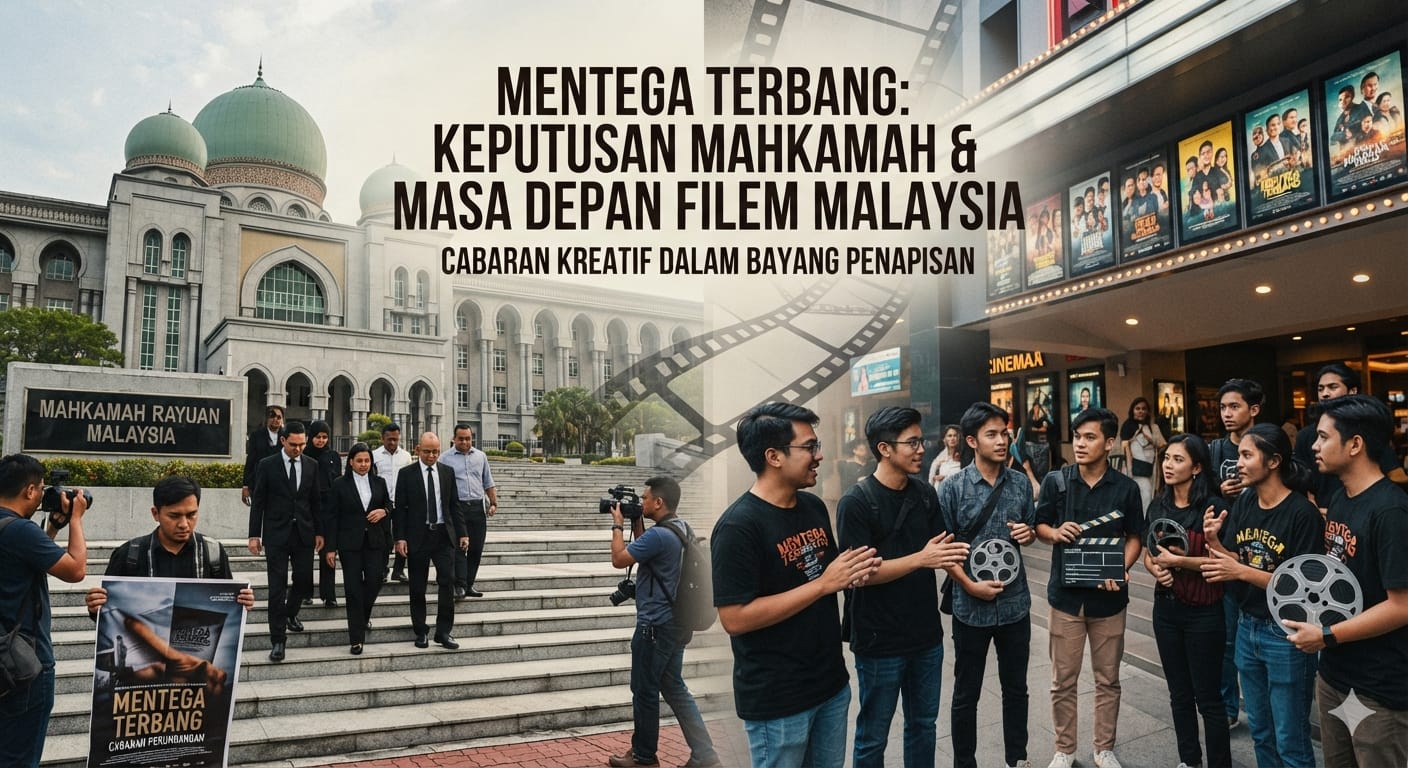
This is where the recent Court of Appeal decision upholding the Home Minister's power to ban Mentega Terbang becomes more than a legal story. The courts have interpreted the law before them, and their constitutional role deserves respect. The legal reasoning surrounding ministerial discretion, public order and existing legislation will continue to be discussed by lawyers and constitutional scholars. Yet beyond the courtroom lies another question that deserves equal attention. What message does this moment send to the next generation of Malaysian filmmakers?
The issue is not whether one agrees or disagrees with Mentega Terbang. Reasonable people will hold different opinions about the film's themes and whether they cross acceptable boundaries in a diverse society. The larger issue is what happens when filmmakers begin asking themselves, "Can I safely make this story?" before asking, "Can I tell this story well?" Once fear becomes part of the creative process, self-censorship quietly replaces artistic curiosity. It is rarely announced publicly. It simply becomes the safest business decision.
Perhaps this explains why so many producers eventually choose familiar formulas. Horror films, ghost stories, supernatural thrillers and predictable comedies are not inherently bad. Every healthy film industry requires commercially successful productions. The problem begins when safety becomes the dominant creative strategy. When producers believe original ideas carry greater legal uncertainty and commercial risk than conventional genres, innovation slowly disappears. The audience is then offered the same narratives repeatedly, while filmmakers with different voices gradually retreat from experimentation.
Ironically, Malaysian audiences themselves have already moved far beyond these limitations. Every day, millions of Malaysians watch documentaries, political discussions, philosophical debates and controversial dramas from every corner of the world through YouTube, Netflix and other streaming platforms. They consume Korean thrillers, Indian political dramas, Japanese animation, European documentaries and American independent cinema without waiting for someone else to decide what deserves discussion. The digital age has fundamentally changed how audiences engage with ideas. Information crosses borders instantly, and conversations no longer stop at national boundaries.
This raises an important cultural question. Is the long-term future of Malaysian cinema best served by relying primarily on prohibition, or should we gradually move towards a model that places greater emphasis on classification, critical discussion and informed viewing? Protecting public harmony is a legitimate responsibility of government, particularly in a multicultural nation where religion and identity require careful handling. At the same time, creative industries flourish when artists have sufficient space to explore difficult questions responsibly. Finding the right balance between these two objectives may ultimately prove more valuable than allowing either extreme to dominate.
Great cinema has never emerged from comfort alone. It has grown because filmmakers were willing to challenge conventions, audiences were willing to engage with unfamiliar ideas, and societies were confident enough to distinguish between discussion and endorsement. Every remarkable film industry in the world has experienced controversy. Many of today's celebrated classics were once criticised, questioned or misunderstood. Time often reveals that difficult conversations contribute as much to artistic growth as commercial success.
Malaysia stands at an important crossroads. We can continue investing in newer cameras, better drones and more sophisticated editing software while producing stories that rarely travel beyond our own borders. Or we can invest equally in writers, directors, actors and editors who possess the confidence to create films that surprise, challenge and emotionally move audiences. Technology will continue evolving regardless of what we choose. Creativity, however, requires an ecosystem that rewards courage as much as competence.
Whether one supports or opposes Mentega Terbang is ultimately a personal position. The more enduring question is whether Malaysia wishes to build a film industry defined by caution or one remembered for its imagination. Because history has shown that great cinema is rarely created by those who simply avoid mistakes. It is created by those who dare to tell stories worth remembering, while trusting audiences to think, question and grow alongside them.
This article is not a defence of any particular film. It is a reflection on the future of Malaysian cinema, the importance of creative courage, and the ecosystem needed for Malaysia to produce films that can compete with the best in the region. - Annan Vaithegi
Annan Vaithegi (annanvaithegi@icloud.com) is a content creator under the Newswav Creator programme, where you get to express yourself, be a citizen journalist, and at the same time monetize your content & reach millions of users on Newswav. Log in to creator.newswav.com and become a Newswav Creator now!
The User Content (as defined on Newswav Terms of Use) above including the views expressed and media (pictures, videos, citations etc) were submitted & posted by the author. Newswav is solely an aggregation platform that hosts the User Content. If you have any questions about the content, copyright or other issues of the work, please contact creator@newswav.com.