
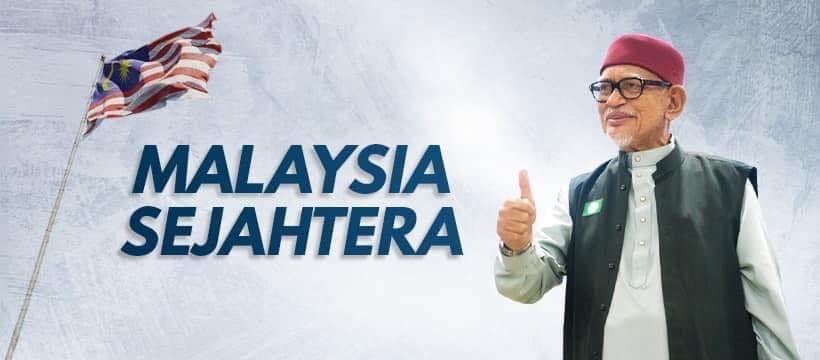
The coffee shops of Subang Jaya and the bustling food courts of Georgetown have been humming with a persistent, hopeful question: Can Malaysia’s largest single political party ever truly change its spots? On paper, the blueprint for a modernized, technocratic Islamist movement exists. It is articulate, it holds a doctorate in aerospace engineering, and it goes by the name of Datuk Seri Dr. Ahmad Samsuri Mokhtar. When Dr. Sam secured a landslide victory in the Kemaman by-election, even Prime Minister Anwar Ibrahim went on record to note that the PAS vice-president could bring a more moderate image to the country, offering a brief sigh of relief to a highly polarized political landscape.
Yet, outside the air-conditioned rooms of corporate think-tanks, a starker reality remains entrenched in the rural heartlands of Kelantan, Terengganu, and Kedah. No matter how many polished, suit-wearing technocrats PAS puts on display, the core identity of the Parti Islam Se-Malaysia remains inextricably tied to its veteran leadership. The fundamental thesis whispered among political insiders and openly debated by urban voters is simple yet profound: if PAS genuinely desires to shed its polarizing, radical reputation and reinvent itself as a non-radical, inclusive Islamist party, its foundational stalwarts Tan Sri Abdul Hadi Awang and Datuk Seri Tuan Ibrahim Tuan Man must step aside.
But in the complex tapestry of Malaysian politics, structural evolution is rarely that simple. A political party is not merely a brand that can be refreshed with a new logo and a younger CEO. It is an organic institution built on decades of cultural conditioning, theological dogma, and deep-seated grassroots loyalty. To replace the old guard with the new might soften the aesthetics for urban and non-Malay voters, but it risks tearing the very fabric that made the party a formidable political juggernaut in the first place.
The Iron Grip of the Old Guard
To understand why the imagery of PAS remains stubborn and unyielding, one must examine the institutional weight of its current leadership. For over two decades, Tan Sri Abdul Hadi Awang has been the ideological heartbeat of the party. His rhetoric, often uncompromising and heavily focused on traditionalist Islamic governance, has solidified a fiercely loyal voter base. During the 2025 Pan-Malaysian Islamic Party leadership election, both Abdul Hadi Awang and Tuan Ibrahim Tuan Man retained their positions as President and Deputy President completely unopposed. This uncontested status sends an unmistakable signal to the nation: despite external demands for modernization, the internal machinery of PAS is comfortable with its traditional, conservative trajectory.
This leadership structure means that while figures like Dr. Sam are elevated to prominent positions such as his appointment as the chairman of Perikatan Nasional (PN) they remain structurally subordinate to the senior religious scholars. Political analysts have frequently pointed out that Dr. Sam’s elevation is often more about optics than absolute institutional authority. He is a carefully brokered compromise designed to make the opposition coalition palatable to middle-ground voters, yet his room for maneuver is tightly circumscribed by the overarching theological veto held by the party's Ulama (religious scholars) wing.
When the old faces remain at the absolute apex of power, any attempt by younger leaders to project moderation is viewed by the wider Malaysian public as mere window dressing. To the non-Malay minority and urban Malay middle class, a party cannot claim to be transitioning toward a "non-radical Islam" when its chief decision-makers continue to view the secular world through a rigid, binary lens of absolute compliance or complete rejection.
The Technocrat vs. The Firebrand
The internal ideological landscape of PAS is currently defined by a fascinating duality. On one side stands the professional, soft-spoken, and measured approach of Dr. Sam in Terengganu. On the other side sits the raucous, populist, and highly combative style of Kedah Menteri Besar Datuk Seri Muhammad Sanusi Md Nor. According to an extensive study by the ISEAS-Yusof Ishak Institute, PAS has actively showcased these two distinct models of non-Ulama leadership to appeal to different segments of the electorate.
- The Terengganu Model (Dr. Sam): Focuses on administrative competence, economic planning, and presenting a professional image to attract affluent urban Malays and corporate stakeholders.
- The Kedah Model (Sanusi): Leverages aggressive, populist identity politics that fires up the working-class rural base and cements the party’s anti-establishment credentials.
This internal division highlights a profound systemic challenge: PAS knows how to win elections by being religiously dogmatic and electorally aggressive. The party achieved historic success in the 2022 general election by capturing 49 parliamentary seats, making it the single largest party in the Dewan Rakyat. This unprecedented victory was achieved not by diluting their message, but by leaning heavily into their core identity as defenders of Malay-Muslim supremacy.
Consequently, there is a powerful counter-argument brewing within the party’s internal ranks. Figures like Abdul Hadi Awang’s son-in-law, Zaharudin Muhammad, have publicly voiced resistance to a rapid transition toward a softer image, even warning that a premature shift in leadership could risk losing up to 37 parliamentary seats based on internal party data. The fear is palpable: if PAS abandons its sharp, ideologically uncompromising edge to chase the elusive "moderate" voter, it might alienate the very grassroots base that forms the bedrock of its political dominance.
The Myth of the 'Non-Radical' Pivot
Can an Islamist party truly secularize or moderate its public image while its foundational ideology remains untouched? The cultural and institutional analysis suggests that a mere change of leadership faces severe limits. Since the historic 2015 PAS party congress (muktamar), which saw a systematic purge of the moderate professional faction (who subsequently left to form Amanah), the conservative Ulama leadership has held absolute sway over the party's ideological direction.
Even as PAS incorporates engineers, doctors, and lawyers into its state executive councils in places like Perlis and Terengganu, these professionals are structurally bound to uphold the party’s core theological commitments. The party's international affiliation with transnational Islamist movements like the Muslim Brotherhood further anchors its grand strategy to a global framework of revivalist Islamic politics, making a pivot toward a Western-defined "moderate, non-radical" model highly improbable.
Therefore, expecting PAS to change its entire systemic worldview simply by passing the gavel to Dr. Sam is an analytical oversimplification. The "Wajah Lama" (old faces) are not just individuals; they are symbols of a covenant made with millions of rural voters who view compromise with secular, pluralistic urban values as a betrayal of their faith.
The Structural Dilemma of Malaysian Pluralism
For a multi-ethnic, multi-religious nation like Malaysia, the inability of PAS to transform its image creates a profound democratic impasse. The country remains split down the middle. One half views the "Green Wave" as an existential threat to civil liberties, multicultural harmony, and economic modernization. The other half views the current federal administration as a compromised elite failing to protect the native demographic's cultural and spiritual heritage.
If Abdul Hadi Awang and Tuan Ibrahim Tuan Man remain at the helm, the political narrative for the next general election will likely mirror the bruising identity wars of the recent past. The old guard’s presence ensures that the political discourse remains hyper-focused on race, religion, and royalty. While a transition to a leader like Dr. Sam could bridge the deep divide between Malaysia's urban centers and rural heartlands, such a shift requires a level of institutional courage that PAS, at its core, may not yet be ready to display.
What do you think? I’d love to hear your opinion in the comments section.
Ultimately, the debate over whether PAS can alter its public image without changing its foundational architects forces us to look into a mirror and confront the very soul of Malaysian democracy. Politics is rarely driven by sudden, clean breaks from the past; instead, it is a slow, often painful negotiation between the comfort of old traditions and the absolute necessity of future survival.
We find ourselves watching a complex dance where a powerful political machine attempts to balance the administrative demands of a modern state with the rigid theological expectations of its traditional base. To believe that replacing a few individuals at the top will instantly cure a deeply polarized nation is a comforting illusion. The challenges facing Malaysia run far deeper than the identity of whoever happens to hold a party president's credentials. It requires a fundamental, collective reassessment of how diverse communities can peacefully coexist within a single nation without constantly weaponizing faith and identity for electoral gain.
The evolution of a movement like PAS will not be decided overnight in a closed-door committee room, nor will it be solved by simple slogans or tactical public relations campaigns. It will be forged in the slow, grinding reality of governance, in how state administrations handle economic pressures, and in whether the next generation of leaders can cultivate a political language that speaks to all Malaysians, rather than just a chosen few. Until that fundamental shift takes place, the old ghosts will continue to haunt our political halls, and the true progress of our nation will remain tantalizingly out of reach.
AM World (tameer.work88@gmail.com) is a content creator under the Newswav Creator programme, where you get to express yourself, be a citizen journalist, and at the same time monetize your content & reach millions of users on Newswav. Log in to creator.newswav.com and become a Newswav Creator now!
The User Content (as defined on Newswav Terms of Use) above including the views expressed and media (pictures, videos, citations etc) were submitted & posted by the author. Newswav is solely an aggregation platform that hosts the User Content. If you have any questions about the content, copyright or other issues of the work, please contact creator@newswav.com.