

When ghost stories go global, they don’t just haunt a house. They stalk luxury mansions, fake passports and the corridors of power. In 2025, amidst renewed claims and denials, Low Taek Jho widely known as Jho Low remains the world’s most controversial fugitive. For Malaysia and beyond, the question echoing across continents is the same: where is he now?
A jaw-dropping resurgence of claims
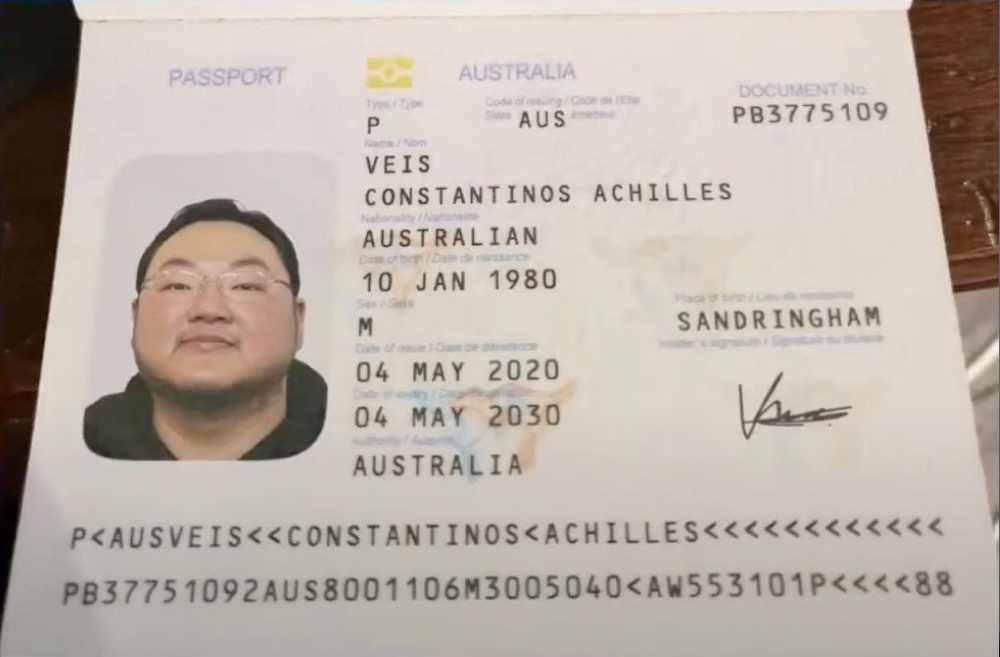
In July 2025, headline-making reports by investigative journalists Bradley Hope and Tom Wright reignited global attention on Jho Low’s fate. The pair claimed the fugitive financier is living in the upscale “Green Hills” neighbourhood in Shanghai, using a fake Australian passport under the alias “Constantinos Achilles Veis” to move freely and quietly. They say he drives luxury cars and works from an office in the Shanghai Financial Centre. (The Straits Times)
Major international outlets picked up the story. One headline declared the alleged hide-out “discovered.” (BusinessToday) Another described him as “living lavishly in China with fake Australian passport.” (ABC) The revelations fueled a global hunt for answers.
Government reaction: official silence and denial
But in Kuala Lumpur, the response was cautious almost icy. The Malaysian government, represented by Saifuddin Nasution Ismail (Home Minister) and Anwar Ibrahim (Prime Minister), said the claims lacked “credible proof.” (The Straits Times)
Saifuddin confirmed ongoing cooperation with international agencies but stressed no verified evidence ties Jho Low to the alleged Chinese hide-out or the passport in question. (Malay Mail)
Meanwhile, the nation’s police force, represented by Royal Malaysia Police (PDRM), said the investigation remains active. No closure. No breakthrough. (The Edge Malaysia)
Why the focus on China or is it just speculation?
The emphasis on China is hardly random. For nearly a decade, rumours have swirled that Jho Low found sanctuary beyond jurisdictions inclined to extradite. The 2025 reports leverage a broader context: rising scrutiny of global financial flows, tightening of passports and identity documents, and increasing pressure on states to cooperate against money-laundering.
Some analysts argue that if the reports are true, it signals a profound lapse in cross-border enforcement. As one put it: “the world’s most wanted white-collar fugitive, living in plain sight.”
Others urge caution. The lack of verifiable documentation passports, CCTV, financial transactions combined with denials from home headquarters, suggests the story might be more sensational allegation than confirmed fact.
A small win asset recovery, but not yet justice
While the question of Jho Low’s location lingers, investigators have made modest headway. In September 2025, authorities announced recovery of US$8.57 million in assets linked to him and his family. That brings the total 1MDB-related recoveries by the Malaysian Anti‑Corruption Commission (MACC) to RM 31.19 billion. (The Straits Times)
Still, recovered assets are far from the billions allegedly siphoned. Observers note asset recovery is important but it is not the same as securing custody or delivering justice.
What courts and investigators say and what they avoid
In ongoing legal proceedings, the spotlight has shifted toward others. In 2025, during the trial of Najib Razak, prosecutors argued that Jho Low was not the mastermind but rather a “messenger” who carried out instructions helping manage personal and financial matters for Najib, including handling credit-card debts abroad. (Malay Mail)
That framing matters legally. If Jho Low is cast as a facilitator rather than principal, it complicates efforts to convict him in absentia and may influence extradition and sentencing arguments in future trials.
The human and symbolic cost for Malaysians
For Malaysians who lived through the 1MDB scandal the losses, betrayals, national shame the saga isn’t just about stolen billions. It’s about trust. Many feel the years of waiting exposed deep failures: oversight mechanisms weak. Enforcement inconsistent. Justice piecemeal and slow.
The resurfacing of Jho Low under alleged luxury conditions abroad regardless of proof rekindles public anger. It reminds ordinary citizens that those accused of massive fraud can vanish while their victims struggle with inflation, economic uncertainty and political distrust.
What this latest twist reveals about global financial crime
If the new claims hold weight, they reveal a frightening pattern.
First, fugitives can exploit weak cross-jurisdiction coordination, using fake identities and passports to stay hidden.
Second, even the most high-profile scandals may persist in the shadows for years.
Third, the recovery of assets while vital does not equal closure. Restitution doesn’t bring people home.
Finally, this underscores how financial crime is not just domestic. It’s global. And tackling it requires equally global cooperation.
What must happen now
Authorities and civil society in Malaysia and internationally need to push for:
- Transparent collaboration across borders on identity verification, passport fraud and asset tracing. Integrity of travel and financial documentation must be defended.
- Stronger legal frameworks to enable extradition even when suspects adopt false identities.
- Full transparency about recovered assets. Citizens deserve to know how much has been returned, what more remains, and how recovered funds are used.
- Institutional reform to restore public trust through accountability, not selective justice.
Justice beyond headlines
Whether Jho Low sits in a Shanghai mansion or remains a ghost drifting across jurisdictions, his case speaks to broader vulnerabilities. It highlights how stolen billions can erode economies, and how escaped justice can stain a nation’s reputation for decades.
Yet, the modest success in asset recovery shows what determined prosecution and cross-agency cooperation can achieve.
In the end, justice should not hinge on where a fugitive hides. It depends on institutions. On resolve. On transparency.
This story is far from over. But every time we ask “Where is Jho Low” we reaffirm a collective demand: accountability. If one man can vanish and leave a nation wounded, let that tarnish not only him but a system that allows his escape.
AM World (tameer.work88@gmail.com) is a content creator under the Newswav Creator programme, where you get to express yourself, be a citizen journalist, and at the same time monetize your content & reach millions of users on Newswav. Log in to creator.newswav.com and become a Newswav Creator now!
The User Content (as defined on Newswav Terms of Use) above including the views expressed and media (pictures, videos, citations etc) were submitted & posted by the author. Newswav is solely an aggregation platform that hosts the User Content. If you have any questions about the content, copyright or other issues of the work, please contact creator@newswav.com.