
When politicians speak about transparency, the public listens. But what the public notices even more is when that voice appears only in certain moments and not others.
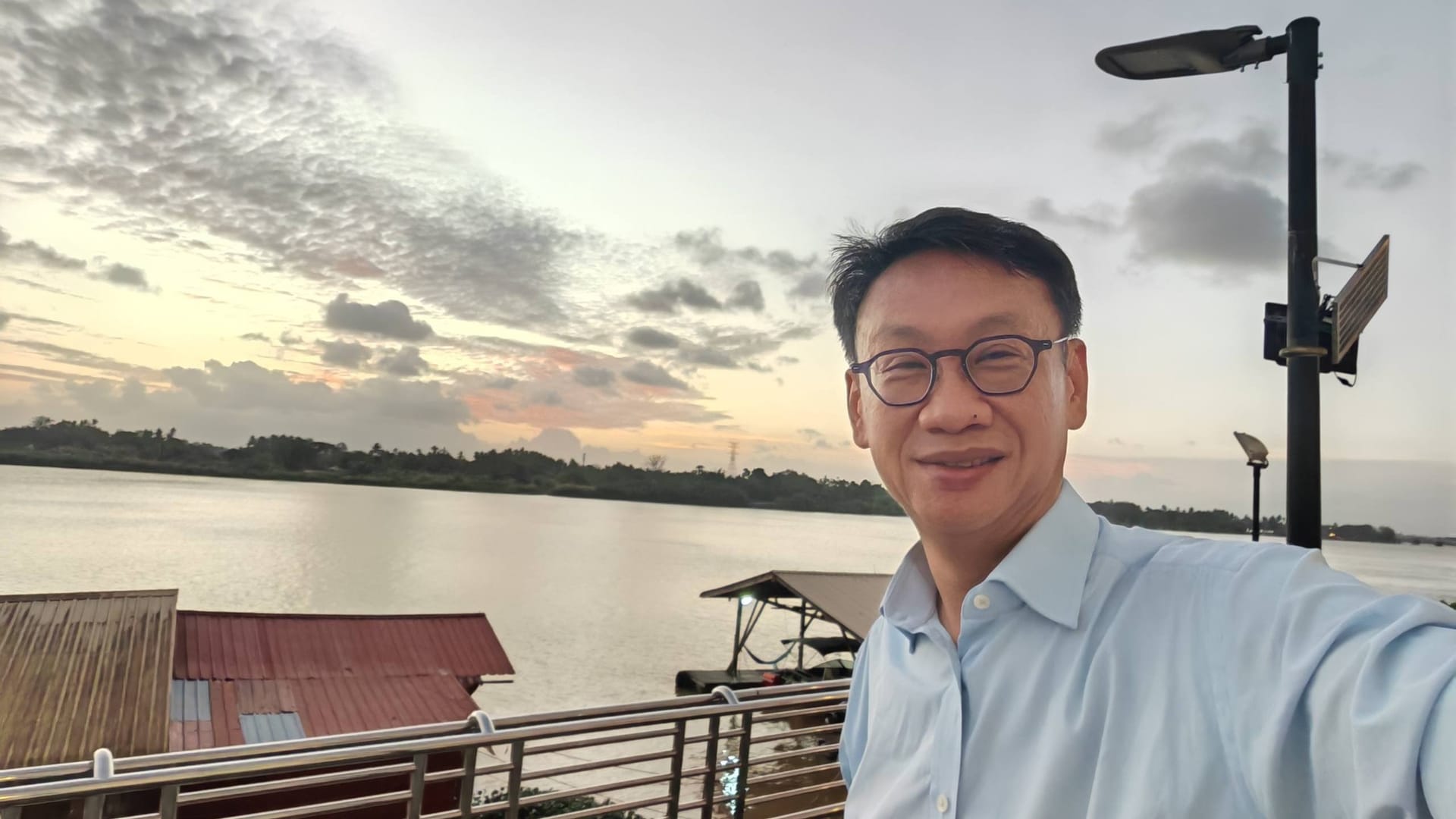
In recent days, Subang MP Wong Chen has raised concerns about land governance in Selangor, calling for greater transparency and caution against premature conclusions. On its own, this is not only reasonable it is necessary. Land in Malaysia is never just about ownership. It is about history, policy, community, and trust.
But in politics, what is said is only half the story. What is not said often matters just as much.
This raises a deeper and more uncomfortable question: is transparency a principle applied consistently, or selectively?
Malaysia is no stranger to land controversies. From commercial developments to public land transactions, questions of ownership, process, and accountability regularly surface. Wong Chen’s recent remarks reflect a broader concern shared by many Malaysians that decisions involving land must be transparent, accountable, and properly explained.
Yet there is another category of land issue that often sits quietly beneath the surface until it erupts.
Temple land.
Unlike commercial land disputes, these cases are rarely just about documents. They are layered with history, community memory, and identity. Many temples in Malaysia were built long before formal land systems were established, particularly during the estate era when Indian labourers formed the backbone of early economic development. These structures were not built as acts of defiance, but as expressions of survival, faith, and community.
One does not have to look far for an example. The Seafield Sri Maha Mariamman Temple in USJ 25, Subang Jaya within Selangor itself became a national flashpoint in 2018. What began as a land dispute quickly escalated into violence, exposing the fragile intersection between legality, history, and communal sensitivity. The issue was never simply about land titles. It was about recognition, dignity, and how a modern state engages with historical realities.
The lesson from Seafield was not subtle.
When land issues intersect with community identity, the cost of mismanagement is not administrative it is societal.
Which brings us back to the present.
Recent controversies surrounding temple land, including those tied to institutions and development, have once again raised questions about how such matters are framed and handled. These are not marginal issues. They are deeply connected to questions of minority rights, historical continuity, and governance maturity.
And yet, the level of political attention given to these issues often appears uneven.
When a politician speaks strongly about transparency in one land matter but remains relatively silent in another equally sensitive context, the public cannot help but notice the contrast. It may not be intentional. It may be circumstantial. But perception, in politics, is reality.
In moments like this, timing becomes part of the message.
When positions emerge during periods of political tension or internal party friction, the public begins to ask whether the issue itself is driving the response or whether the moment is. This does not invalidate the concern being raised. But it does shape how that concern is received.
And credibility, once questioned, is not easily restored.
This is not about any single politician. It is about a broader pattern within Malaysian politics selective advocacy.
Issues are amplified when they align with political momentum, and quieter when they do not. Statements are made when they carry advantage, and withheld when they carry risk.
But governance cannot function on selective principles.
If transparency is a value, it must apply across all cases commercial land, state land, and community land. If accountability is important, it must extend not only to transactions, but to how historical and cultural realities are treated within those transactions.
Temple land disputes are not peripheral issues. They are tests of how a nation treats its history and its minorities. They ask whether legality is applied with understanding, or in isolation.
Subang MP Wong Chen has argued that land matters in Selangor must be handled with greater transparency, cautioning against premature conclusions and calling for clearer disclosure in how decisions are made. His position reflects a valid concern: land governance should be accountable, and the public deserves to understand how and why decisions are taken.
But this principle does not exist in isolation. Land issues in Malaysia are not limited to commercial transactions or state dealings. They also involve community spaces particularly long-standing temple land, which carries layers of history, identity, and social memory. While commercial land disputes are often framed in terms of process and documentation, temple land issues require an additional layer of sensitivity: recognition of legacy.
This is where the comparison becomes important. If transparency, accountability, and caution are essential in commercial land matters, they are no less critical in cases involving places of worship. In fact, the stakes are often higher. The question, then, is not whether one type of land issue deserves scrutiny but whether the same standard is applied consistently across all of them.
If such consistency had been applied earlier across all categories of land, many of today’s tensions might have been avoided altogether.
And they demand consistency.
In fact, temple land disputes are not isolated cases. Over the past year alone, multiple land-related controversies have surfaced across Selangor and beyond ranging from development-linked negotiations with residents, to long-standing village communities questioning broken promises, to homeowners demanding fair compensation in urban redevelopment zones. These cases may differ in context, but they share a common thread: concerns over transparency, fairness, and whose interests are ultimately being prioritised.
When viewed together, they reveal a deeper pattern. Land issues in Malaysia are not confined to any single community or category. They affect estate descendants, village residents, urban homeowners, and religious institutions alike. The question, therefore, is not whether one issue deserves attention but whether all are treated with the same standard of accountability.
The Malaysian public today is more aware, more connected, and more discerning than before. They observe not only what leaders say, but when they say it and when they choose not to.
Trust, therefore, is no longer built through individual statements. It is built through patterns.
A leader who speaks consistently across issues earns credibility. A leader who appears selective invites doubt.
This is the quiet shift taking place in Malaysian political culture.
Consistency is no longer optional. It is the currency of credibility.
The challenge for any public figure is not simply to speak up but to speak up consistently, across issues, across contexts, and across communities.
Because in the end, leadership is not measured by moments of visibility.
It is measured by the integrity of one’s silence, and the consistency of one’s voice.
Annan Vaithegi writes on governance, public trust, and the evolving standards of political accountability in Malaysia.
Annan Vaithegi (annanvaithegi@icloud.com) is a content creator under the Newswav Creator programme, where you get to express yourself, be a citizen journalist, and at the same time monetize your content & reach millions of users on Newswav. Log in to creator.newswav.com and become a Newswav Creator now!
The User Content (as defined on Newswav Terms of Use) above including the views expressed and media (pictures, videos, citations etc) were submitted & posted by the author. Newswav is solely an aggregation platform that hosts the User Content. If you have any questions about the content, copyright or other issues of the work, please contact creator@newswav.com.