
The news about a headmaster in Perak who allegedly sent inappropriate messages to a Form Three student, including the words “I love you”, was not the first time I heard of an adult in a position of authority developing an inappropriate attachment to a student.
Over the years, I have heard stories from friends, and some from the people involved themselves. And each time, I find myself asking the same question, “What exactly are we doing to protect our children from the very adults we entrust with their care?”
A friend once told me about her 14-year-old son, whose public-school principal seemed particularly fond of him. The principal would find reasons to rub his shoulders, brush his hair or hold his arm during most of their encounters.
I am not suggesting that every physical gesture is sinister. A pat on the shoulder can be a gesture of encouragement. Teachers can genuinely care for their students. But surely, we must also recognise when attention becomes excessive, and when a relationship starts to blur the boundaries between an educator and a child.
My friend was concerned. But what could she do? The person involved was the principal, someone entrusted with the education and welfare of her son. In the end, she could only advise her boy to keep his distance and be mindful of his interactions with the principal.
Think about that for a moment. A mother has concerns about an adult at her son's school, but her response is to teach her child how to avoid that adult.
Is this what protecting our children has come to? We tell them to be careful, to stay away from people who make them uncomfortable, to speak up if something does not feel right. All good advice, of course. But why does so much of the responsibility fall on the child?
What if the child does not feel uncomfortable? What if he enjoys the attention, feels special because a person of authority seems to favour him, or simply does not understand why the behaviour might be inappropriate?
Children are still learning about relationships, boundaries and trust. That is precisely why we have adults responsible for them.
I have another friend who told me about a colleague at a private school who openly spoke about how fond he was of one of his students. According to my friend, the teacher talked about their exchange of text messages and sexual jokes, and how cute he thought the student was.
I wonder what happens when a teacher hears a colleague speak this way about a student. Is it dismissed as harmless banter? Is it brushed aside because the teacher seems friendly enough and nobody has made a formal complaint? Or does someone stop to consider whether these interactions are appropriate in the first place?
We talk about safeguarding children, but safeguarding is not just about what happens after a complaint is made. It is also about recognising warning signs and having the courage to act before a situation escalates.
Unfortunately, despite my advises, my friend decided to stay away from the issue, not wanting to poke his nose in what he claimed to be “none of my business.” Imagine a teacher regarding the safety and wellbeing of a student as none of his business!
Then there is an acquaintance who admitted to me that he had fallen in love with his 17-year-old female student. After supressing his feelings throughout school years, he finally confessed his feelings to her on her final day of high school.
She turned him down, telling him that she saw him only as a teacher. Good for you, girl.
Some might say it’s not an issue as nothing happened. That he did not pursue the student during her schoolyears. Also that she rejected him. End of story.
But is it really that simple?
I am not suggesting that having feelings for someone automatically makes a person guilty of wrongdoing. Feelings can arise without us choosing them. What matters is how we act on them.
A teacher is not just another adult in a student's life. Students may admire their teachers, seek their approval and depend on them for guidance. They may be reluctant to disappoint them or question their behaviour. There is a power imbalance, even when the student is intelligent, confident and almost an adult.
Leaving school does not automatically erase the relationship that existed before. A teacher's responsibility is not simply to avoid breaking the law. It is also to maintain professional boundaries and not turn a position of trust into an opportunity for personal or romantic pursuit.
These three accounts are different. They should not be treated as equivalent, and we should not label anyone a predator without evidence. But together, they raise an uncomfortable question about how some adults understand their responsibilities towards the children placed under their care.
A teacher's intention may be difficult to determine, but professional boundaries should not be left to personal interpretation.
And that brings me back to the news from Perak.
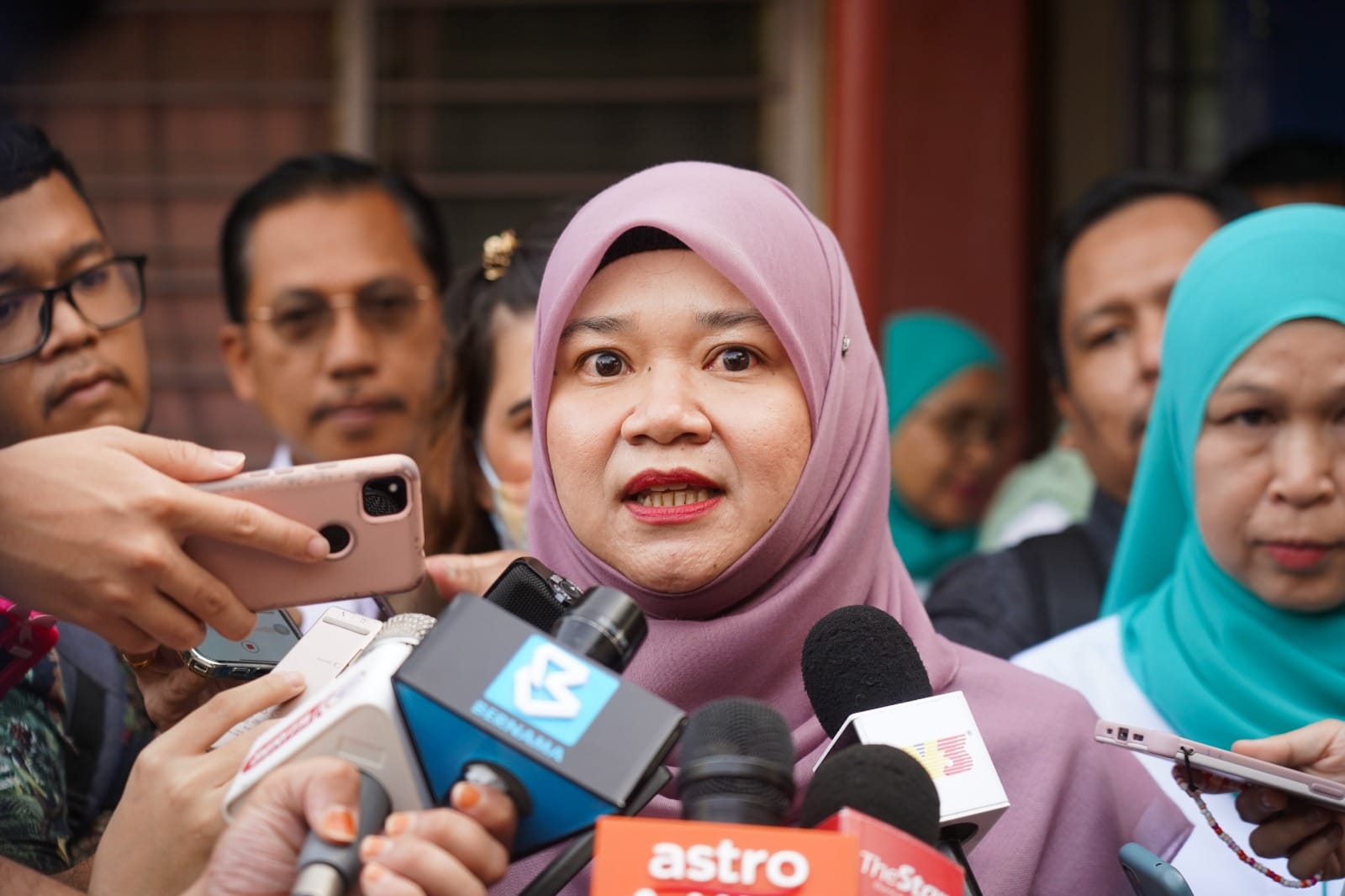
The allegations against the headmaster must be investigated fairly. We should not assume guilt based on a social media post. But neither should the matter be treated as just another complaint to be quietly managed and eventually forgotten.
If the allegations are substantiated, what happens next matters.
A warning? A transfer to another office? A move to another school?
What exactly does a transfer achieve if the behaviour that caused concern has not been properly addressed? Moving someone out of one school does not protect children elsewhere.
We entrust teachers with our children. We trust them to teach, guide, discipline and care for them. We allow them into our children's lives at an age when those children are still learning to understand many things around them.
That trust is not a small thing. It is not a privilege that comes without responsibility. And it certainly should not be treated as something an educator can abuse and then walk away.
If serious misconduct is established, dismissal and a permanent bar from teaching should be real consequences.
This is not about ruining someone's career for the sake of public anger. It is about recognising that working with children requires a standard of professional conduct that cannot be compromised.
There is another reason why consequences matter - the message they send to other teachers.
We need every teacher to understand that inappropriate conduct towards students will not be tolerated, that colleagues who witness concerning behaviour have a responsibility to raise the alarm, and that professional status will not shield anyone from accountability.
Sometimes, I think people need a metaphorical punch in the gut to understand the seriousness of what they are doing. A gentle reminder is not enough. Neither is a quiet warning that allows everyone to carry on as though nothing happened.
There must be consequences that hurt enough to make people think twice.
Parents should not have to investigate their own suspicions, teach their children how to avoid a principal, or worry that reporting a concern might put their child in a more difficult position.
Of course, we must teach children about consent, bodily autonomy and personal boundaries. We must encourage them to speak up. But children do not always have the words to explain what is happening.
Sometimes they may not even realise that a boundary has been crossed.
Safeguarding cannot depend entirely on a child's ability to recognise a problem and report it. It requires clear reporting channels, independent investigations and disciplinary measures that match the seriousness of the misconduct.
We often tell our children to respect their teachers. And rightly so. Good teachers deserve our respect. They do extraordinary work, often under difficult circumstances, and can leave a lasting, positive impact on a child's life.
But respect should never mean unquestioning trust. And protecting the reputation of the teaching profession should never mean protecting those who bring it into disrepute through their own actions.
If we genuinely respect teachers, we should also insist on accountability. The actions of those who cross professional boundaries should not be allowed to cast a shadow over the many educators who do their jobs with integrity.
So, when we hear of another allegation involving a teacher or school principal, we should ask whether the institution did enough to prevent it, whether the reporting process protects the child, whether colleagues acted when they had reason for concern, and whether the consequences are strong enough to prevent similar behaviour in the future.
We tell our children to be careful.
Perhaps it is time we made it clear to the adults - if you cannot respect the boundaries that come with teaching our children, you have no business being in a classroom.
Fa Abdul (fa.abdul.penang@gmail.com) is a content creator under the Newswav Creator programme, where you get to express yourself, be a citizen journalist, and at the same time monetize your content & reach millions of users on Newswav. Log in to creator.newswav.com and become a Newswav Creator now!
The User Content (as defined on Newswav Terms of Use) above including the views expressed and media (pictures, videos, citations etc) were submitted & posted by the author. Newswav is solely an aggregation platform that hosts the User Content. If you have any questions about the content, copyright or other issues of the work, please contact creator@newswav.com.