
Across the democratic world, political organizations are wrestling with a deep crisis of representation. Whether it is the racialized voter polarization splitting the electorate in the United States or the rising anti-immigrant sentiment altering Europe's parliamentary landscapes, the challenge remains unchanged: how does a party transcend its traditional cultural base without destroying its founding identity?
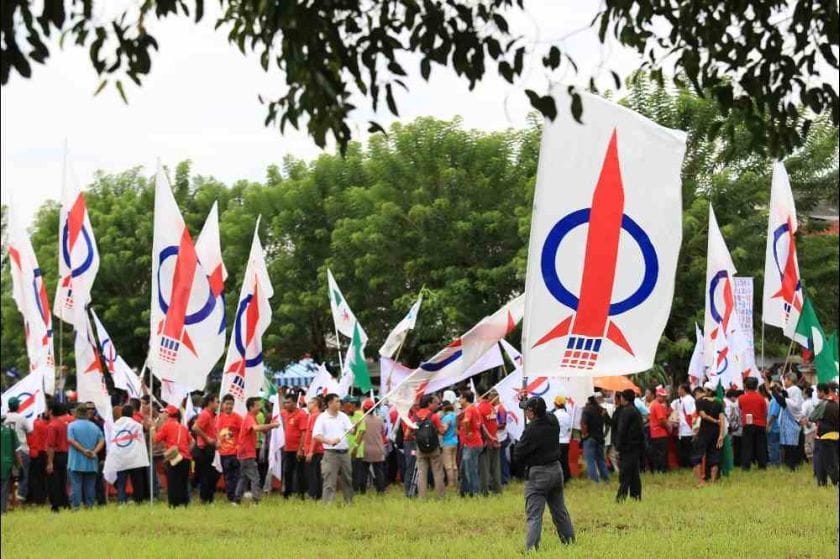
In Malaysia, this global dilemma manifests in a hyper-localized, deeply entrenched theater of ethnic politics. For decades, the Democratic Action Party (DAP) has faced a powerful ideological barrier, routinely painted by its detractors as an exclusively Chinese enclave operating against the interests of the majority population. However, an intriguing structural shift has begun to emerge within the party machinery. Instead of parachuting prominent Malay figures directly into high-profile candidacies, the party is reportedly deploying a mandatory apprenticeship strategy—quietly absorbing Malay youths into internal administrative, research, and civil service roles within the party apparatus before letting them face the electorate.
This process, colloquially described as “angkat bekerja sebelum wakili parti” (employing them before having them represent the party), acts as a political screening mechanism and a corporate assembly line. While framed as an organic method to cultivate grassroots credibility and operational competence, our social and institutional analysis suggests that this strategy is a complex high-stakes gamble. It forces us to ask: is this an authentic attempt to build a cross-ethnic meritocracy, or an engineered corporate blueprint designed to bypass deep-rooted systemic biases?
The Corporate Assembly Line: Grooming or Gatekeeping?
To understand why this strategy has become a central talking point within Malaysian political circles, one must look at the structural mechanics of how political talent is generated. Historically, traditional parties like UMNO or PAS relied on a highly visible, organic pipeline rooted in communal networks: rural village leadership, student activism via Malay-centric groups, or religious institutions. For a secular, multiethnic party like DAP, those traditional cultural channels remain largely inaccessible due to deep-rooted social resistance.
As an institutional alternative, the party has turned to an internal corporate-style hierarchy. Young Malay professionals, researchers, and community organizers are brought in to work directly as political aides, administrative staff, or policy analysts. The structural intent appears clear: by integrating these individuals into the day-to-day governance machinery of the party, they absorb the organization’s political culture, understand its inner policy dynamics, and develop a public track record long before their names ever appear on a ballot paper.
Institutional analysis indicates that this method serves a dual purpose. For the party, it provides an ideological vetting period, ensuring that any future candidate is thoroughly aligned with its core platforms, such as its long-standing commitment to a secular state framework. For the aspiring Malay cadre, it offers a form of institutional protection; when they eventually stand for public office, they can defend their candidacy using administrative merit and public service data, insulating themselves against accusations of being mere political window dressing.
Deconstructing the Token Identity Dilemma
Yet, this bureaucratic approach to cultivating representation does not exist in a vacuum, and it frequently collides with the messy realities of localized campaigning. The structural limits of expanding a non-communal political brand into ethnically conservative heartlands remain incredibly steep, as academic researchers have noted in comprehensive studies on structural barriers and political opportunities in Malaysia. No matter how long a candidate has worked within a party office, the transition from an elite, urban policy researcher to a grassroots leader capable of winning over rural voters is fraught with friction.
This exact friction often threatens to disrupt the party's carefully managed candidate pipeline. A prime example occurred during internal tactical realignments in the state of Johor, where high-profile adjustments surrounding prominent Malay figures like Marina Ibrahim sparked intense public discussions. The internal tensions within the party over candidate deployments and the distribution of state appointments became highly visible, leading to sharp criticisms from veteran party figures such as Ronnie Liu regarding political pragmatism and patronage politics. When internal debates spill into the public arena, they underscore a persistent, systemic vulnerability: the immense difficulty of balancing elite meritocratic ideals with the pragmatic, transactional demands of regional coalition politics.
Navigating the Terrain of a Fractured Coalition
The political ecosystem has grown even more complex following the formation of the federal Unity Government (Kerajaan Perpaduan). In this current alignment, former historic rivals find themselves sharing power, forcing parties to adjust their public messaging to avoid destabilizing their fragile partnerships. Leaders must continuously reassure their base that core constitutional boundaries remain untouched. For example, Prime Minister Datuk Seri Anwar Ibrahim has frequently emphasized the protection of Malay privileges, Islam, and the royal institutions to maintain stability across the governing coalition.
This complex dynamic makes the internal candidate-grooming process highly sensitive. If an progressive party moves too aggressively or handles candidate positioning clumsily, it risks providing political fuel to opposition coalitions like Perikatan Nasional, who are eager to exploit anxieties regarding Malay political representation. This delicate balance is vividly on display as parties finalize their candidate rosters for major upcoming electoral tests, including the highly anticipated Johor state polls where DAP plans to contest 17 seats, alongside their broader strategy to preserve institutional continuity by defending all 11 of their seats in Negeri Sembilan.
Ultimately, our analysis indicates that an elite, desk-bound internship can never fully replace the deep, organic community trust required to survive the crosswinds of Malaysian elections. A professional resume detailing years of policy research can quickly be overshadowed by identity-driven rhetoric when navigating competitive local divisions.
What do you think? I’d love to hear your opinion in the comments section.
What we are witnessing is a fundamental test of whether a political identity can be systematically built from the top down. The practice of putting potential Malay leaders through a rigorous administrative corporate grind before introducing them to the public reflects a conscious effort to rewrite the rules of political advancement. It attempts to replace traditional patronage and ethnic appeals with professional capability and visible public service.
However, the real test of this strategy does not take place within air-conditioned party headquarters or urban policy forums. It takes place on the campaign trail, in the local coffee shops of semi-urban towns, and inside the voting booths of the Malay heartland. Until these internally cultivated professionals can consistently win over skeptical majorities on their own merits, this strategy will remain a highly debated, unproven experiment in a country where identity and politics remain deeply intertwined.
The future of Malaysia's political landscape depends on whether voters can look past deeply ingrained party labels to judge an individual candidate by their character and record of service. Until that shift occurs, the journey for these young leaders will remain a challenging, uphill battle against history.
AM World (tameer.work88@gmail.com) is a content creator under the Newswav Creator programme, where you get to express yourself, be a citizen journalist, and at the same time monetize your content & reach millions of users on Newswav. Log in to creator.newswav.com and become a Newswav Creator now!
The User Content (as defined on Newswav Terms of Use) above including the views expressed and media (pictures, videos, citations etc) were submitted & posted by the author. Newswav is solely an aggregation platform that hosts the User Content. If you have any questions about the content, copyright or other issues of the work, please contact creator@newswav.com.