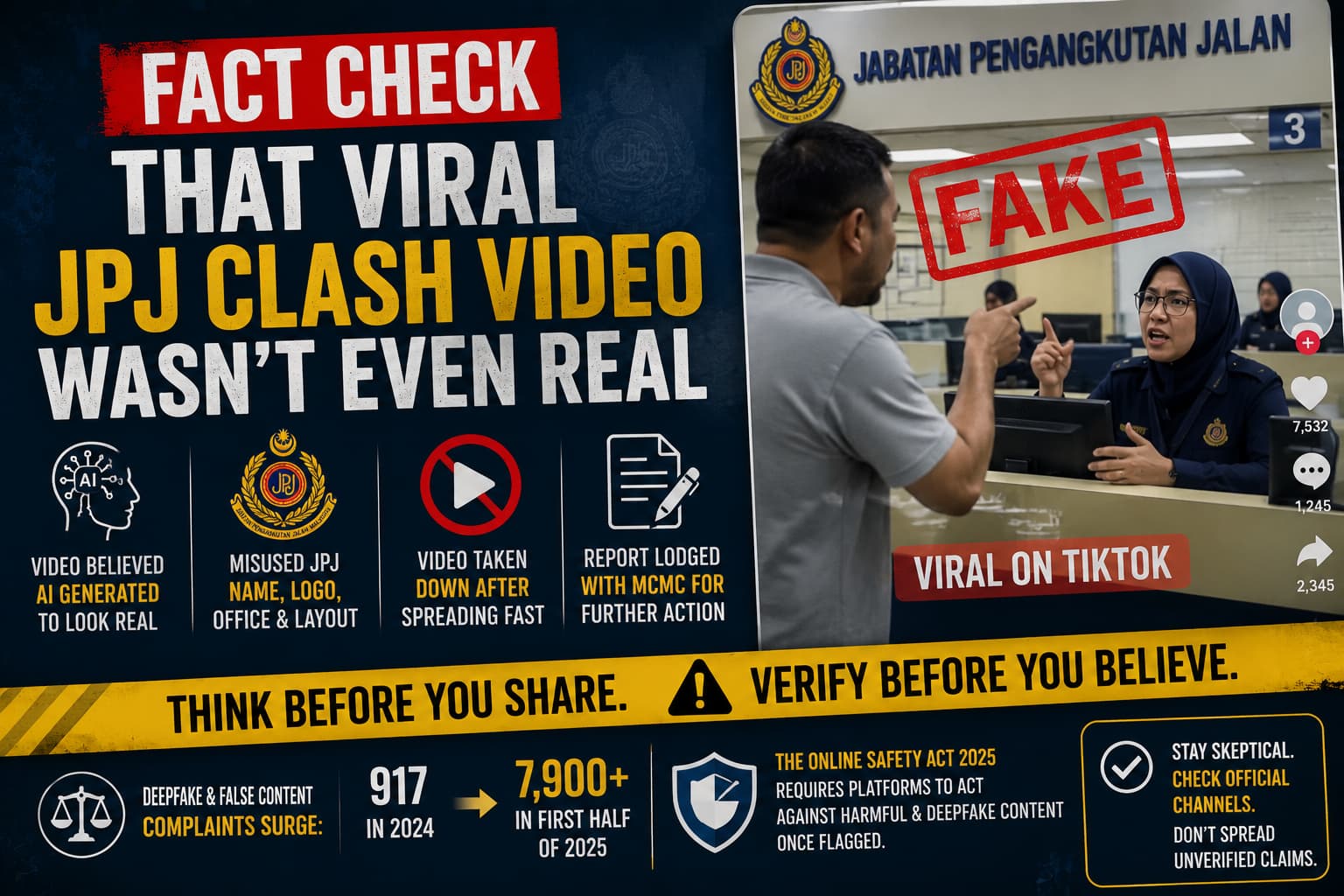
A video showing a heated dispute between a member of the public and JPJ counter staff spread fast on TikTok this week, and just as fast, it turned out to be fake. JPJ issued a statement debunking the footage, saying initial checks found the video had been manipulated using elements resembling the department's official identity, including its office layout, visual displays, and even its name and logo.
According to JPJ, the clip is believed to have been AI generated specifically to create the impression that the confrontation took place inside an actual JPJ office, and the video has since been taken down, but not before it had already caused confusion and, in JPJ's own words, affected the department's image and reputation. The department has lodged a report with the Malaysian Communications and Multimedia Commission for further action against whoever created and circulated it.
This isn't an isolated case, and it isn't just JPJ dealing with it either. The Communications Ministry told Parliament that MCMC has taken down more than 11,600 pieces of false or deepfake content since 2024, with complaints surging more than eightfold, from 917 in 2024 to over 7,900 in the first half of this year alone. What sets this JPJ case apart is that it wasn't a real incident stretched out of context or exaggerated online. It was manufactured from nothing using AI tools convincing enough to fool a large chunk of the internet before anyone thought to check.
The broader trend behind these numbers is what makes this particular video worth paying attention to. Deepfake content in Malaysia has ranged from fabricated videos putting words in the mouths of politicians and royalty to AI generated scam accounts impersonating local officials to solicit personal information from unsuspecting victims. Under the Online Safety Act 2025, which came into force this January, licensed platforms now carry specific obligations to act on this kind of content once flagged, part of a wider regulatory push to keep pace with how quickly generative AI tools have made convincing fakes accessible to almost anyone with a laptop.
JPJ's advice was straightforward, stay skeptical of unverified viral content and rely on official channels before sharing anything that claims to involve a government agency.
My Opinion
What gets me about this one isn't the video itself, it's how quickly it spread before anyone stopped to ask whether it actually happened. We've spent years training ourselves to be skeptical of doctored photos, and now AI video tools have basically reset that skill back to zero, because the fakes are simply good enough to slip past our usual instincts. If a government department's own office layout can be convincingly faked well enough to go viral, I don't think any of us are as good at spotting this stuff as we'd like to believe. Verify before you share, even when a video looks completely convincing, especially when it looks completely convincing.
Ronny M (ronny76netstuff@gmail.com) is a content creator under the Newswav Creator programme, where you get to express yourself, be a citizen journalist, and at the same time monetize your content & reach millions of users on Newswav. Log in to creator.newswav.com and become a Newswav Creator now!
The User Content (as defined on Newswav Terms of Use) above including the views expressed and media (pictures, videos, citations etc) were submitted & posted by the author. Newswav is solely an aggregation platform that hosts the User Content. If you have any questions about the content, copyright or other issues of the work, please contact creator@newswav.com.