

A final-year student from Universiti Malaysia Sabah (UMS), Fadhil Kasim, has sparked national debate not for violence, but for symbolism. At the recent Gempur Rasuah 2.0 rally in Kota Kinabalu, he and a friend burned a caricature of Prime Minister Datuk Seri Anwar Ibrahim to highlight unresolved issues like corruption and water shortages at UMS. The act drew swift criticism from government-aligned youth groups, but Fadhil's response has been firm and thought-provoking:
“Wasn’t Anwar once like us?”
Finally, Sabah may have found a real hero in Fadhil Kasim a student brave enough to speak truth to power in a state long plagued by corruption but rich in resources and potential. His courage to act, while controversial, has sparked a deeper national conversation on integrity and accountability. Burning the caricature may not sit well with everyone two wrongs never make a right but it is the values, beliefs, and frustrations behind that act that deserve attention. As Fadhil reminded us, even Anwar once burned Tunku’s book as a student, a fact many never knew, and now seems forgotten by those who once hailed student activism as noble. Instead of dismissing today’s students as attention seekers, perhaps it's time for leaders to reflect: are they living the ideals they once fought for, or just preaching what they no longer practice? The truth hurts, but truth it remains. Fadhil’s voice cuts through the noise, and his critical thinking is what many say is lacking in current university culture, especially in Peninsular Malaysia. If the Madani government doesn’t listen, they risk sliding off not just Sabah’s trust, but the people's trust come GE16. The time to walk the talk is now without ifs or buts.
If Universiti Malaysia Sabah (UMS) was not officially involved in organising the rally, then why rush to lodge a police report? As an academic institution, UMS should be protecting student expression not punishing it. Protests are part of learning and growth, especially in universities where critical thinking and civic engagement should be encouraged. Burning or defacing political imagery is not new, nor is it unique to Malaysia. Over 100 universities around the world have witnessed similar acts whether it's students at Columbia University protesting the Vietnam War, South Korean students burning authoritarian portraits in the '80s, or recent university protests in India and Indonesia where effigies of prime ministers and ministers were torched to demand reform. These acts are not about disrespect; they are about amplifying voices that feel ignored. UMS should respond as educators, not enforcers. Guide the students, don't silence them.
Enough with the hypocrisy about what is “civilised.” What moral authority does PKR Youth bring to the table when university students in Sabah have been forced to live without reliable water for years? Is it civilised for students to attend classes at UMS without being able to shower for days? Is it civilised to let corruption thrive unchecked in Sabah while poor infrastructure and basic services are neglected? If this is what you defend as ‘civilised’, then your compass is broken. Students like Fadhil are not anarchists they are patriots pushed to the edge. Their protest, however symbolic, came from the frustration of being ignored. If you had done your job held your leaders accountable, questioned corrupt appointments, or even acknowledged videos exposing rot in the Sabah administration maybe students wouldn’t need to protest this way. You speak of extreme and uncivilised behaviour, but what’s more extreme than denying a generation basic dignity while shielding those looting public wealth? Before you moralise to these students, fix your party’s silence, your double standards, and your comfortable indifference. In a country where young voices are constantly suppressed, these students still believe change is possible. That’s not uncivilised it’s heroic.
What has the MACC got to do with students burning a caricature of the Prime Minister? The Malaysian Anti-Corruption Commission should focus on its core duty fighting corruption not defending political leaders from symbolic protests. Burning an effigy is a long-standing form of legal, peaceful protest. It becomes unacceptable only when the system fears what it represents: the people's anger. Rather than attacking students, the government should be addressing why such anger exists in the first place. We are witnessing a worrying erosion of democratic space. Dissent is increasingly met with hostility. Appointments to key institutions bypass senior, qualified candidates in favour of loyalty. DNAA rulings are handed down to high-profile figures accused of looting billions, while cases are closed halfway, investigations stalled, and the public’s dissatisfaction is ignored. Extending the tenure of an MACC chief with a questionable record only adds to the growing perception that those in power are protecting their own. The student protest in Sabah, including the burning of a caricature, is not an act of disrespect it is a reflection of deep frustration, a boiling point reached after years of inaction and selective justice. If the leaders still fail to listen, they should not be shocked when this frustration grows louder. This is not about effigies. It’s about integrity.
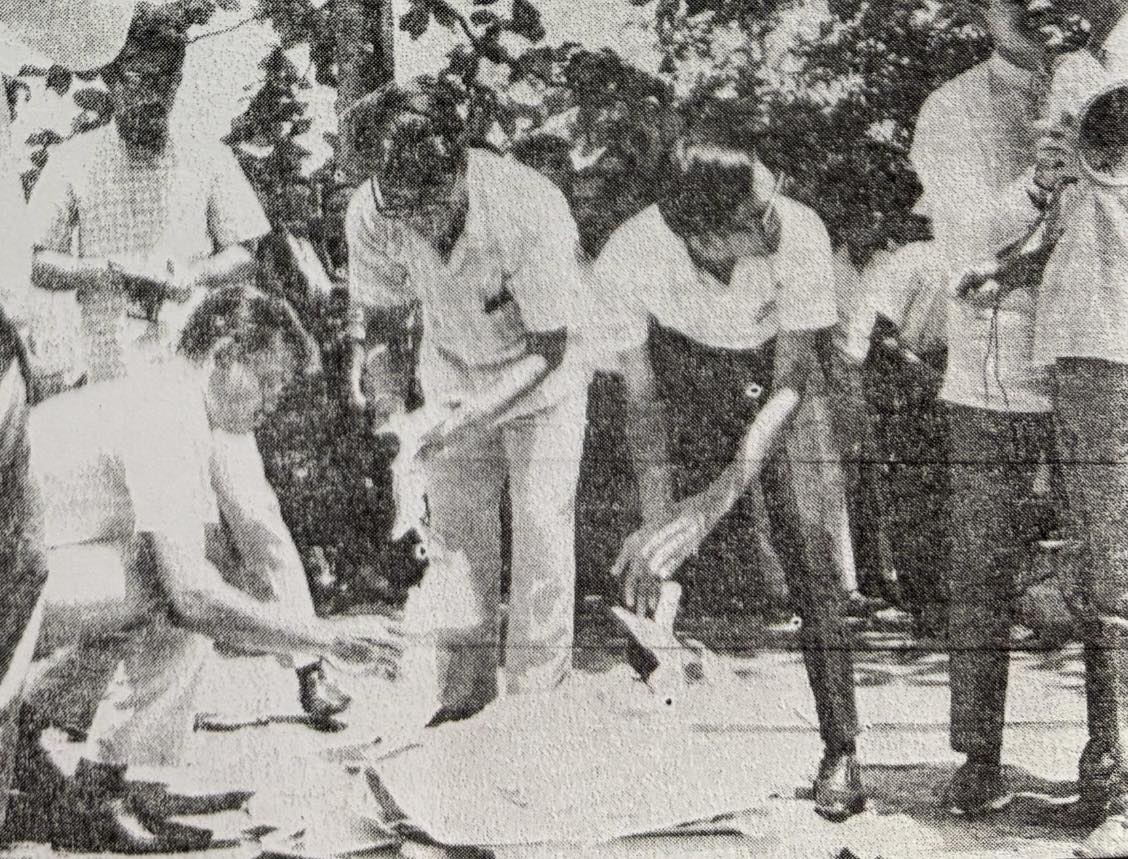
His question pierces deeper than many care to admit. In the 1970s, young Anwar Ibrahim was a firebrand student leader at Universiti Malaya. Alongside others, he protested what he saw as the failings of then-Prime Minister Tunku Abdul Rahman. Their demonstrations were loud, uncompromising and yes, included the public burning of Tunku’s book. They believed it was “subversive,” and they made that belief known without apology. That moment, frozen in black-and-white photos, wasn’t just youthful defiance. It was a call to hold power accountable.
So what changed?
Today, the very actions that once defined Anwar’s student activism are being condemned by his own supporters. Groups like ABIM and AMK who once stood against authority now seem more concerned with protecting it. Criticism that once built leaders is now labelled disrespect. It is easier, after all, to quote past struggles than to honour their spirit.
Fadhil's protest isn’t just about corruption. It's about memory. It's about how leadership often forgets its roots. A younger Anwar championed the oppressed and voiced Sabah's long-standing grievances about logging, poor roads, and neglected rights. The Prime Minister Anwar seems more concerned with political alliances, even if it means shielding parties in Sabah accused of corruption.
Leadership, at its best, is not about titles or loyalty to party. It is about conscience. What Fadhil reminds us is that dissent, when rooted in truth and principle, is not betrayal it is a mirror. One that asks all leaders: do you still recognise the person you once were?
Fadhil ended his post with a sharp line “Madani: Protector of Sabah’s corrupt.” Harsh, perhaps. But history teaches us that every era needs its Fadhils, just as the 1970s needed its Anwar. The irony is painful. The lesson, eternal: never forget what you once stood for, especially when you finally hold the power to change it.
Annan Vaithegi (annanvaithegi@icloud.com) is a content creator under the Newswav Creator programme, where you get to express yourself, be a citizen journalist, and at the same time monetize your content & reach millions of users on Newswav. Log in to creator.newswav.com and become a Newswav Creator now!
The User Content (as defined on Newswav Terms of Use) above including the views expressed and media (pictures, videos, citations etc) were submitted & posted by the author. Newswav is solely an aggregation platform that hosts the User Content. If you have any questions about the content, copyright or other issues of the work, please contact creator@newswav.com.