.jpg)
By Mihar Dias August 2026
There is something wonderfully uncomplicated about politics when you reduce the entire population of a country to one word: hate.
Mukhriz Mahathir has apparently decided that nuance is overrated.
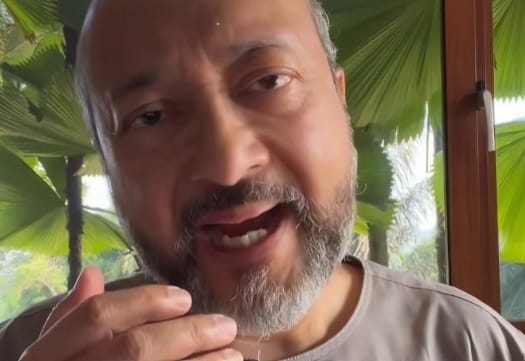
In a video that has now stirred a social-media storm, the Malaysian politician declared: “I hate Americans. I despise Israelis, but I hate Americans, all of them.” https://www.scmp.com/week-asia/people/article/3365045/i-hate-americans-all-them-malaysian-politicians-anti-us-rant-draws-backlash?utm_source=Reddit&utm_medium=Social
He went further, saying it made no difference whether an American was Republican or Democrat, pro-Israel or pro-Palestine.
Well, at least he has solved one of the world's most complicated geopolitical problems. Forget diplomacy, international law, elections, Congress, the White House, public opinion and the millions of Americans protesting, voting, arguing and campaigning over Israel and Gaza.
They are all guilty.
What a relief.
One can understand fury over the war in Gaza and anger at Washington's policies. One can condemn American military assistance to Israel. One can criticise presidents, senators, political parties and foreign-policy decisions with every adjective available in the English language.
That is called political argument.
But hating all Americans is something else.
There are more than 300 million Americans. They include Jews, Muslims, Christians, atheists and people of every conceivable political persuasion. They include Americans who march for Palestine, Americans who march for Israel and Americans who would probably prefer politicians to stop talking about the Middle East altogether and fix their rent, healthcare, schools and potholes.
There are Americans who voted for Trump, Americans who voted against him, Americans who voted Democrat, Republicans who despise Trump's policies and millions who are so politically exhausted they would rather watch Netflix than listen to another speech from Washington.
To declare that every one of them deserves hatred because of what their government does is not a particularly sophisticated political philosophy.
It is collective punishment in verbal form.
And there is an amusing irony here.
Malaysia has spent decades telling the world that it is a moderate, peaceful, multicultural country that distinguishes between governments and ordinary people. We quite rightly object when foreigners stereotype Malaysians because of the actions of our politicians.
Imagine if someone in Washington said:
“I hate Malaysians. All of them. It doesn't matter whether they support Anwar, oppose Anwar, are Malay, Chinese, Indian, Muslim, Christian, Buddhist or atheist. They are all responsible for what their government does.”
We would quite rightly be furious.
We would call it ignorant.
We might even demand an apology.
So why should the principle suddenly change when the nationality happens to be American?
The particularly curious part of Mukhriz's argument is that he appears to regard voting as sufficient to transfer responsibility from government to every citizen.
That is a very convenient theory.
By that logic, every Malaysian becomes personally responsible for every decision made by whichever government happens to be in power. Every American becomes responsible for every American military operation. Every British citizen becomes responsible for every decision made in Downing Street. Every Israeli becomes responsible for every action of the Israeli government.
And every Palestinian, presumably, becomes responsible for whatever Hamas does.
It is an absurd standard.
Democracy does not work that way.
Citizens elect governments, but governments do not become moral clones of every citizen who voted for them. Even within a democracy, citizens disagree violently about foreign policy. They protest. They campaign. They sue governments. They vote them out. They sometimes spend their lives opposing policies carried out in their name.
Some Americans are among the most vocal critics of their own government's support for Israel.
So when Mukhriz says it does not matter whether an American is pro-Palestine or pro-Israel, he effectively dismisses the very people who agree with him.
That is quite a political achievement.
He has managed to hate his opponents and his supporters simultaneously.
Perhaps this is where the Mahathir family tradition of political rhetoric becomes particularly interesting. His father, Tun Dr Mahathir Mohamad, has for years been one of Malaysia's most outspoken critics of the United States and Israel. His latest comments have again condemned Benjamin Netanyahu's opposition to a Palestinian state.
But criticism of a government, even ferocious criticism, is not the same thing as hatred of an entire nationality.
There is a world of difference between saying:
“I hate what the American government is doing.”
and
“I hate Americans, all of them.”
The first is a political position.
The second is prejudice.
And prejudice does not become wisdom merely because it is expressed passionately on a video.
Perhaps Mukhriz should also consider the practical absurdity of declaring war on an entire nationality while living in a world saturated with American technology, entertainment, science, universities, medicine, aviation, social media and business.
We may dislike America. Fine.
But try going through an ordinary day without encountering something American.
The smartphone in your hand? Good luck avoiding American technology.
The social-media platforms on which politicians make declarations of hatred? Well, there is a certain irony there.
The global entertainment industry? American.
The universities where countless Malaysians have studied? American.
American companies employ Malaysians. American tourists spend money here. Malaysians work, study and build businesses in the United States.
Yet somehow the American grandmother buying coffee in California, the Malaysian-American doctor in New York, the Muslim student protesting for Palestine in Michigan and the Republican voter in Texas are all supposed to occupy the same moral category.
That is not political courage.
That is intellectual laziness.
And if the purpose was to make a strong statement against Washington's support for Israel, it has rather spectacularly missed the target.
Instead of focusing attention on American policy, the statement invites people to debate whether Mukhriz hates ordinary Americans.
Congratulations.
The conversation has moved from Gaza to Mukhriz.
That may be the oldest trick in politics: say something sufficiently outrageous and everybody ends up discussing the politician rather than the policy.
There is certainly plenty to criticise about American foreign policy. There is plenty to criticise about Israeli policy. There is plenty to criticise about Hamas. There is plenty to criticise about the international community's failures.
But if we genuinely believe in justice, we should apply the same standard to everyone.
You cannot demand that the world stop stereotyping Palestinians while casually stereotyping Americans.
You cannot condemn collective punishment in Gaza and then endorse collective blame in America.
And you cannot preach humanity while announcing that you hate hundreds of millions of human beings you have never met.
Perhaps the more useful message would have been:
“I hate the policies that enable injustice, and I will oppose them wherever they come from.”
That would have been powerful.
It would also have been defensible.
But “I hate Americans, all of them”?
That sounds less like statesmanship and more like somebody discovered the social-media equivalent of shouting “Everybody out!” and forgot that the world contains people.
If Mukhriz really wants to make a serious contribution to the Palestinian cause, he should attack policies, governments and decisions.
Leave the American people alone.
Some of them might even agree with him.
Mihar Dias (mihardias@gmail.com) is a content creator under the Newswav Creator programme, where you get to express yourself, be a citizen journalist, and at the same time monetize your content & reach millions of users on Newswav. Log in to creator.newswav.com and become a Newswav Creator now!
The User Content (as defined on Newswav Terms of Use) above including the views expressed and media (pictures, videos, citations etc) were submitted & posted by the author. Newswav is solely an aggregation platform that hosts the User Content. If you have any questions about the content, copyright or other issues of the work, please contact creator@newswav.com.