
The debate over a temple allegedly built illegally near the main entrance of Bukit Mertajam Hospital a few months ago has raised broader questions about how religious facilities are provided in shared public and commercial spaces.
One question, in particular, has drawn attention: If prayer rooms are commonly provided in hospitals and shopping malls, why are places of worship for other religions not offered in the same way?
While the question may appear to centre on religious equality, it also points to a more practical issue: What purpose do these facilities serve, and how are decisions about them made?
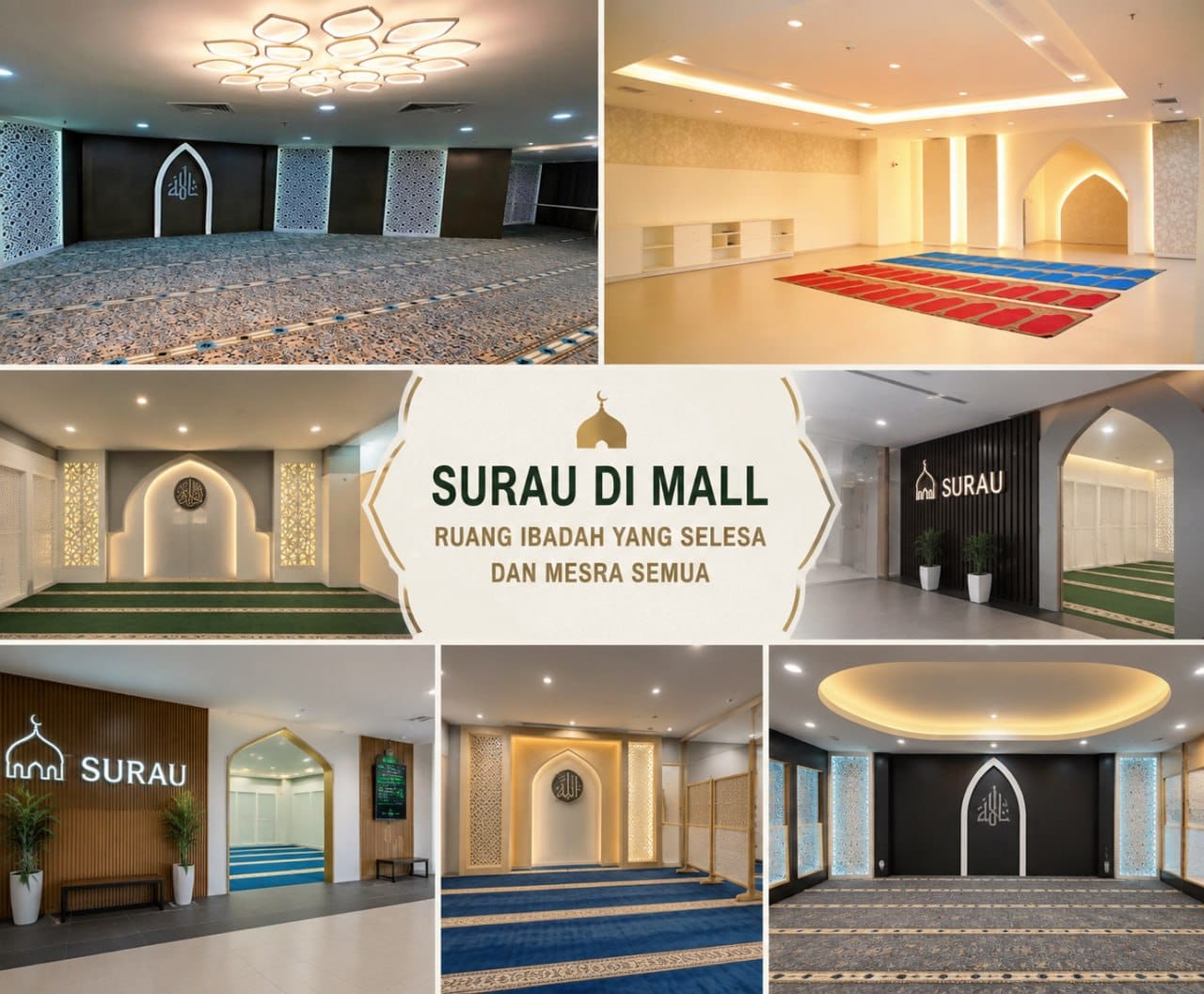
In shopping malls, a prayer room is not necessarily an attempt to turn a commercial space into a religious institution. It is often a customer facility designed around the needs of a significant portion of Malaysia’s population. By making it easier for Muslim customers to pray without leaving the premises, malls may also encourage them to stay longer, return more often and spend more within the complex.
Prayer Rooms as Part of Consumer Needs
In the context of shopping malls, the provision of a prayer room is not solely a religious matter. It can also form part of a mall’s management and business strategy to meet the needs of its customers.
Malaysia has a Muslim-majority population. As a result, access to facilities for daily prayers is naturally one of the considerations for many Muslim consumers when choosing where to shop, dine or spend their time.
This explains why many shopping malls today provide prayer rooms that are increasingly spacious, comfortable and accessible. Some are equipped with dedicated ablution areas, air conditioning, clean prayer spaces and other facilities designed to improve the overall experience.
In many cases, such facilities can influence consumer choices.
The logic is straightforward. If one shopping mall does not provide an adequate prayer facility, Muslim customers may choose another mall that offers a more convenient and comfortable alternative.
In other words, a prayer room can also be viewed as a service provided to a significant segment of the consumer market.
It is also worth noting that many shopping mall owners are non-Muslims.
Nevertheless, market realities mean that mall operators have to understand and respond to the needs of their largest customer groups, regardless of the owner’s personal religious background.
Prayer Rooms Can Influence How Long Customers Stay
Another factor that is often overlooked is the potential impact of prayer facilities on the amount of time customers spend at a particular premises.
Most people do not visit a shopping mall simply to pray. They go there to shop, dine, watch movies, meet friends or carry out other activities.
Consider a Muslim customer who spends the day at a shopping mall, perhaps from morning until late afternoon. With an easily accessible prayer room, the customer can continue with their activities without having to leave the premises simply to find a suitable place to pray.
This can indirectly benefit businesses within the mall because customers have fewer reasons to leave.
The effect can become even more apparent during Ramadan.
A shopping mall offering a wide range of dining options for iftar, combined with a spacious and comfortable prayer facility, could become an attractive destination for Muslim consumers.
This can be linked to the concept of an economic spillover effect.
A facility that is initially provided to meet the basic needs of consumers can also influence their visiting patterns, length of stay and, potentially, their spending behaviour.
What About Hospitals and Other Public Facilities?
A similar principle can be applied to hospitals, recreational areas, transport terminals and other public locations.
When a facility serves people from different backgrounds, providing basic amenities that users require is part of the responsibility of managing the premises.
A prayer room, therefore, does not necessarily have to be viewed solely through the lens of religious privilege.
In a commercial setting, it can also be understood as a customer-oriented facility designed to accommodate the needs of a significant user group.
The same principle applies to public facilities. Their purpose is to serve the people who use them, and their amenities are generally designed around practical needs, usage patterns and the characteristics of their users.
Ultimately, the presence of a surau in a shopping mall does not automatically mean that the premises are being turned into a religious institution.
It can simply be a reflection of how businesses respond to the needs of their customers, while at the same time creating an environment that encourages them to stay longer, return more frequently and continue spending within the premises.
Azzman Mantoya (azzman.tvpertiwi@gmail.com) is a content creator under the Newswav Creator programme, where you get to express yourself, be a citizen journalist, and at the same time monetize your content & reach millions of users on Newswav. Log in to creator.newswav.com and become a Newswav Creator now!
The User Content (as defined on Newswav Terms of Use) above including the views expressed and media (pictures, videos, citations etc) were submitted & posted by the author. Newswav is solely an aggregation platform that hosts the User Content. If you have any questions about the content, copyright or other issues of the work, please contact creator@newswav.com.