Have leaders from both sides of the political divide ever led by example in steadfastly upholding the country's Rukun Negara?
Fellow writer KT Maran’s recent no-holds-barred article on our national philosophy should provide serious food for thought—not just to ordinary folks, but more so to those holding the levers of influence and power, especially our politicians.
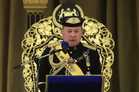
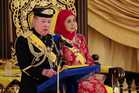
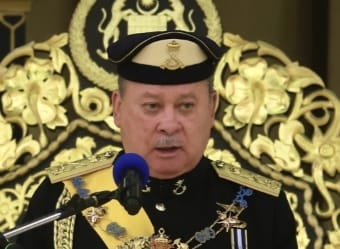
Recently, His Majesty Sultan Ibrahim, the King of Malaysia, declared that individuals who reject the principles of the Rukun Negara are simply not worthy of being regarded as Malaysian citizens.
His Majesty called upon all quarters to uphold every single principle of the national philosophy, adding:
“Any Malaysian who refuses to adhere to the principles of the Rukun Negara… is not worthy of being called a Malaysian citizen.”
A stern caution that should be taken seriously by everyone.
But let’s stop pretending.
For decades, haven't the five core principles of our national pledge been blatantly and routinely trampled on?
To find out, let's run down our supposedly cherished Rukun Negara and see exactly where it stands today.
1. Kepercayaan Kepada Tuhan (Belief in God)
The first principle is essentially a call to respect the Almighty, and by extension, every religion. This is fundamental, given that Malaysia was founded as a multiracial and multi-faith nation.
But have we been faithful to this pledge?
Weren't there disturbing incidents in the past where individuals desecrated sacred books and religious symbols—gleefully filming and sharing them with thousands on social media?
Aren't such sacrilegious acts clearly at odds with the spirit of the first principle?
2. Kesetiaan Kepada Raja dan Negara (Loyalty to King and Country)
Many are fond of hoisting the Jalur Gemilang for all to see. For them, that bold display is what patriotism is all about; yet they think nothing of breaking laws—whether by running red lights, abusing drugs and alcohol, committing sexual offences, or resorting to road rage at even the slightest provocation.
Then there are also some who will march proudly, carrying huge banners and placards, purportedly to show undivided loyalty to the monarch, when their underlying motive is purely political.
In fact, there have even been past allegations of leaders failing to respect the constitutional rights of the King and state Rulers.
And what about the high-profile financial scandals involving the embezzlement of billions from public funds? Does robbing the nation's coffers not represent a grave breach of loyalty to the country?
In the court of public conscience, wouldn't that be deemed a form of modern treason?
3. Keluhuran Perlembagaan (Supremacy of the Constitution)
The third principle reaffirms beyond a shadow of doubt that the Federal Constitution is the supreme law of the land.
Then why do some still challenge it?
Many might recall the huge uproar over vernacular schools, whose legality was dragged to the courts though the judiciary ultimately reaffirmed that the Constitution protects the right to learn and teach in one's mother tongue.
And what about those who have allegedly tried to impose unwarranted religious restrictions, when the Federal Constitution explicitly guarantees freedom of worship?
Then there are the highly sensitive cases where certain state authorities have openly challenged the boundaries of the Federal Constitution in the courts.
Let's be unreservedly frank: Wouldn't an attempt by any party to override the supreme law of the land be construed as an outright breach of the Rukun Negara?
4. Kedaulatan Undang-Undang (Rule of Law)
The fourth principle is grounded on a simple truth: everyone is equal before the law, and no one enjoys immunity.
In other words, there should never be double standards.
Yet, the reality is that some of the “elites” facing massive corruption or abuse of power charges have seen their cases dropped, reduced, or delayed indefinitely. Meanwhile, ordinary citizens charged with far lesser offenses face the full, swift force of the law, resulting in heavy penalties and jail time.
5. Kesopanan dan Kesusilaan (Courtesy and Morality)
This final tenet underscores the need to maintain high ethical standards, civility, and mutual respect to preserve the country's fragile social harmony.
Yet, we regularly witness a complete breakdown of this principle, often led by the very ones who are supposed to set the standard for the rakyat.
In fact, haven’t some politicians, public figures, and even the so-called “celebrity” preachers been accused of shamelessly using racist, divisive rhetoric or derogatory language—sharing it proudly with millions on social media—while making a complete mockery of Kesopanan itself?
Truth be told, it's not uncommon to hear slurs such as pendatang, kafir, and bodoh being spewed without consequence, even inside Parliament.
If that isn't a direct strike at the heart of the Rukun Negara, what is?
Sadly, such antics seem to have inspired even ordinary citizens to do the same. One only needs to scroll through the comment sections of any local social media page to witness all the toxicity.
Are we Malaysians genuinely a kind and courteous lot, or have we become experts at putting up a fake front?
Finally, and perhaps most significantly, what is often entirely overlooked is that there is far more to the Rukun Negara than its five core principles.
Unknown to many, its official preamble outlines broader national goals: fostering unity, preserving democracy, creating a just society, adopting a liberal approach toward cultural diversity, and building a progressive society grounded in science and technology.
Strangely, the call for a liberal approach toward cultural diversity seems to have been gradually downplayed.
But why?
After all, the farsighted authors of the document had clearly recognized that actively promoting the various cultures is the cornerstone of a mature, modern and harmonious multiracial society.
Is this why we have instead become increasingly polarised—intolerant of the customs and religious beliefs of others?
There are also some who quote the Rukun Negara only selectively—when it suits their agenda!
Ultimately, without a conscious effort to reinforce it as the “foundation” of all our government policies and guidelines, it will eventually fade into irrelevance.
Now, even the King has spoken—and the warning is clear.
But who among our leaders is willing to put aside their communal interests and restore that crumbling foundation to build a proud, vibrant and truly inclusive nation?
Main information source: Malay Mail, Focus Malaysia, World of Buzz and The Edge Malaysia.
JK Joseph (jtkingsworld@gmail.com) is a content creator under the Newswav Creator programme, where you get to express yourself, be a citizen journalist, and at the same time monetize your content & reach millions of users on Newswav. Log in to creator.newswav.com and become a Newswav Creator now!
The User Content (as defined on Newswav Terms of Use) above including the views expressed and media (pictures, videos, citations etc) were submitted & posted by the author. Newswav is solely an aggregation platform that hosts the User Content. If you have any questions about the content, copyright or other issues of the work, please contact creator@newswav.com.