No wings can fly alone by themselves: Is a Hung Parliament Good or Bad?
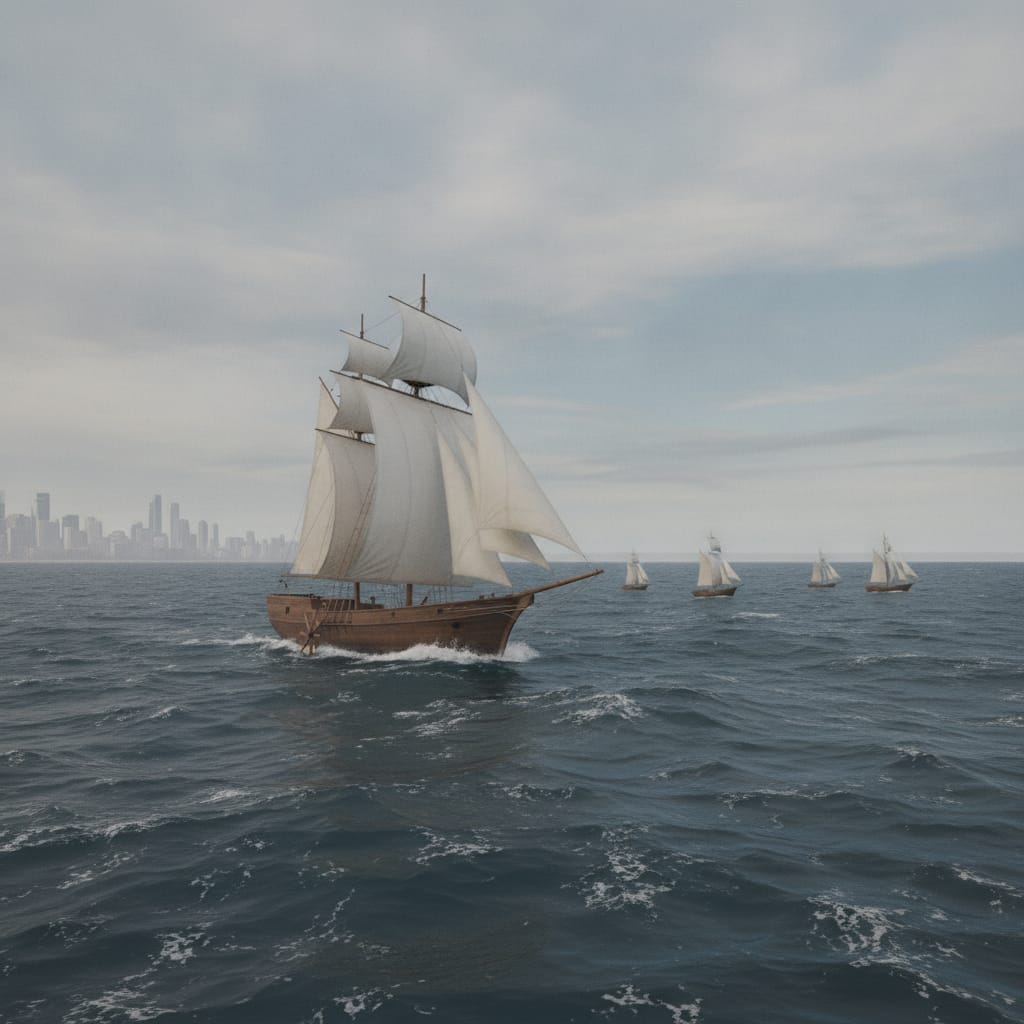
A hung Parliament—where no single party or coalition holds an outright majority—is often described as a ship without a single captain, its sails billowing in shifting winds, drifting into uncharted waters. In Malaysia’s democratic archipelago, this scenario, experienced vividly after the 15th General Election, remains one of the most debated structures of governance. Some see it as a house built on quicksand, liable to sink at any moment, while others view it as a lush rainforest where democracy truly blooms, fed by the waters of many different streams. Whether it serves the nation well or leads it astray depends largely on what one values most: the straight, fast road of stability or the winding, inclusive path of consensus.
To its critics, a hung Parliament is bad news—a foundation made of dry sand rather than solid rock. The greatest fear is instability. When no group holds enough seats to stand alone, forming a government becomes like assembling a complex mosaic from shards that do not naturally fit, a process taking days or weeks, filled with intense bargaining, horse-trading and shifting loyalties. This period of uncertainty acts like a thick fog rolling over the nation’s compass, obscuring the path ahead and unsettling investors, businesses and the public alike. Furthermore, decision-making slows to a crawl. Major reforms or bold policies, which might otherwise flow swiftly like a river through a wide, open valley, risk becoming trapped like water in a narrow, rocky gorge, blocked by the need to please too many masters. Important agendas are often diluted or abandoned, flowers cut down just as they begin to bloom, merely to keep fragile alliances from crumbling. There is also the spectre of “weak government”, where the administration is a giant held hostage by dwarves, forced to bend to the demands of smaller parties just to survive, leading to policies that swing like a weather vane in a storm, changing direction with every gust of political pressure.
Yet, those who defend the merits of a hung Parliament see it not as a flaw, but as a mirror reflecting the true face of the nation. In a multi-ethnic, multi-religious country like Malaysia, it acts as a natural dyke preventing the flood of dominance by any single group or ideology. Just as a healthy forest relies on a rich variety of trees, shrubs and roots to hold the soil together, a hung Parliament ensures that no single voice drowns out all others. It forces cooperation, compelling parties to cross the bridge from isolation to partnership, sitting at the same table—sometimes with former foes—and finding common ground. This creates governments that are broad-based and inclusive, representing a tapestry woven from many coloured threads, far stronger and more beautiful than one made from a single strand. Policies born from such consensus are rarely sharp or extreme; instead, they are polished smooth like river stones, rounded by the friction of debate, fairer and more acceptable to the majority. It also turns power into a caged bird, not a wild beast; without a massive majority to bulldoze laws through, the executive is forced to listen, explain and negotiate, making democracy work as it was intended—not as a command from above, but as a conversation around a communal hearth.
In a political system where parties and races are woven together like warp and weft in a kain batik, words carry hidden patterns. In a “strong majority” system, rigid stances like his could act like a dam blocking the flow of representation, cutting off entire communities. But in a hung Parliament, such unbending positions become like dry branches in a storm—easily broken, because survival requires reaching across divides.
Ultimately, a hung Parliament is neither a paradise nor a wasteland; it is a double-edged sword that cuts both ways, or perhaps better, a garden that requires careful tending. It can be messy, noisy and slow, like a crowded market where everyone shouts at once, but it is also the truest reflection of our diverse society. It reminds us that governing is not about flying solo above the clouds, but about sailing together in a shared boat, navigating rough waters and changing tides. In a nation where unity is always a bridge under construction, a hung Parliament may just be the most honest system we have—imperfect, perhaps, but vibrant, alive, and undeniably ours.
moykokming@gmail.com
Moy Kok Ming (moykokming@gmail.com) is a content creator under the Newswav Creator programme, where you get to express yourself, be a citizen journalist, and at the same time monetize your content & reach millions of users on Newswav. Log in to creator.newswav.com and become a Newswav Creator now!
The User Content (as defined on Newswav Terms of Use) above including the views expressed and media (pictures, videos, citations etc) were submitted & posted by the author. Newswav is solely an aggregation platform that hosts the User Content. If you have any questions about the content, copyright or other issues of the work, please contact creator@newswav.com.