
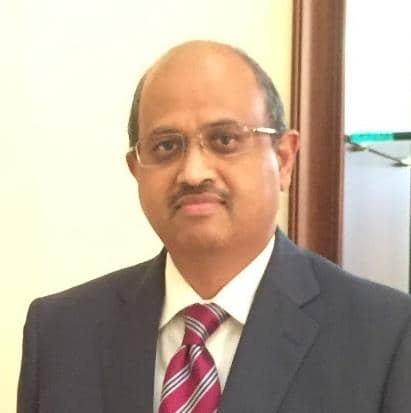
M.Krishnamoorthy
A media coach, adjunct professor, and author
A conflict is imminent in the South China Sea, according to former Malaysian ambassador Dr Ilango Karuppannan.
There were international 195 incidences of attacks and rivalries in the South China Sea from 2010 until July of 2024 with 35 of them taking place between January 2023.
“The rivalry between the US and China is no longer confined to trade wars and tariffs—it’s inching closer to military confrontation in one of the world's most critical maritime regions.
“As tensions rise, the risk of conflict in the South China Sea could disrupt global trade routes and destabilise Southeast Asia. Are we on the brink of a crisis that could shake the foundations of the international order?”
In this YouTube video, Ilango analysed how the US’s economic strategies against China are leading to increasing tensions in the South China Sea, risking a conflict that could have catastrophic effects on Southeast Asian nations and global trade.
The retired ambassador views it as a deliberate conflict being orchestrated and questioned: “What does it mean for the South East Asia region’s future?”
Ilango replied: “The South China Sea, a crucial and contested maritime region, is increasingly becoming a focal point of global tension. With its historical disputes over territorial claims, particularly China's expansive nine-dash line, the region has seen escalating military activities. This includes China’s militarisation of artificial islands and aggressive patrols, prompting neighbouring countries and global powers like the United States to respond with heightened defence measures and alliances.
“The geopolitical stakes are immense, as the South China Sea is a vital trade route and a strategic military zone, leading to fears that any miscalculation could spark a broader conflict. Among the key areas where conflict could break out are in the Second Thomas Shoal also known as the Ayungin Shoal or the Scarborough Shoal, in the area that is also known as West Philippines Sea.”
Amid these developments, Ilango explained that regional powers like Australia and India and multilateral frameworks such as ASEAN play critical roles in mediating tensions.
However, the risk of escalation remains high, with the potential for severe humanitarian and economic consequences, especially if global attention shifts due to conflicts elsewhere, like in the Middle East.
“The situation demands careful diplomacy, adherence to international law, and cooperative efforts to prevent the volatile environment from descending into war, which would have far-reaching impacts on global stability.”
The South China Sea has been a point of contention for years, but all other states have rejected China's claims. But it is not just about China. Four members of ASEAN, namely Brunei, Malaysia, the Philippines and Vietnam, also claim various parts of the South China Sea.
Each claimant state has its mix of economic interests, national security concerns, and historic historical claims. Let us look at the number of incidences that have occurred in the South China Sea. As we can see in this figure, from 2010 until 2024, there has clearly been an increase in the number of these types of incidents, these close encounters, near conflicts, and other forms of skirmishes involving naval vessels, coast guards of China, aircraft, and others.
“In total, there have been 195 incidences in the South China Sea since 2010 until July of 2024 with 35 of them taking place between January 2023 and July of this year alone. So clearly there has been a dramatic step up in terms of these near conflicts. One of the scholars who have studied this US-China rivalry in detail is Graham Allison,” Illango said in his commentary.
Allison wrote a book entitled "Destined for War - Can America and China Escape the Thucydides Trap?". In this book, he studied 16 different conflicts between rising powers and established powers throughout 500 years of human history. And what he found was out of these 16 of the 12 of them ended in conflict.
Freelance Writer M. Krishnamoorthy (www.imkrishna.net) is a media coach, adjunct professor and undercover journalist. He has freelanced with Bernama, NST, The Star, and Malaysiakini. He also freelances as a fixer/coordinator for CNN, BBC, German and Australian Television networks and the New York Times. As an undercover journalist, he has highlighted society's concerns.
M. Krishnamoorthy is a content creator under the Newswav Creator programme, where you get to express yourself, be a citizen journalist, and at the same time monetize your content & reach millions of users on Newswav. Log in to creator.newswav.com and become a Newswav Creator now!
The User Content (as defined on Newswav Terms of Use) above including the views expressed and media (pictures, videos, citations etc) were submitted & posted by the author. Newswav is solely an aggregation platform that hosts the User Content. If you have any questions about the content, copyright or other issues of the work, please contact Newswav.
