
In 2018, our then Finance Minister Lim Guan Eng said that the national debt is more than RM1 trillion. This year, our Prime Minister cum Finance Minister Anwar Ibrahim, announced that the national debt had reached RM 1.5 trillion. This means that in the last five years, the Malaysian government has been adding around RM 100 billion worth of debt into our economy every year.
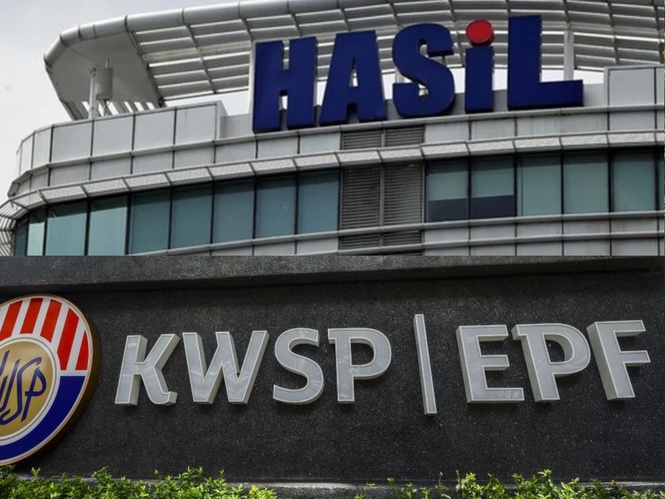
Since 2020, EPF members have withdrawn RM 145 billion from the retirement fund under four separate schemes. Considering that the EPF assets are worth around RM 1 trillion, this not only represents an alarming 15 per cent of EPF’s total worth, but it also means that on average, the EPF withdrawals alone have pumped around 50 billion ringgit every year into our economy in the last three years.
In the last few years, just the EPF withdrawals and government loans alone have added around RM 150 billion into our economy every year. Considering this, when the Malaysian economy is reported to have grown by 5.6 per cent in the first quarter of 2023, it is doubtful as to whether this growth is caused by a real value being added to the economy or whether this growth is just being propped up by national debt and EPF withdrawals.
If we estimate the size of the Malaysian GDP to be around RM 1.8 trillion (USD 407 billion), RM 150 billion represents around 8.3 per cent. That our economy only grew by 5.6 per cent this quarter, even though our debts and EPF withdrawals alone propped up the economy by 8.3 per cent, is a bad sign. It means that even after being given tremendous help by national debt and EPF withdrawals, our economy still couldn’t grow in real terms.
If you usually make an average of 100k a year, but this year you just made 90k, but you also borrowed 10k and withdrew a further 5k from your savings, you cannot claim that just because you have 105k this year, you are doing well, because you have made 5 per cent more than you usually do.
The more realistic assessment of the situation is that you are doing badly. Despite investing heavily in your business by forking out 15 per cent of your savings and getting deeper into debt, you still cannot increase your income.
On average, around 6 million people participated in the EPF withdrawal schemes (The first withdrawal scheme, the i-Lestari scheme, saw withdrawals by 5.3 million contributors. The second, third and fourth schemes saw 6.6 million, 5.2 million and 6.6 million withdrawals, respectively. )
The fact that, on average, around 42 per cent of the total number of EPF contributors ( EPF has around 14 million members) who are participating in these withdrawal schemes tells us that approximately 42 per cent of Malaysian are facing a fundamental decline in lifestyle or are facing survival issues in the post-pandemic era.
There are only two reasons why people withdraw money from their EPF. The first reason is that they need to survive, and the second is that they defend their lifestyle.
To be in the middle class, you have to have the lifestyle of someone in the middle class. You should, in other words, live in an apartment or a house, not rent a flat. You should drive a car, not ride a motorbike. If you can’t afford such a lifestyle, you will no longer be seen as a member of the middle class.
That 42 per cent of our adult population needed to withdraw money from their EPF account is a sign that 4 out of every 10 ten Malaysians is at least suffering from a crisis in lifestyle, where they have to dig into their savings to maintain their current status in life.
Against this backdrop, the LHDN collected a record amount of tax revenue last year is another worrying sign. Corporate tax compromises 55 per cent of LHDN’s revenue, while the T20 contributes 85 per cent of the personal income tax. That LHDN has collected record amounts of tax last means that the rich are getting richer while the poor are getting poorer.
In an economy that is growing realistically, the poor and the rich will become more affluent. In an economy that is only being propped up artificially by debts and the liquidation of savings, the rich will grow richer at the expense of the poor.
That we have been oppressed by inflation is another sign why our economy might be debt-fueled. Inflation is the parasitic mechanism that allows the wealth from the below to be sucked to the top.
If this trend continues, and we get used to growing our economy not by adding value to our economy but merely by propping it up with debt and other artificial forms of cash injections, it is doubtful as to whether Malaysia still be able to maintain our status as a middle-income nation, or are we going to fall back into the state of a third world nation that took us decades to rise out from.
There are three things that TheRealNehruism holds to be true in life. The first is that the purpose of life is to pursue happiness, the second is that you cannot be happy unless you carry your fair share of the world's weight and the third is that you can never underestimate your ability to take your own side.
TheRealNehruism is a content creator under the Newswav Creator programme, where you get to express yourself, be a citizen journalist, and at the same time monetize your content & reach millions of users on Newswav. Log in to creator.newswav.com and become a Newswav Creator now!
The User Content (as defined on Newswav Terms of Use) above including the views expressed and media (pictures, videos, citations etc) were submitted & posted by the author. Newswav is solely an aggregation platform that hosts the User Content. If you have any questions about the content, copyright or other issues of the work, please contact Newswav.

