.jpg)
By Mihar Dias October 2026
Murray Hunter has raised a frightening possibility.
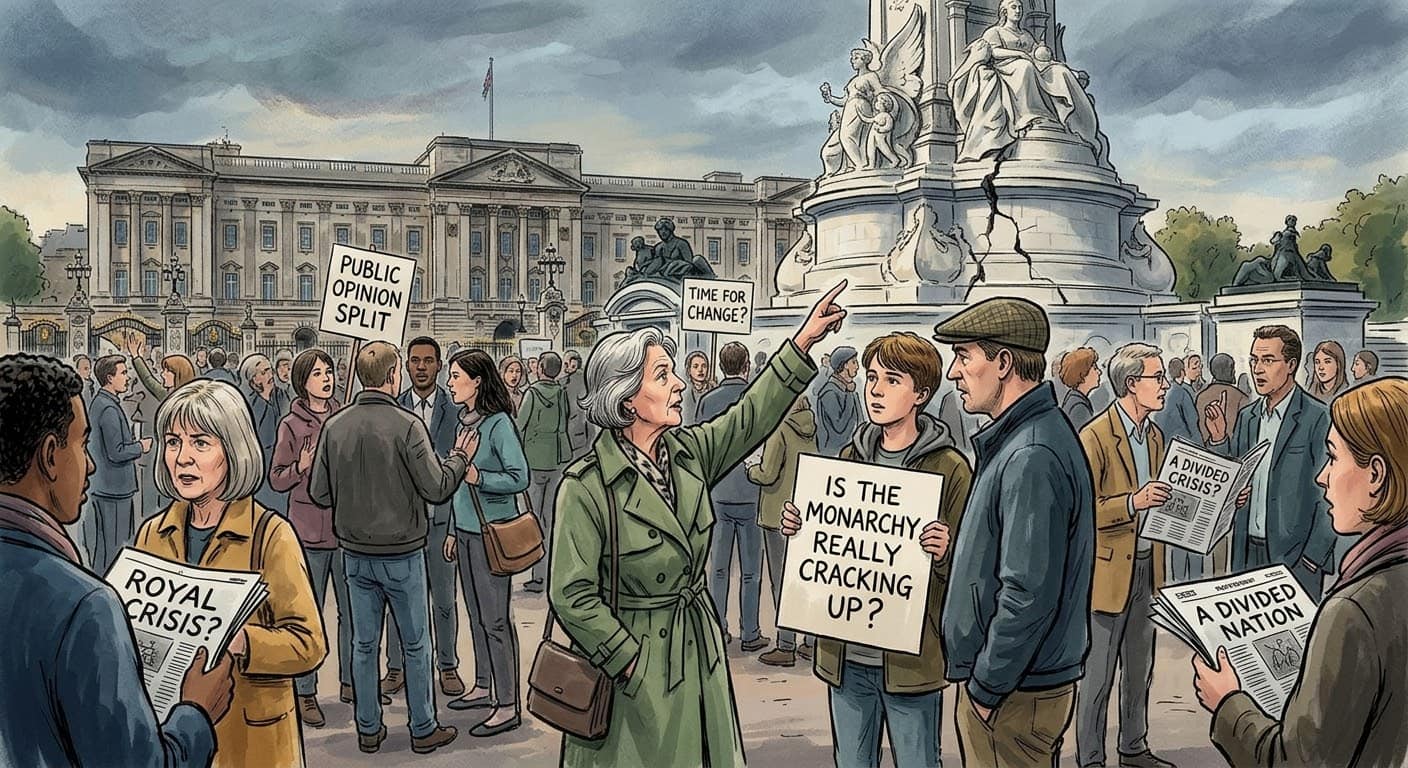
Could the prolonged crisis in Negeri Sembilan actually crack Malaysia’s monarchical institution?
It is a good question.
It is also the sort of question that makes a columnist sit up, put down his coffee and wonder whether the roof is about to collapse.
Hunter argues that what began as a dispute over the position of the Yang Dipertuan Besar has become something much bigger — a test of the constitutional monarchy itself. He warns that if challenges to a ruler can continue for months without decisive resolution, the monarchy could gradually become something that political actors regard as negotiable. https://murrayhunter.substack.com/p/the-prolonged-crisis-in-negeri-sembilan?r=3yfri&utm_campaign=post-expanded-share&utm_medium=web&fbclid=IwdGRzaAUqoX5jbGNrBSqhVWV4dG4DYWVtAjExAHBkb2YFc3J0YwZhcHBfaWQMMzUwNjg1NTMxNzI4AAEeNBmN2_xOU8qVupSbTNx1iBOxWgVW_9Ff0uGX90M2fOuex55oNejtgduNgIA_aem_34qmYDqN12Y4JWgmOAkN1Q&utm_id=97757_v0_s00_e0_tv2_a1dennhb42y8qf&sfnsn=wa
That sounds ominous.
But is the Malaysian monarchy really cracking?
I am not convinced.
For one very simple reason.
The Constitution is still standing.
And, rather inconveniently for everyone involved, it has been speaking rather loudly.
On September 17, the Attorney-General’s Chambers said the April 19 proclamation purporting to remove Tuanku Muhriz was invalid because it had failed to comply with the mandatory requirements of Article 10 of the Negeri Sembilan Constitution. https://murrayhunter.substack.com/p/the-prolonged-crisis-in-negeri-sembilan?r=3yfri&utm_campaign=post-expanded-share&utm_medium=web&fbclid=IwdGRzaAUq
More importantly, the AGC said the Menteri Besar and State Executive Council had no unilateral power to remove or vacate the office of the Yang Dipertuan Besar.
The State Secretary’s office subsequently said the disputed proclamation would not be gazetted or enforced. The Dewan Keadilan dan Undang also reaffirmed that Tuanku Muhriz remained the legitimate ruler. https://murrayhunter.substack.com/p/the-prolonged-crisis-in-negeri-sembilan?r=3yfri&utm_campaign=post-expanded-share&utm_medium=web&fbclid=IwdGRzaAUq
That does not sound like a monarchy collapsing.
It sounds like the constitutional machinery, however noisily, is doing what it was designed to do.
A crack is not a collapse
There is a difference between testing an institution and destroying it.
Malaysia has had constitutional crises before. Governments have fallen. Political parties have split. Prime ministers have departed. State assemblies have produced extraordinary dramas that would make Shakespeare ask for royalties.
Yet the constitutional monarchy has survived.
Why?
Because Malaysia's monarchy is not held together merely by personalities.
It is held together by constitutional provisions, established conventions, state constitutions, the Council of Rulers, the judiciary, the executive, the traditional institutions of the Malay states and, ultimately, public acceptance.
Negeri Sembilan is even more complicated because its monarchy is elective and intertwined with the traditional authority of the Undang and Adat Perpatih.
So this is not simply a case of one politician challenging one king.
It is a collision between adat, constitutional law, political authority and competing interpretations of legitimacy.
That is serious.
But serious is not the same thing as terminal.
Perhaps the monarchy is doing what a monarchy is supposed to do
There is something almost deliciously ironic about the argument that the monarchy is endangered because the constitutional rules surrounding it are being fiercely contested.
Perhaps this is precisely why constitutions exist.
They are not written for the days when everyone agrees.
They are written for the days when nobody does.
The real danger would be if an unlawful or unconstitutional action became accepted simply because enough people repeated it often enough.
But that has not happened.
The AGC has rejected the unilateral removal.
The State Secretary refused to gazette it.
The DKU reaffirmed Tuanku Muhriz.
And the disputed proclamation has not simply become a new constitutional reality because somebody announced it.
That distinction matters.
In Malaysia, apparently, saying something has happened and making it legally happen remain two rather different activities.
Thank goodness.
But Hunter is right about one thing
There is nevertheless a warning in Hunter's argument that should not be dismissed.
Institutions can be weakened by prolonged uncertainty. https://murrayhunter.substack.com/p/the-prolonged-crisis-in-negeri-sembilan?r=3yfri&utm_campaign=post-expanded-share&utm_medium=web&fbclid=IwdGRzaAUq
If a sitting ruler can be publicly challenged, another claimant can be proclaimed, executive councillors can issue competing statements and constitutional authority becomes the subject of daily political argument, the public may eventually become confused about where legitimate authority actually resides.
That is dangerous.
Not because Malaysians are about to wake up tomorrow and abolish the monarchy.
They are not.
But because constitutional authority depends partly upon something less tangible than legislation:
respect.
And respect is easier to lose than to regain.
The monarchy therefore does not need dramatic rescuing.
It needs the Constitution to be followed.
That may be the least dramatic solution imaginable.
Which, in Malaysia, makes it almost revolutionary.
So, is the monarchy cracking?
I would say the Negeri Sembilan episode has exposed a crack in the political architecture surrounding the monarchy, but that is not the same as a crack in the monarchy itself.
There is an enormous difference.
A house can have a dispute in the kitchen without the foundations collapsing.
What would genuinely threaten the institution would be something far more fundamental: a sustained public rejection of constitutional monarchy, a systemic refusal by governments to recognise royal constitutional authority, or a successful political transformation of the constitutional order.
We are nowhere near that.
What we have instead is a highly unusual constitutional confrontation in one state — one that has already demonstrated something rather encouraging.
When competing claims collide, the Constitution still matters.
That should reassure us.
Perhaps the greater danger is not that the monarchy will crack.
Perhaps it is that Malaysians will become so accustomed to constitutional drama that we stop being shocked by it.
That would be a much quieter kind of damage.
And, as history keeps reminding us, the institutions that matter most rarely disappear with a bang.
Sometimes they simply become irrelevant one violation, one compromise and one shrug at a time.
For now, however, I would not write the obituary of Malaysia's monarchy.
The patient is not on life support.
The patient is having a rather unpleasant constitutional argument with the neighbours.
And the Constitution, mercifully, is still answering the door.
Mihar Dias (mihardias@gmail.com) is a content creator under the Newswav Creator programme, where you get to express yourself, be a citizen journalist, and at the same time monetize your content & reach millions of users on Newswav. Log in to creator.newswav.com and become a Newswav Creator now!
The User Content (as defined on Newswav Terms of Use) above including the views expressed and media (pictures, videos, citations etc) were submitted & posted by the author. Newswav is solely an aggregation platform that hosts the User Content. If you have any questions about the content, copyright or other issues of the work, please contact creator@newswav.com.