
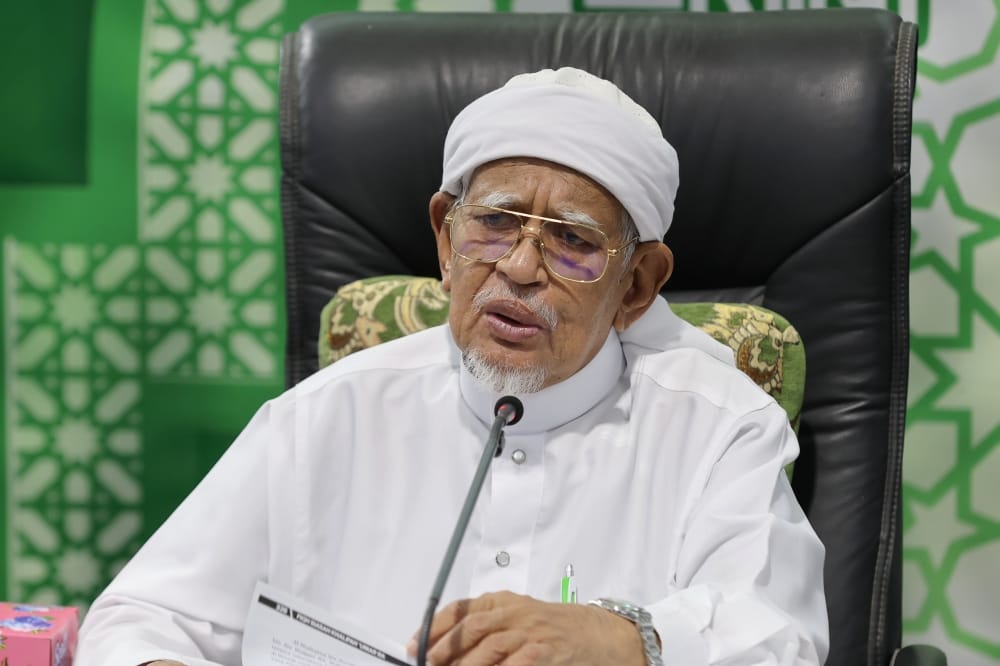
Walk into any local coffee shop in Kota Bharu or Alor Setar on a Friday afternoon, and you will hear a familiar, rhythmic hum of communal solidarity. For generations, the kopiah the white prayer cap has stood as a sacred symbol of unyielding spiritual conviction, moral purity, and an unwavering devotion to divine justice. It represented a lifestyle untouched by the grubby machinations of worldly greed. Yet, beneath the surface of Malaysia's highly publicized "Green Wave," a quiet, agonizing disillusionment is brewing among the party's grassroots. Loyal supporters who spent decades campaigning under the scorching sun, driven by the pure conviction of elevating faith above politics, are starting to look at their leadership with a profound sense of betrayal. The underlying realization is settling in: the top echelon of the Malaysian Islamic Party (PAS) appears increasingly willing to compromise its core spiritual values at the altar of political pragmatism and power dynamics.
This internal friction has reached a boiling point in May 2026. The recent public declaration by PAS President Tan Sri Abdul Hadi Awang that the party is reassessing its cooperation with Bersatu serves as a stark reminder of this transactional shift. Rather than anchoring its political strategy on eternal principles, the Islamist party’s leadership is behaving like any conventional secular player calculating electoral margins, weighing the baggage of its coalition partners, and recalibrating its allegiances solely to preserve its path to federal power. For a party that historically defined itself as a vanguard against secular corruption, this nakedly pragmatic posturing feels like a deep spiritual wound to the rank-and-file. It is a moment of deep reckoning that forces ordinary members to confront a painful question: Has the party they loved traded its moral soul for the spoils of the state?
The Transactional Pivot: How Principles Were Exchanged for Power
The history of PAS is deeply rooted in an identity of ideological purism. For decades, its leaders preached that political office was not a prize to be won through worldly compromises, but a heavy spiritual burden to be executed under divine scrutiny. However, the trajectory of Malaysian politics following the 2022 general election shattered this idealistic facade. By capturing 43 federal seats and emerging as the single largest party in the Dewan Rakyat, PAS tasted unprecedented legislative dominance. Yet, as prominent political analysts note, this massive electoral expansion came with a heavy cost to the party's foundational identity. To secure its grip on these new territories, PAS found itself entangled in highly transactional alliances that contradicted its long-held theological narratives.
The deepening friction within Perikatan Nasional (PN) highlights this ideological decay. Throughout late 2025 and into early 2026, the opposition coalition has been rocked by severe internal crises, including the sudden resignation of former Prime Minister Muhyiddin Yassin as PN chairman and the subsequent expulsions of key Bersatu figures. Observers point out that instead of offering a stabilizing, principled hand to guide the coalition through these turbulent times, the PAS leadership has chosen a highly opportunistic route. By threatening to sever ties and holding emergency meetings right before major cultural milestones like Aidiladha, the party is signaling that its partners are merely disposable stepping stones. When a political entity systematically abandons its comrades the moment they face internal turbulence, it demonstrates that its operating manual is guided by political convenience rather than the enduring Islamic values of loyalty (kesetiaan) and mutual support (ukhuwwah).
The Broken Machinery and the Fractured Grassroots Alliance
The structural decay of the party is also manifesting as a profound logistical crisis at the grassroots level. Historically, the party's greatest political asset was its volunteer machinery. Driven by pure religious devotion, ordinary members would selflessly dedicate their weekends, personal finances, and physical energy to set up campaign stages, cook communal meals, and drive rural voters to the polls. They did this out of a deep belief that their efforts were a form of spiritual service (jihad). However, the relentless political flip-flopping and shifting alliances of recent years have severely strained this organic network.
Political analysts have highlighted that in previous general elections, the party's grassroots machinery single-handedly carried the opposition coalition in key states like Kedah and Terengganu. But as the leadership openly signals its readiness to abandon long-term partners for newer, more lucrative political arrangements, the motivation among the volunteers is noticeably fracturing. Many are beginning to realize that their pure, uncompensated devotion is being exploited by a professional political class to secure high-paying government appointments, corporate board seats, and luxury official vehicles. When the grassroots begin to see that their spiritual sacrifices are being converted into material wealth for a select few at the top, the organic enthusiasm that once powered the party begins to evaporate, leaving behind a hollowed-out corporate structure masquerading as a religious movement.
What do you think? I’d love to hear your opinion in the comments section.
The future of Malaysia’s social fabric depends on the willingness of its citizens to dismantle the dangerous rhetoric of identity politics that seeks to divide the nation for personal gain. For decades, the party’s traditional base was insulated by a deep-seated narrative that portrayed any critique of the leadership as an attack on faith itself. This psychological barrier allowed successive leadership circles to escape rigorous accountability for their governance failures. But as the world evolves and the economic challenges facing ordinary Malaysians become increasingly severe, this old defensive narrative is rapidly losing its efficacy. The younger, social-media-savvy generation of Malay-Muslims is increasingly demanding tangible results over abstract rhetoric, looking beyond empty slogans to evaluate leaders on their actual competence and moral consistency.
Ultimately, the true strength of a community lies not in its ability to capture the apparatus of the state through cynical compromises, but in its unwavering commitment to truth, justice, and compassionate service to all of humanity. By shifting our focus away from the divisive, power-hungry theater of partisan politics and redirecting our collective energy toward building a fair, prosperous, and transparent society, we honor the genuine spirit of our values. The white prayer cap must return to being a symbol of pure humility and divine connection, completely cleansed of the stain of political opportunism. It is only when the faithful choose to throw down the compromised tools of institutional politics that they can truly begin the noble work of rebuilding a society rooted in genuine righteousness and authentic moral leadership.
AM World (tameer.work88@gmail.com) is a content creator under the Newswav Creator programme, where you get to express yourself, be a citizen journalist, and at the same time monetize your content & reach millions of users on Newswav. Log in to creator.newswav.com and become a Newswav Creator now!
The User Content (as defined on Newswav Terms of Use) above including the views expressed and media (pictures, videos, citations etc) were submitted & posted by the author. Newswav is solely an aggregation platform that hosts the User Content. If you have any questions about the content, copyright or other issues of the work, please contact creator@newswav.com.