

"When the highway is quiet, the sidewalks are deserted, and the traffic lights are only lit in the night ripples between the grandeur of the skyscrapers and the glare of security lights that this city is holding its breath."
That's a snapshot of the imagination that begins to face the reality of Kuala Lumpur next week, as the city enters an unofficial "lockdown" period ahead of and during the 47th ASEAN Summit (October 26-28, 2025). Various Malaysian media reports said that the city center would be "completely closed", with the closure of rotating roads, the deployment of around 16,000 security forces, and restrictions on the mobility of citizens. (TRP)
However, there is also a denial by official institutions that there will be no full "lockdown" but rather "extra tightening of security" and a work-from-home policy for close civil servants. (The Star)
This narrative conflict sets the stage for the tension, hope, and complexity behind the curtain of great diplomacy that will bring together world leaders during a seemingly "locked-in" urban atmosphere.
When the public in Kuala Lumpur began to hear the news of the "lockdown", reactions emerged: from worries about daily logistics to the question, "What will happen to ordinary citizens?" On the one hand, The People's Post website asserts that "Kuala Lumpur is bracing for an unprecedented security lockdown ... city center will be completely sealed off" from 23 to 28 October. (TRP) But on the other hand, The Star reported that Foreign Minister Datuk Seri Mohamad Hasan said "there will be no total lockdown" but rather a similar "extra security" when President Xi Jinping visited. (The Star)
This inconsistency of statements reflects a dilemma that always arises ahead of a major diplomatic event: how to balance security with the convenience of citizens. Moreover, several strategic areas such as Jalan Ampang, Jalan Sultan Ismail, Jalan P. Ramlee, and the road from KLIA or Subang to the city center are expected to be closed in rotation for 30-45 minutes for the smooth operation of the official convoy. (The Vibes)
The Malaysian government said it would deploy about 16,000 police personnel from various states to maintain security and prevent disturbances during the ASEAN summit. (The Vibes) Some reports say that this mobilization will start as early as October 23, three days before the official event begins, in anticipation of traffic congestion and potential protests. (Scoop)
One mitigation measure is to require civil servants living within a 25 km radius of the city center to work from home during that period. Schools in the affected zones are expected to switch to online learning. (The Vibes)
The plan also includes the closure of most of the toll roads and main lanes from the airfield to the city center during heavy traffic hours. Residents are advised to use public transportation such as LRT, MRT, or monorail. (VnExpress International)
However, can this scheme really be called a "lockdown"? From a security point of view, yes, from a purely social distancing point of view: it is not yet clear.
Imagine a typical morning: you go to the canteen for coffee, or to the wet market to shop for vegetables. When the main toll gate is closed for half an hour, and then public buses are stalled, of course even simple routines are disrupted. Street vendors who depend on the street consumption flow of small food stalls, kiosks, nasi lemak sellers will feel the real blow from the reduced foot traffic.
Several private companies have been urged to provide work-from-home flexibility for their employees during the period. However, not all jobs allow remotes, what about the logistics sector, emergency public services, local retail stores? This kind of mitigation framework often leaves a "blind spot" that is completely unserved.
For residents living inside the area to be locked down or on convoy routes, their movement space becomes very limited. They may be forced to avoid traveling altogether or look for alternative routes that sometimes take longer. There are also concerns about access to health services, especially for outpatients, or elderly residents who need medication and clinics.
Added to the concern is the potential for a repression of freedom of assembly even though there has been no official report on the ban on demonstrations, the high security conditions often create an intimidating atmosphere for citizens who want to voice their opinions.
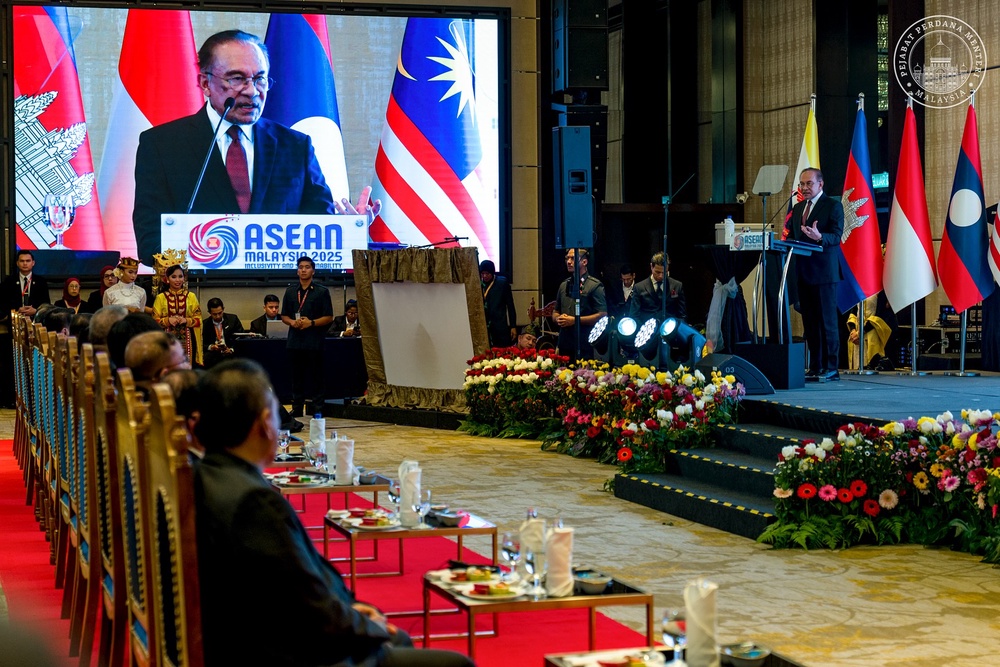
As the host of ASEAN 2025 (although you mention "2026", but all reports call this event to take place in October 2025), Malaysia wants to present a sturdy, safe, and elegant face. The second effect: as a regional leader, Malaysia wants to position itself as a regional mediator and stabilizer. (Reuters)
This ASEAN summit is coupled with the proposed "Kuala Lumpur Accord" of a ceasefire agreement between Thailand and Cambodia, which is planned to be witnessed by US President Donald Trump. (The Star) The presence of a global figure with a high security sensitivity demands maximum security so that no small incident can tarnish the reputation of Malaysian diplomacy.
When a city is "locked down" by high security, it is also a political signal that the state is in full control. In the geopolitical context, Southeast Asia is now an arena of great power competition: between the United States, China, and other countries. Malaysia, as the host, wants to ensure that this stage is not dominated by chaos, but by agendas and symbols of control.
However, the discourse of "lockdown" also holds a paradox: a locked city is a city that feels threatened, even though the narrative to be built is regional stability and trust.
The public is certainly not a passive spectator. Criticism of restrictions on civil space can arise: "Are we being sacrificed for the sake of elite diplomatic interests?" such questions can develop on social media or community forums. When public space is limited, the potential for citizen alienation becomes real.
If the "lockdown" discourse is later refuted by the authorities (such as by Malaysia's Foreign Minister), the public may perceive the leader as inconsistent, eroding trust. The Star previously reported an official statement that "there is no total lockdown, just extra security". (The Star) The mismatch between media narratives, government policies, and realities on the ground could be a source of new uproar.
When cities are deserted, vulnerable groups of the elderly, people with disabilities, and home traders are most likely to be left behind by policy agility. Those with access to private transportation or flexible work connections will have an easier time navigating obstacles than those who rely on public transportation or micro-activities.
During the "lockdown" period, low-income residents who depend on daily activities on the streets are particularly vulnerable to losing income. In a city that is used to buzzing with activity, a few days of silence can be an economic wound to the informal sector.
If not managed properly, the "lockdown" controversy could bounce off the ASEAN stage: criticism of restrictions on freedoms, social impacts, or technical flaws in its implementation can be used by outsiders to attack Indonesia's legitimacy as a host. Malaysia needs to keep its security message from being mixed with an authoritarian impression in the eyes of the region and globally.
History records that countries hosting major events often impose closures on the area. The closure of city centers for the sake of summits, Olympics, or international conferences is not a foreign phenomenon. However, what sets Kuala Lumpur apart this time is the complexity of a connected world: social media, human rights pressures, global spotlight and the expectation that democracy and transparency are part of today's diplomacy pact.
In a corner of a small village within a 25 km radius of the city center, a light nasi lemak vendor named Amina (pseudonym) is trying to adjust. He received word that his house was in the "work-from-home zone" area. "I just hope there will be no power outages," he said quietly, because bill payments are done online.
Meanwhile, university students living on the outskirts of Klang said that the lockdown plan to give online courses an "uneven break" is allowed, but physical tasks such as practicums or field projects will be a new challenge.
In the silence of a city that is about to be locked down, there are also little stories: a food delivery man who may have to recalculate the route, a painter who delays exterior work, a janitor who is still working within certain limits. Behind the media reports and official releases, tens of thousands of citizens will "watch" their city transform for several days without a loud sound, but through every footstep, every car brake, every streetlight that stays on in the darkness of the Malaysian night.
Kuala Lumpur, shortly before ASEAN 2025, will touch the end of a paradox: a dynamic city is given a forced pause, public space is reduced, so that global diplomacy can run smoothly. But it is in the pause that we are tested: how the state maintains the honor of civil space, how citizens can speak even when their voices are muffled, how the security agenda does not delay humanitarian responsibility.
"Lockdown" for the city is not only about roadblocks, patrols by the authorities, or vehicle bans but about respecting the lives of citizens behind the magnificent walls of the diplomatic building. When the city's doors are locked for a few days, one thing that matters most is: the city must remain breathing with a sense of security, a sense of justice, and a sense of being part of the big story.
And as world leaders leave Kuala Lumpur in grand convoys, the city will slowly reopen its doors with the hope that no citizen is left behind in the shock of major diplomacy.
Of course, anyone who passes through the city's small alleys in the morning after will see small traces of paintings on window glass, abandoned street paint, stalls that close early. But from the rubble can grow a new story: that even one city was once "locked", but the souls of its citizens remain free, waiting for more small steps to reopen it.
Hopefully, among the noise of diplomacy and the glitter of protocol, human warmth and empathy for daily life will not be dissolved. Hopefully the "locked-in" city can reopen itself not only to state guests, but to all who call it home.
AM World (tameer.work88@gmail.com) is a content creator under the Newswav Creator programme, where you get to express yourself, be a citizen journalist, and at the same time monetize your content & reach millions of users on Newswav. Log in to creator.newswav.com and become a Newswav Creator now!
The User Content (as defined on Newswav Terms of Use) above including the views expressed and media (pictures, videos, citations etc) were submitted & posted by the author. Newswav is solely an aggregation platform that hosts the User Content. If you have any questions about the content, copyright or other issues of the work, please contact creator@newswav.com.
