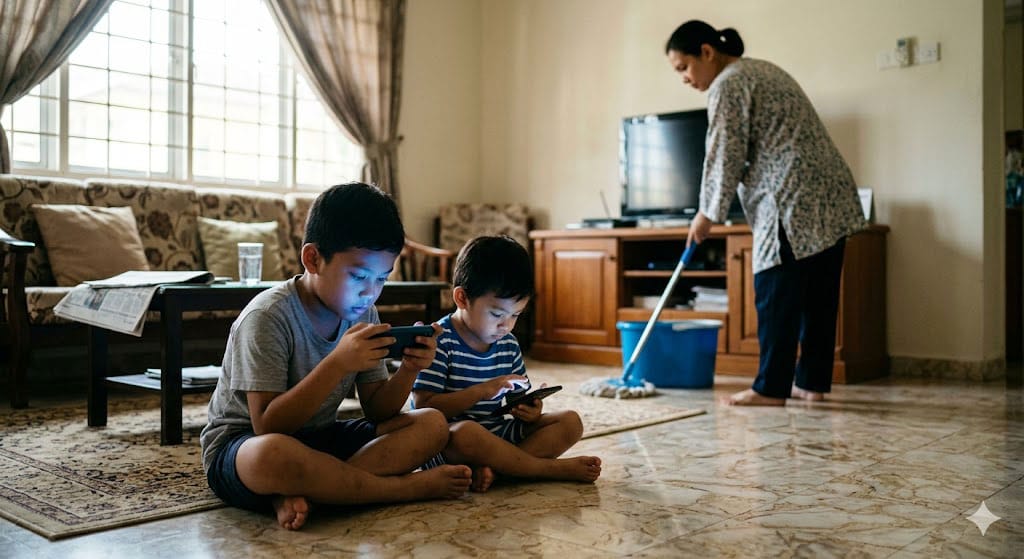
So it's finally happening. Malaysia is serious about booting anyone under 16 off social media, and if things go according to plan, it kicks in by mid-2026. Your kid's TikTok account? Gone. Their Instagram? Blocked. The group chat where they post memes all day? Not so fast.
On paper, this sounds like a win. Parents have been complaining about kids glued to their phones for years. The government has been watching Australia's playbook closely, and Communications Minister Fahmi Fadzil has been vocal about the need to protect kids from cyberbullying, financial scams, and worse. A UNICEF report found that one in four Malaysian children are exposed to sexual or disturbing content online. That number should make any parent deeply uncomfortable.
But here's the thing, good intentions and effective policy are two very different things. And the more you dig into the details, the more questions start piling up.
How Is This Even Going to Work?
The government's plan relies heavily on eKYC, basically using your MyKad, passport, or MyDigital ID to verify your age when you sign up for a platform. According to FMT, the restriction also covers under-16s who already have existing accounts, not just new sign-ups. So platforms will need to proactively identify and restrict these accounts too.
That sounds straightforward until you think about the logistics. Who verifies? The platform? MCMC? And what stops a 14-year-old from borrowing their older sibling's MyKad? Or creating an account using a parent's details? Teenagers are resourceful. Anyone who has ever watched a kid "fix" the parental controls on a TV in under 20 minutes knows this to be true.
Cybersecurity expert M Selvakumar from Universiti Sains Malaysia put it bluntly: the effectiveness of any system here will depend largely on parental involvement. So yes, the government can pass all the laws it wants, but the real enforcement still comes down to what happens at home during dinner.
The Pushback Is Real
Not everyone is cheering. Privacy advocates and human rights groups have come out swinging against the policy, arguing that a blanket ban is misguided and disproportionate, and that it risks undermining the freedom of expression and privacy of all users, not just children. Even the UN Committee on the Rights of the Child raised eyebrows in February 2026, expressing concern that Malaysia's approach limits children's access to age-appropriate online spaces rather than making those spaces safer.
There's also the question of what exactly counts as "social media" in 2026. Is it just TikTok and Instagram? What about YouTube? WhatsApp? Discord? The lines have blurred considerably and the policy needs to be crystal clear on scope or we'll end up with selective enforcement that mostly inconveniences the law-abiding while determined bad actors route around it effortlessly.
My Take on This, As a Dad
I have two boys, aged 7 and 5. So this topic hits close to home, literally.
My wife and I made a decision early on: no phones on weekdays, except Fridays. Weekends, they can use them. The rest of the time, the phones stay away. And to back that up, we use Google Family Link on both their devices to monitor screen time, block certain apps, and filter content. Yes, there is an app for this, and it works brilliantly.
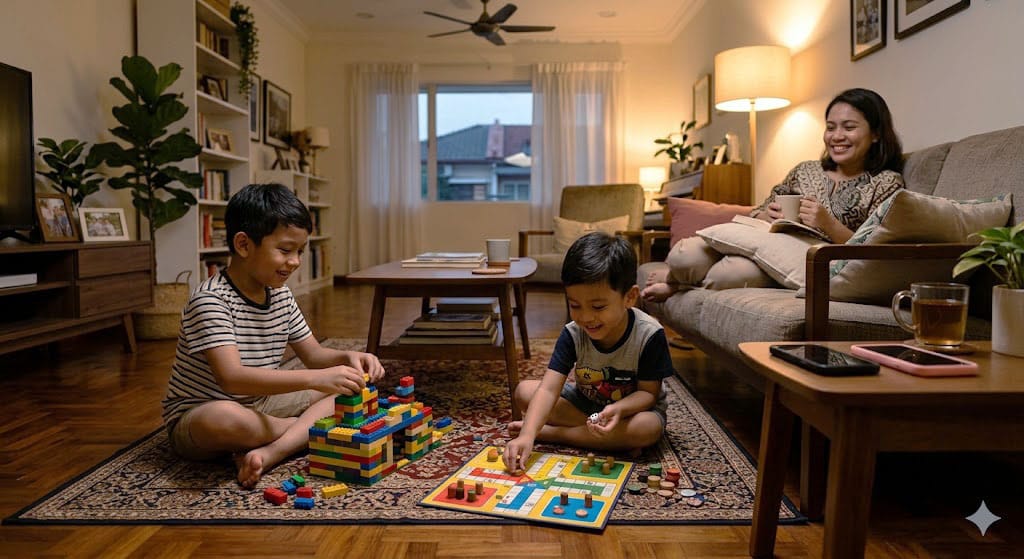
The result? On weekday evenings, my boys are playing board games, building with Lego, running around doing hide and seek, or just making up their own games with whatever they find around the house. They are not glued to a screen. More importantly, they do not throw a tantrum when we take the phone away. Because they were never taught to expect it in the first place.
Now, about their Instagram accounts. Yes, both of them have one. But before you raise an eyebrow, let me explain. I manage those accounts entirely. They do not have the password and they do not post anything themselves. I use those accounts to document their lives, from baby photos right up to now, the funny moments, the milestones, the everyday chaos. Think of it as a digital photo album that they will get to take over when they turn 18. By then, they will have years of their own childhood to scroll back through. I think that is a pretty good gift, honestly.
So here is my honest take. The government banning under-16s from social media is well-intentioned, but it is treating the symptom rather than the cause. The real issue is that too many parents hand their kids a phone as a babysitter and then wonder why the kid cannot function without one. I see it all the time. Kid is being noisy at a restaurant? Here, take the phone. Kid is bored in the car? Here, take the phone. That is not parenting, that is outsourcing.
Screen time discipline has to start young, and it has to come from the parents. The government cannot legislate good habits into your household. What works in my home works because my wife and I decided it was important enough to be consistent about it, even on the days when it would have been much easier to just hand over the phone and have five minutes of peace.
A national ban might slow things down at the edges. But if a kid grows up in a home where no one ever modelled healthy phone habits, a policy change is not going to fix that.
The mid-2026 deadline is coming up fast. Let's hope the execution is as serious as the intention. And in the meantime, maybe take a look at Family Link. Trust me on this one.
Kamarul Azwan (k.azwan@gmail.com) is a content creator under the Newswav Creator programme, where you get to express yourself, be a citizen journalist, and at the same time monetize your content & reach millions of users on Newswav. Log in to creator.newswav.com and become a Newswav Creator now!
The User Content (as defined on Newswav Terms of Use) above including the views expressed and media (pictures, videos, citations etc) were submitted & posted by the author. Newswav is solely an aggregation platform that hosts the User Content. If you have any questions about the content, copyright or other issues of the work, please contact creator@newswav.com.