MITI quietly dropped a policy change that will reshape Malaysia's EV market from July 1.
If you were planning to buy an affordable imported electric car anytime soon, you are going to want to sit down for this one, preferably in the driver's seat of the EV you were eyeing because after July 1, that seat gets a lot harder to afford.
Wait, RM200,000 Before What Exactly?
Here is where most people get confused, and honestly, it is designed to be confusing.
Starting July 1, 2026, all fully imported CBU electric vehicles must have a minimum CIF value of RM200,000 and a minimum power output of 180kW, which works out to about 245 horsepower. This comes after the four-year special tax exemption period for CBU EVs expired on December 31, 2025, following which MITI reverted to its standard import rules with these new thresholds added on top.
CIF stands for Cost, Insurance and Freight. It is the value of the car as it arrives at the Malaysian port, before any taxes or dealer margins are added. And here is where the math starts to sting.
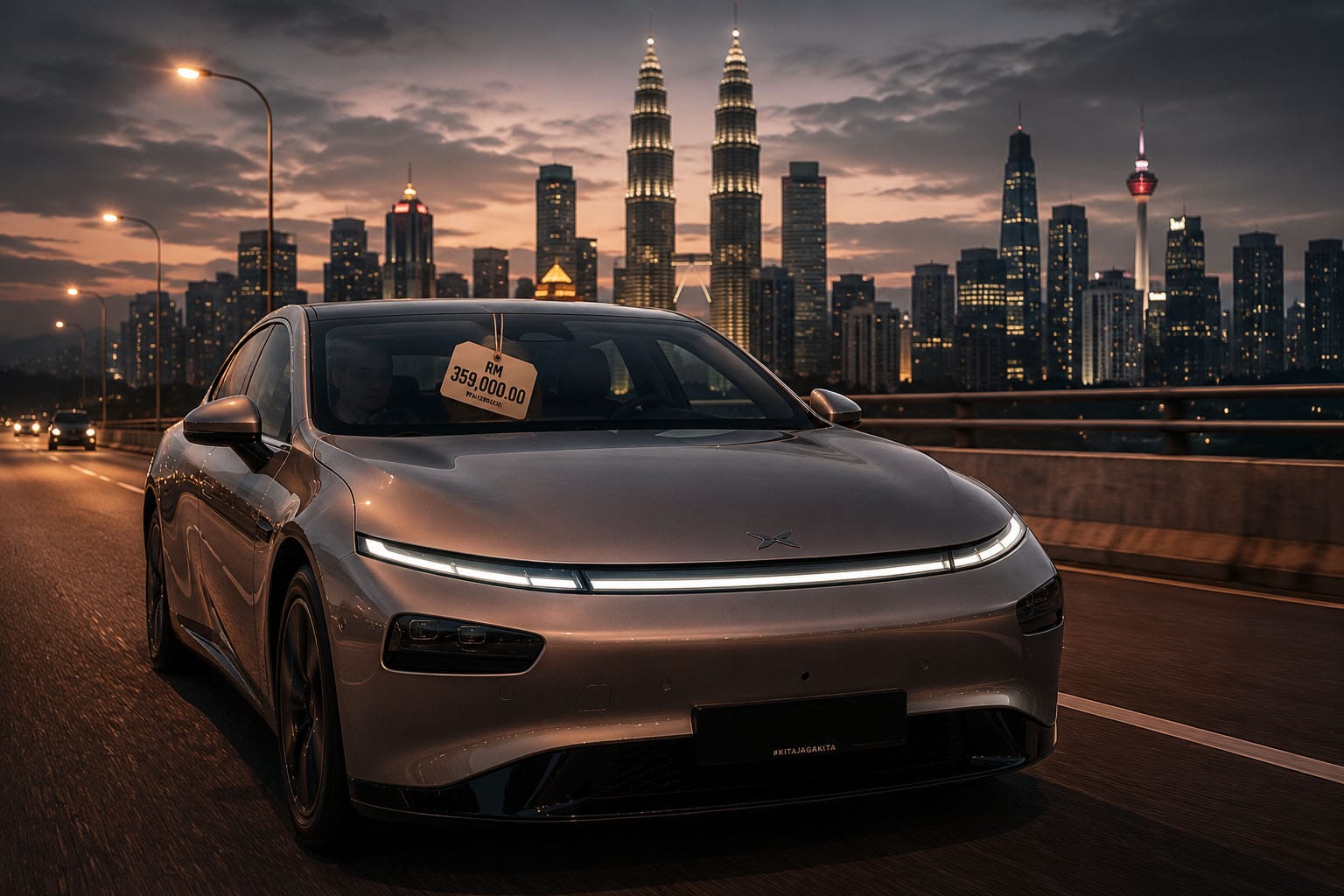
Take a Chinese EV with a CIF value of exactly RM200,000. By the time you slap on a 5% import duty, 10% excise duty, and 10% sales tax, the cost to the distributor is already around RM250,000. Add a rough 10% margin each for the distributor and the dealer, and the car sitting on the showroom floor will carry a price tag of at least RM300,000. If the car happens to come from Europe or South Korea instead of China, import duty jumps to 30%, pushing that floor price closer to RM360,000.
So when the headline says "RM200,000 minimum," what it actually means for you as a buyer is: nothing affordable is getting in anymore.
Which Cars Are We Actually Losing?
The casualties here are exactly the kind of EVs that were making the Malaysian market interesting. The BYD Seal and Sealion 7 are both currently priced below RM200,000, which means their CIF values are well under the new threshold. The BYD Atto 3, the ORA Good Cat, and several other popular Chinese EV models fall into the same category.
These were the cars that were actually moving the needle on EV adoption in Malaysia. According to SoyaCincau, five of the top ten best-selling EVs in 2025 were mainstream models in exactly this price bracket. The new rules effectively wipe them off the table for anyone thinking of importing fresh stock after July 1. Existing stock and cars in transit are exempted, so there may be a brief window to catch remaining units, but once those are gone, they are gone.
What survives? Premium EVs with high power outputs. Your BMWs, your Mercedes EQs, your higher-end Teslas. Basically the market segment that was never struggling to begin with.
So Who Benefits From This?
Let us be straightforward about it. The policy is framed as supporting long-term industry development and national economic interests, which is the kind of language that always deserves a closer look.
The brands that benefit most from removing affordable CBU competition are those with local assembly, or CKD, operations in Malaysia. That list includes Proton, whose e.MAS EV lineup is essentially rebadged Geely vehicles assembled locally. It also includes other brands with existing or planned CKD facilities in the country. When affordable fully-imported rivals disappear from showrooms, local assemblers have significantly less competition to worry about at the critical entry-to-mid price range.
This is not unusual government policy by global standards. Protecting local manufacturing through import barriers is something countries do all the time. But it does mean the people bearing the cost of that protection are Malaysian consumers, who now have fewer affordable choices in a segment that was finally starting to grow.
Is CKD the Silver Lining Here?
The argument from the government's side is that pushing brands toward CKD operations creates jobs, develops local supply chains, and builds long-term economic value. That argument is not wrong. A car assembled in Malaysia brings more economic activity to the country than one shipped in fully built.
The problem is timing and execution. EV adoption in Malaysia is still at an early stage. Removing affordable options right now, before CKD alternatives have fully ramped up and before consumer confidence in local assembly EVs has been properly established, risks cooling the momentum that the past four years of tax exemptions worked hard to build.
If the CKD pipeline delivers affordable, quality EVs to market quickly, this policy might age well. If it does not, Malaysia will have a EV market dominated by premium options that most people cannot afford, and a middle class that goes back to buying petrol cars because the numbers simply do not work.
My Take
I get the logic. Malaysia wants to be a manufacturing hub, not just a dumping ground for fully-built foreign cars. That is a legitimate long-term goal.
But the way this has been handled is a textbook example of how not to communicate policy to the public. The headline number of RM200,000 sounds almost reasonable until you understand it is a pre-tax, pre-margin CIF figure that translates to RM300,000 at the showroom. That gap between what MITI announced and what it actually means for the average Malaysian buyer is where trust gets eroded.
If you are in the market for an EV right now, my honest advice is to move fast on existing stock before July 1. After that, your options narrow significantly, and the wallet takes the hit.
Kamarul Azwan (k.azwan@gmail.com) is a content creator under the Newswav Creator programme, where you get to express yourself, be a citizen journalist, and at the same time monetize your content & reach millions of users on Newswav. Log in to creator.newswav.com and become a Newswav Creator now!
The User Content (as defined on Newswav Terms of Use) above including the views expressed and media (pictures, videos, citations etc) were submitted & posted by the author. Newswav is solely an aggregation platform that hosts the User Content. If you have any questions about the content, copyright or other issues of the work, please contact creator@newswav.com.