.jpeg)
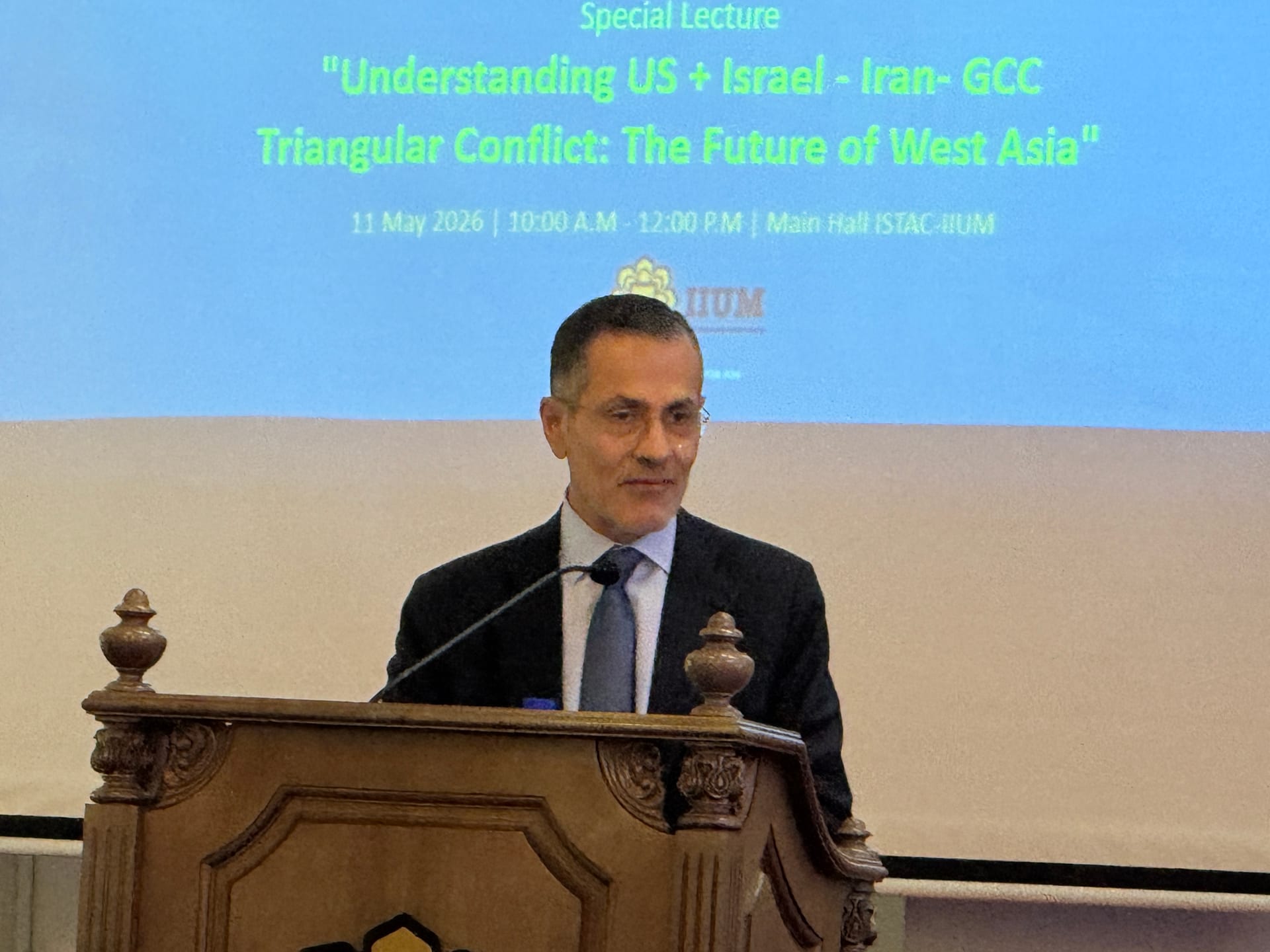
The crisis in West Asia is no longer read in Malaysia through Palestine alone, nor through Iran, Israel, or the Gulf Cooperation Council (GCC) states as separate files. In the first lecture of his academic visit to Malaysia, Professor Seyyed Vali Reza Nasr presented the region as one connected political landscape: Gaza reshaping the logic of normalisation, Iran testing the limits of deterrence, Israel entering a moment of excessive military confidence, the United States facing the consequences of its choices, and the GCC standing at the centre of energy and maritime stability.
The lecture was part of a series of intellectual engagements in Malaysia on the conflict involving the United States, Israel, Iran, and the GCC, and on the future of West Asia. Nasr’s authority came not only from his academic standing, but from the unusual intersection of his experience: an Iranian-American scholar who has worked inside American policy circles, led one of the world’s leading schools of international studies at Johns Hopkins University, and spent decades studying Iran, the Middle East, and the wider region. His lecture was therefore not a classroom summary of the conflict, but an attempt to understand it from the inside of overlapping American, Iranian, and scholarly perspectives.
Nasr approached the war on Iran through the regional order that Washington had been trying to shape before Gaza changed the atmosphere. That order rested on integrating Israel into the region through normalisation, economic corridors, and security arrangements, while containing Iran and reducing China’s influence by bringing India more deeply into West Asian trade and strategy. Gaza disrupted that vision. It returned the Palestinian question to the centre of regional politics and showed that any project built above an unresolved conflict may look convincing on maps, but fragile when tested by political reality.
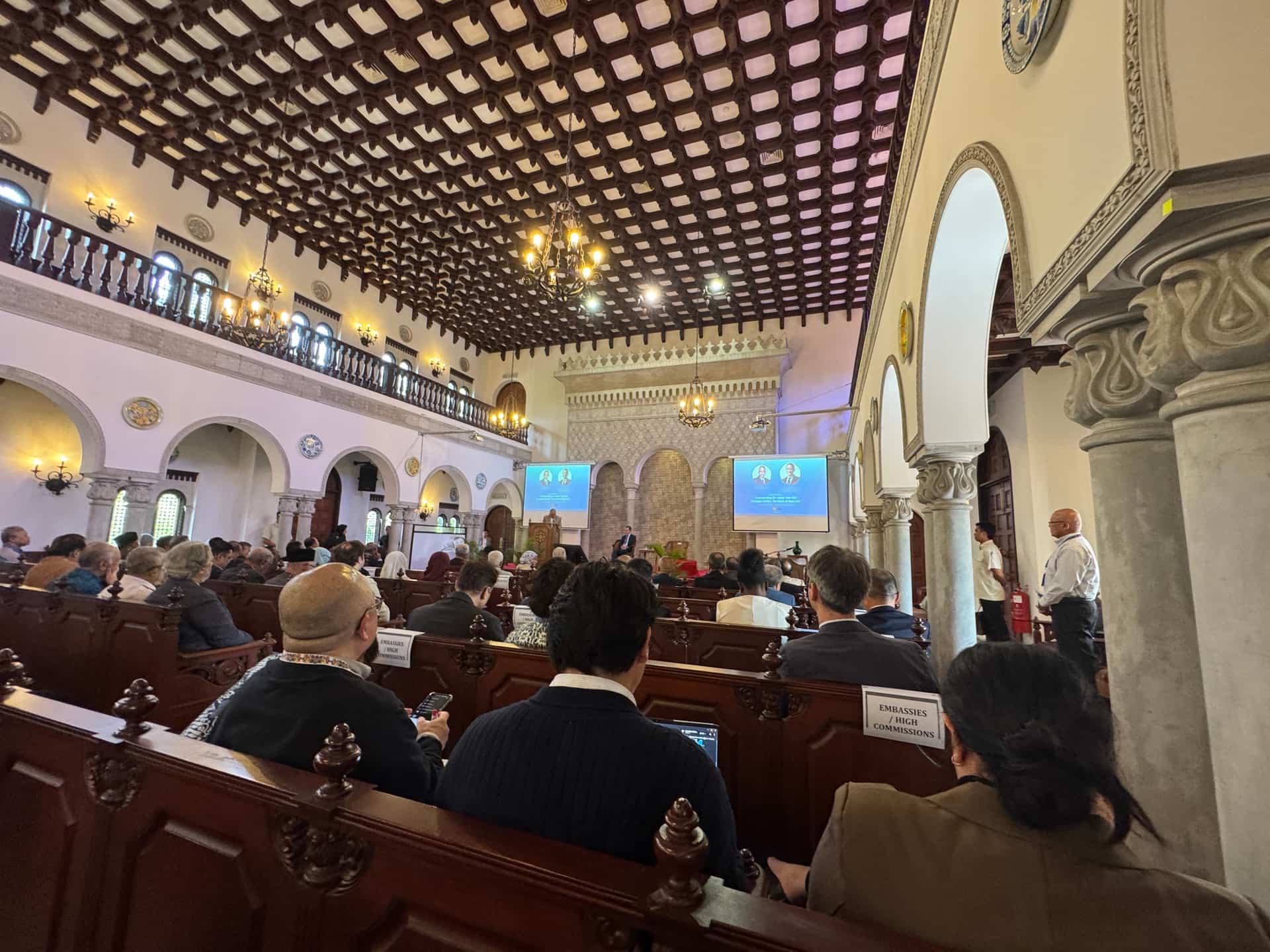
From that background, Nasr moved to the war on Iran. In his reading, Israel saw the post-Gaza moment as a strategic opening. Hamas had been weakened, Hezbollah’s effectiveness had declined, and Syria’s political landscape had changed. Israel believed Iran was vulnerable enough to absorb a major strike. Donald Trump appeared in this account not as a distant American president, but as a decisive actor. GCC leaders, according to Nasr’s reading, warned him that a wider war would carry a heavy cost, yet Benjamin Netanyahu’s calculation ultimately prevailed: that Iran’s moment of weakness should be used before it passed.
But the war did not end as Iran’s adversaries expected. Israeli and American strikes inflicted serious damage, killing senior Revolutionary Guard figures, targeting nuclear scientists, and hitting military and nuclear facilities. Yet they did not bring down the Iranian system, ignite a broad domestic uprising, or end Tehran’s ability to respond. Iran emerged damaged, but not broken. It reorganised its tools, relied on its geography, missiles, drones, and dispersed command structures, and showed that removing one centre of power was not enough to paralyse the whole system.
Israel, meanwhile, appeared in Nasr’s lecture as a power entering a phase of excessive confidence in its military superiority. His description of this mood as “Napoleonic” was striking: the belief of a state intoxicated by military success that it can impose its will on its surroundings. The danger of such a moment is that force stops being merely an instrument of deterrence and becomes a project for reshaping the region itself.
The GCC states entered the lecture not as the main subject, but as a crucial test of regional stability. A war on Iran does not remain confined to Tehran, Tel Aviv, and Washington once energy and maritime routes are drawn into the equation. The Strait of Hormuz and Bab el-Mandeb are not just lines on a map; they are arteries through which the cost of war travels to markets, shipping companies, insurers, and Asian economies. This is why the discussion matters in Kuala Lumpur. Malaysia does not follow West Asia only through emotion or principle, but also through energy security, trade, maritime routes, and its place in the Asian economy.
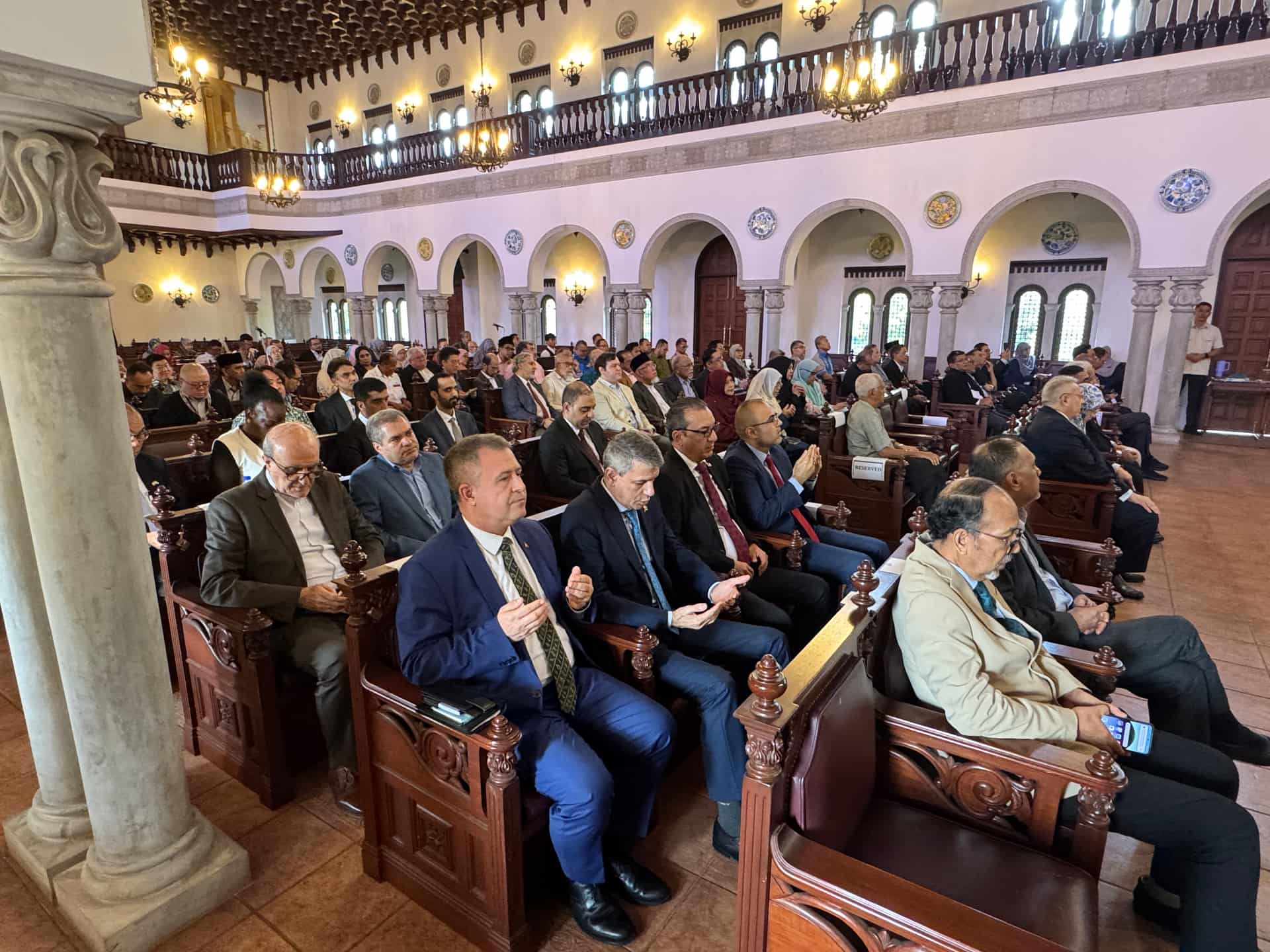
The value of Nasr’s lecture was that it refused easy explanations. Gaza raised the question of justice; Iran raised the question of deterrence; Israel raised the question of the limits of power; Trump raised the question of American decision-making between calculation and risk; and the GCC raised the question of stability in a region that cannot afford an open war. In that sense, Malaysia reads the Iran war from within, not because it is a direct party to it, but because it understands that West Asia’s turmoil does not remain in West Asia. It travels by sea, through energy prices, strategic anxiety, political memory, and the unresolved moral weight of Palestine.
Abdullah Bugis (kualalumpur.abdullah@gmail.com) is a content creator under the Newswav Creator programme, where you get to express yourself, be a citizen journalist, and at the same time monetize your content & reach millions of users on Newswav. Log in to creator.newswav.com and become a Newswav Creator now!
The User Content (as defined on Newswav Terms of Use) above including the views expressed and media (pictures, videos, citations etc) were submitted & posted by the author. Newswav is solely an aggregation platform that hosts the User Content. If you have any questions about the content, copyright or other issues of the work, please contact creator@newswav.com.


