
Since the outbreak of the COVID-19 pandemic, digital learning has become a major part of education in Malaysia. Schools today are increasingly equipped with smartboards, WiFi networks, tablets and artificial intelligence tools during lessons. The Ministry of Education has also introduced initiatives such as the Digital Educational Learning Initiative Malaysia (DELIMa) to support digital learning among students and teachers.
Reference: https://d2.delima.edu.my/
While these developments reflect progress in modernising education, technology alone does not guarantee better learning outcomes.
In many classrooms, lessons are still heavily centered on note-taking, memorisation and examination-oriented learning. The only difference is that notes are now displayed on screens instead of being written on whiteboards or paper. Simply adding gadgets into traditional classrooms will not improve the quality of education if teaching methods remain unchanged.

Digitalisation should not only focus on replacing textbooks with tablets or whiteboards with smartboards. It should encourage students to think critically, communicate confidently and apply knowledge creatively. Without meaningful classroom engagement, technology risks becoming more cosmetic than transformative.
As a student, I have experienced both the strengths and challenges of digital learning. Online resources have made information easier to access. Students can now watch educational videos, attend virtual discussions and explore learning materials beyond the classroom. Artificial intelligence tools can also help students organise notes and understand difficult concepts more efficiently.
However, digital learning has also created new concerns. Many students struggle to stay focused during lessons because phones and laptops can easily become distractions. The growing use of artificial intelligence tools has also changed how students complete assignments and revision tasks. While these tools can support learning, excessive dependence may gradually reduce students’ confidence in thinking and solving problems independently.
Digital access in Malaysia has improved significantly in recent years. Digital access in Malaysia has improved significantly in recent years. According to the Department of Statistics Malaysia, 96.8% of Malaysian households had internet access in 2023, reflecting the growing role of digital connectivity in education and daily life. Nevertheless, access to suitable devices and reliable internet connections remains an important consideration for some students, particularly those from less advantaged backgrounds.
Teacher readiness is equally important. Technology alone cannot transform classrooms without proper teaching strategies. Educators should be continuously supported with training that helps them integrate digital tools effectively while maintaining meaningful interaction with students. Good teaching remains the foundation of effective learning regardless of how advanced classroom technology becomes.
Malaysia should also move beyond viewing digitalisation as simply providing devices and internet access. Schools should place greater emphasis on project-based learning, research skills, communication, and problem-solving. Technology should empower students to create, analyse and innovate rather than simply consume information.
The conversation about digital classrooms should not focus solely on how many devices schools can provide. It should focus on how technology can help students think critically, communicate effectively and solve real-world problems. Tablets and smartboards are useful tools, but they are only part of the solution. The true measure of success is whether students leave the classroom better prepared for the future than when they entered it.
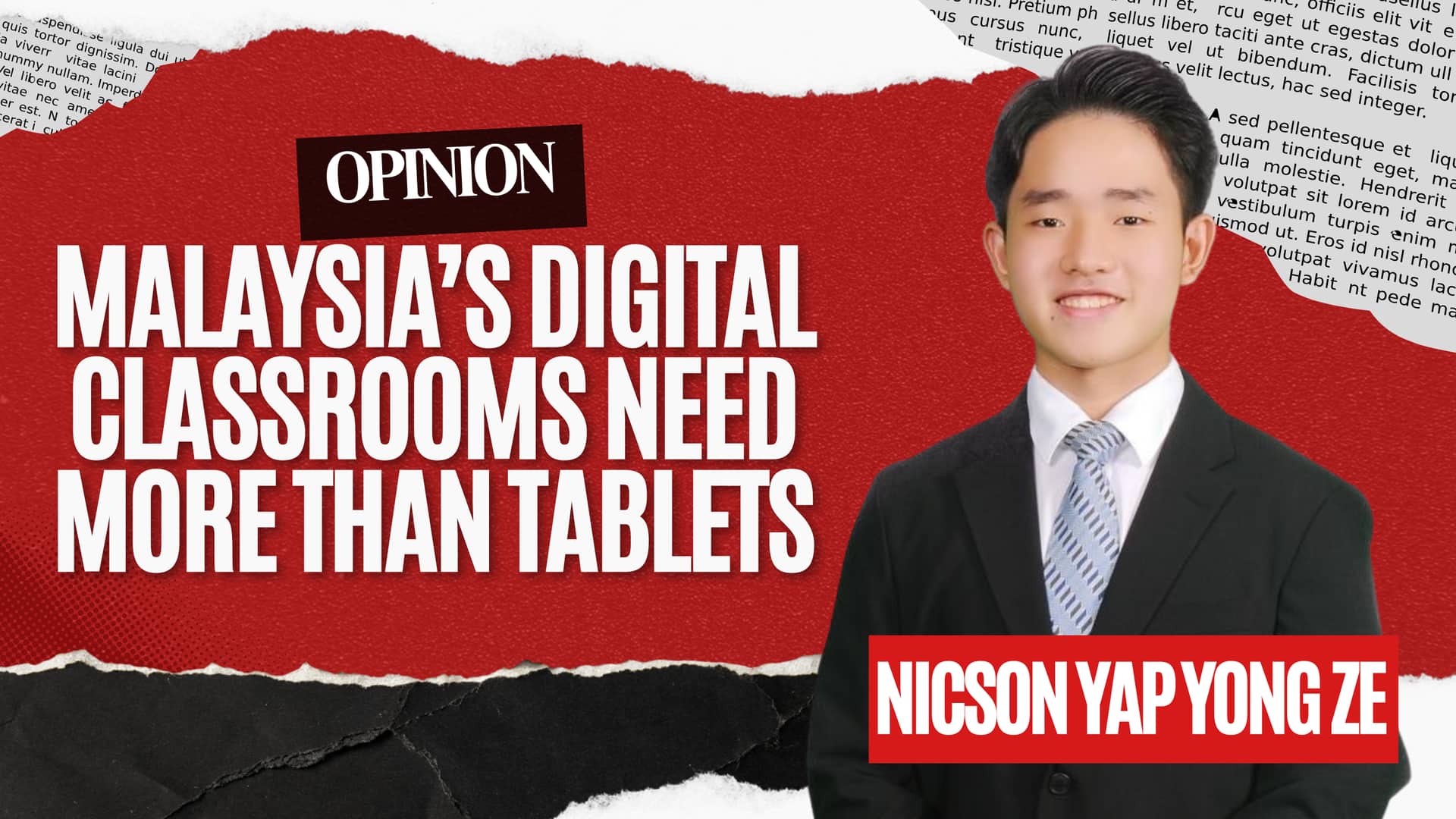
Nicson Yap Yong Ze (nicsonyap3101@gmail.com) is a content creator under the Newswav Creator programme, where you get to express yourself, be a citizen journalist, and at the same time monetize your content & reach millions of users on Newswav. Log in to creator.newswav.com and become a Newswav Creator now!
The User Content (as defined on Newswav Terms of Use) above including the views expressed and media (pictures, videos, citations etc) were submitted & posted by the author. Newswav is solely an aggregation platform that hosts the User Content. If you have any questions about the content, copyright or other issues of the work, please contact creator@newswav.com.