By M.Krishnamoorthy- Author, Journalist, Media Coach, and Adjunct Professor
#EiTahuTak?
Hey! Did you know? If your mind is programmed to the mantra: “In every way, every day, I have a positive mindset towards the unity of all the races in Malaysia, then in every way, you will see and view Malaysians as a united community.”
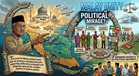
Here is a story of two countries. Dr. Mahathir Mohamad said we are disunited, and while another country's program aims to instill a daily mindset in its citizens to be united.
According to him, the Malays once defeated the British because they were united under UMNO.
“The land of the Malay belongs to other people. Whose fault? The Malays are at fault. This is the last struggle of the Malays,” he said in a bold statement posted on X.
When is Malaysia going to stop the blame game?
It's time for Malaysia to draft a Malaysian unity pledge to strengthen and unite the various races.
Meanwhile, in Singapore, Unity is being achieved through a UNITY pledge.
Those words were written by Sinnathamby Rajaratnam, a man who was born in Ceylon, raised in Malaya (Seremban), spent 12 years in London, and married a Hungarian woman.
School children in Singapore stand with their right fists over their hearts and recite this UNITY pledge every morning.
Singapore’s pledge was formulated in 1966 after Singapore separated from Malaysia; it aimed to instill a sense of national consciousness that the country was now independent of Malaysia.
It was primarily drafted by Rajaratnam, then Minister for Foreign Affairs.
Singapore wanted schoolchildren to have a daily flag-raising ceremony with a pledge of allegiance.
Rajaratnam recognized the need for something to bring Singaporeans of different races together.
Its purpose was to forge a common identity amid communal tensions and racial riots in the 1950s and 1960s.
The pledge was originally written in English; it is officially translated into Malay, Chinese, and Tamil.
Rajaratnam was born on February 25, 1915, in Jaffna, Sri Lanka.
Only because his father wanted him born there for auspicious reasons, because his elder brother died prematurely, and the family believed a birth in the ancestral homeland (Sri Lanka) would protect the second child.
Six months later, the baby (Rajaratnam) was carried back to Malaya and brought up in Seremban.
His father worked as a supervisor on a rubber estate owned by Europeans.
Rajaratnam was born in Sri Lanka, raised in Malaya (Seremban), spent 12 years in London, married a Hungarian woman, and didn't call Singapore home until he was in his thirties.
Malaysia is where Rajaratnam grew up. Not in Sri Lanka. Not in Singapore. Instead, he grew up in Seremban, surrounded by rubber trees, Tamil relatives, Malay neighbors, and Chinese tin miners.
He attended St. Paul's Institution in Seremban, then Victoria Institution in Kuala Lumpur, and later Raffles Institution in Singapore.
In 1937, his father sent him to King's College London to study law. Raja arrived in London at 22.
He was supposed to study law. Instead, he found politics more interesting. He never finished his law degree.
He became a journalist. Freelanced for the Daily Express and several left-leaning publications. He wrote short stories that were reviewed positively by The Spectator. He caught the attention of 𝗚𝗲𝗼𝗿𝗴𝗲 𝗢𝗿𝘄𝗲𝗹𝗹, who was then working in the Indian Section of the BBC's Eastern Service. Orwell recruited Raja to write scripts for the network.
A Ceylonese boy from a rubber estate in Seremban wrote for the BBC. On returning to Singapore, at The Straits Times in Singapore, he wrote a column called "𝗜 𝗪𝗿𝗶𝘁𝗲 𝗔𝘀 𝗜 𝗣𝗹𝗲𝗮𝘀𝗲."
He openly attacked the British colonial government. He wrote that Singapore deserved self-governance. He was called in for questioning by 𝗚𝗲𝗿𝗮𝗹𝗱 𝗧𝗲𝗺𝗽𝗹𝗲𝗿, the British High Commissioner, who tried to intimidate him by opening a desk drawer and showing him a gun. Raja kept writing.
Raja met Lee Kuan Yew through Goh Keng Swee. Lee was a young lawyer representing postal workers in a pay dispute. Lee asked Raja to use his column to support the postal workers, and Raja did by publishing daily articles across the 17-day strike.
In 1954, Raja co-founded the 𝗣𝗲𝗼𝗽𝗹𝗲'𝘀 𝗔𝗰𝘁𝗶𝗼𝗻 𝗣𝗮𝗿𝘁𝘆 with Lee Kuan Yew, Goh Keng Swee, Toh Chin Chye, and others.
When Singapore separated from Malaysia on August 9, 1965, Rajaratnam was appointed 𝗦𝗶𝗻𝗴𝗮𝗽𝗼𝗿𝗲'𝘀 𝗳𝗶𝗿𝘀𝘁 𝗠𝗶𝗻𝗶𝘀𝘁𝗲𝗿 𝗳𝗼𝗿 𝗙𝗼𝗿𝗲𝗶𝗴𝗻 𝗔𝗳𝗳𝗮𝗶𝗿𝘀.
He served as Second Deputy Prime Minister from 1980 to 1985, then as Senior Minister until 1988.
In 1994, Raja was diagnosed with dementia. By 2001, he could no longer speak or move.
On February 22, 2006, three days before his 91st birthday, S. Rajaratnam died of heart failure at his home on Chancery Lane.
Ends
M. Krishnamoorthy (krishnamuthaly@gmail.com) is a content creator under the Newswav Creator programme, where you get to express yourself, be a citizen journalist, and at the same time monetize your content & reach millions of users on Newswav. Log in to creator.newswav.com and become a Newswav Creator now!
M. Krishnamoorthy (krishnamuthaly@gmail.com) is a content creator under the Newswav Creator programme, where you get to express yourself, be a citizen journalist, and at the same time monetize your content & reach millions of users on Newswav. Log in to creator.newswav.com and become a Newswav Creator now!
The User Content (as defined on Newswav Terms of Use) above including the views expressed and media (pictures, videos, citations etc) were submitted & posted by the author. Newswav is solely an aggregation platform that hosts the User Content. If you have any questions about the content, copyright or other issues of the work, please contact creator@newswav.com.