.png)
I knew this was coming.
Perhaps that is why today's announcement did not come as a complete surprise. There had been enough speculation, enough discussion and enough political noise surrounding Najib Razak's bid for clemency and house arrest.
But knowing something is coming does not make it aen it finally arrives.
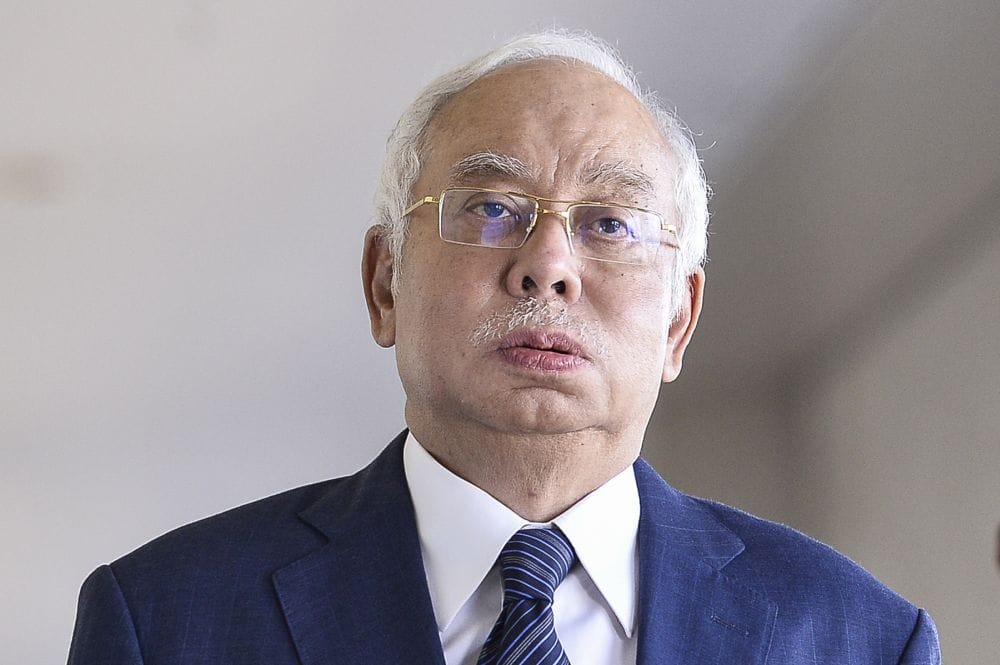
Former prime minister Najib Razak has now been granted a conditional pardon allowing him to serve the remainder of his current prison sentence under house arrest until August 23, 2028, subject to a RM50 million fine and other conditions.
This is, of course, a decision made through the constitutional pardons process. But constitutionality does not automatically settle the question of fairness.
That bothers me - because somewhere else in Malaysia, just a few weeks ago, we were reminded of a very different reality.
An Orang Asli man, Jambi Anak Chang Taa Nam, spent nine years in remand while his murder trial was still at the prosecution stage. He was eventually released by the Johor Bahru High Court after his lawyer challenged the evidence against him.
Nine years.
Think about that.
Nine years of a person's life spent in custody while the prosecution was still presenting its case.
He had not been convicted of murder. Yet he had already spent almost a decade behind bars.
And then we have Najib.
A former prime minister. A man who was convicted by the courts in the SRC International case and is serving a reduced sentence, while separately having been convicted in the 1MDB case of four counts of abuse of power and 21 counts of money laundering involving billions of ringgit. He is appealing that latter conviction.
Now he will be allowed to serve the remainder of his current sentence at home.
I understand that a pardon is a constitutional mechanism. I understand that the law provides for it. I understand, too, that house arrest is still a form of serving a sentence.
But would the same consideration be available to an ordinary prisoner?
There are people in our prisons who have families waiting for them. People who are old. People who are sick. People who would dearly love to spend their remaining years at home rather than behind prison walls.
How many of them have access to this kind of consideration?
How many have the lawyers, connections, public profile or political history necessary for their cases to receive this level of attention?
That is where this decision leaves an uncomfortable taste - because Najib did not become an ordinary prisoner simply because he was sent to Kajang. He was a former prime minister.
And that fact matters enormously in understanding why this case has received the attention it has.
But if his former office is the reason he deserves special consideration, then I cannot help asking, “What kind of prime minister was he?”
Let us not forget that this is not a man serving a sentence because of some minor technical offence. In the SRC International case, the Federal Court upheld his conviction and sentence for offences including abuse of power, criminal breach of trust and money laundering. His separate 1MDB conviction came later, when the High Court found him guilty of abuse-of-power charges and money-laundering charges.
That history matters.
Not because a former prime minister should be denied his legal rights, but because the law is supposed to mean something precisely when the person standing before it is powerful.
We often hear that nobody is above the law, but people judge institutions not by what they say about equality, but by how equality looks in practice.
And this is where Jambi's story sits painfully beside Najib's.
One man spent nine years in remand while his trial had barely progressed.
Another, a former prime minister convicted in a massive corruption case, will be allowed to serve the remainder of his sentence from home.
The two cases are obviously not legally identical. They should not be treated as though they are. The circumstances, offences, stages of proceedings and legal mechanisms involved are different.
But they raise the same question about something bigger than either case - does justice in Malaysia feel equally accessible to everyone?
That is the question I am struggling with today.
After all the times our institutions have disappointed us, this one leaves an especially bitter taste.
Fa Abdul (fa.abdul.penang@gmail.com) is a content creator under the Newswav Creator programme, where you get to express yourself, be a citizen journalist, and at the same time monetize your content & reach millions of users on Newswav. Log in to creator.newswav.com and become a Newswav Creator now!
The User Content (as defined on Newswav Terms of Use) above including the views expressed and media (pictures, videos, citations etc) were submitted & posted by the author. Newswav is solely an aggregation platform that hosts the User Content. If you have any questions about the content, copyright or other issues of the work, please contact creator@newswav.com.