
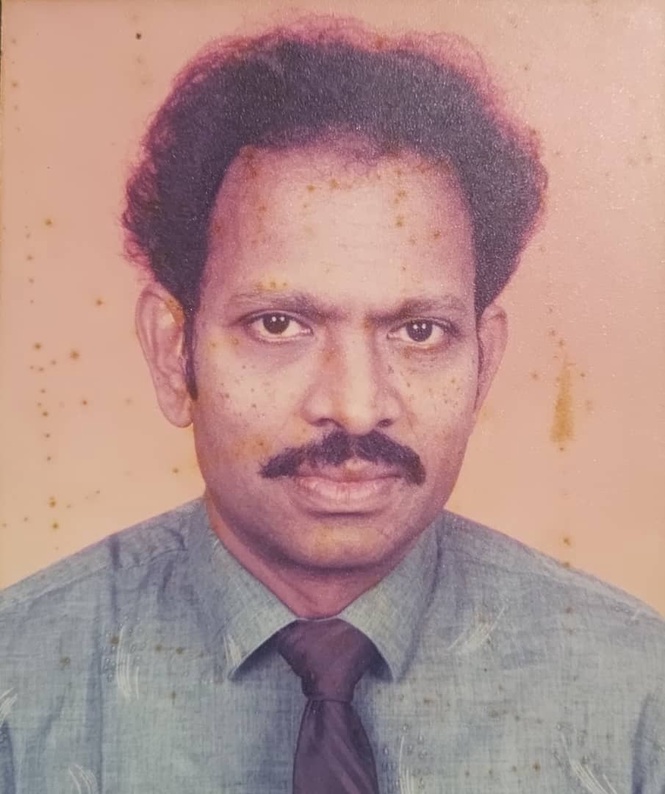
M.Krishnamoorthy
A media coach, adjunct professor and author
The National Economic Policy (NEP) failed to eradicate poverty, its primary objective.
“Instead, NEP made the rich Malays richer, the poor poorer,” said Dr G. Raju, a political commentator and former associate professor at the University of Technology Malaysia.
The NEP was initiated after the 13th. May 1969 riots to achieve National unity, racial harmony and integrity through socio-economic restructuring of the society and eradicating poverty.
Raju told Newswav.com in an interview that the NEP focused on ethnicity and undermined the unity amongst a diversity of races.
“Thus, the NEP failed because it did not address the root causes of economic inequality.
“The NEP was put in place to rectify the economic imbalances between the Bumiputras and the ethnic Chinese population to achieve National unity and harmonious living.”
However, “corruption, cronyism and abuse of power by people walking in the corridor of power, who used race and religious cards to sustain their political power. This may be the cause for the failure of the NEP to achieve its objective within the time frame of the end of 1990.
“The NEP had achieved success based on a slight decline in poverty levels, improved corporate equity ownership by Bumiputras and their involvement in technologically modern occupations in various fields and gone up the ladder in increased numbers in public sector employment,” said Raju, a technocrat, former part-time university lecturer and researcher.
The continuation of NEP has been premised on the Shared Prosperity Vision 2030, which recycles the 30% Bumiputra equity target and triggers the aspirations of the Bumiputra SMEs (Small and Midsize Enterprises) to raise their contribution to the GDP
Commenting on unity, Raju said: “Unity within a community is strength, solidarity and achievements of various challenges a community faces in its life path, and the community concerned must address the issue and find a solution to it.”
Regarding the Malaysian Indian community, Raju said they lacked the unity and solidarity to fight against injustice.
“This was because of the outdated caste system, social standings and selfishness, all of which adversely affected the Indian community and exposed them to several issues.
“These include economic disparities, limited access to quality education and employment opportunities. The major challenges the Malaysian Indian society faces revolve around poverty, illiteracy, corruption, economic inequality, unemployment and discrimination,” he added.
Freelance Writer M. Krishnamoorthy (www.imkrishna.net) is a media coach, adjunct professor and undercover journalist. He has freelanced with Bernama, NST, The Star, and Malaysiakini. He also freelances as a fixer/coordinator for CNN, BBC, German and Australian Television networks and the New York Times. As an undercover journalist, he has highlighted society's concerns.
M. Krishnamoorthy is a content creator under the Newswav Creator programme, where you get to express yourself, be a citizen journalist, and at the same time monetize your content & reach millions of users on Newswav. Log in to creator.newswav.com and become a Newswav Creator now!
The User Content (as defined on Newswav Terms of Use) above including the views expressed and media (pictures, videos, citations etc) were submitted & posted by the author. Newswav is solely an aggregation platform that hosts the User Content. If you have any questions about the content, copyright or other issues of the work, please contact Newswav.


