.jpeg)

The dispute between Malaysia and Norway over naval missiles is not just another stalled defence deal. It is a small but telling test of what trust means in an international system that speaks loudly about rules, yet often bends when political interests get in the way. For Kuala Lumpur, Oslo’s decision to cancel the export licence for the Naval Strike Missile system, intended for Malaysia’s littoral combat ships, has become more than a technical setback. It raises a broader question: how can a middle power build its security when signed contracts can still be suspended by a later political decision?
At the recent Shangri-La Dialogue in Singapore, Malaysian Defence Minister Mohamed Khaled Nordin chose to take the issue beyond a private bilateral complaint and place it before a regional and international security audience. He said Norway’s cancellation of the export licence for the NSM missiles intended for the Royal Malaysian Navy raised serious questions about the reliability of international agreements and strategic partnerships. The case dates back to a 2018 deal between Malaysia and Norway’s Kongsberg Defence and Aerospace as part of the littoral combat ship modernisation programme, before the delivery process was disrupted in March 2026 due to restrictions linked to sensitive defence technology licences.
The issue is particularly sensitive because it touches an already controversial Malaysian defence programme. The littoral combat ship project has long been a subject of domestic debate over cost, delays, oversight and the efficiency of defence procurement. Against that backdrop, the defence minister’s remarks were not merely a technical defence of one contractual clause. They were also a political attempt to shift the focus from the question of whether Kuala Lumpur had failed in managing the programme to whether the exporting side had kept its word. That shift matters for Prime Minister Anwar Ibrahim’s government, which still has to defend public spending on defence before a public that watches major procurement projects with suspicion.
Yet the wider significance goes beyond Malaysia alone. Small and middle powers in Southeast Asia face two competing pressures. They need to modernise their maritime defences in an increasingly crowded and contested region, but they also need to avoid becoming too dependent on the political mood of major powers or their allies. In that sense, a defence contract is never just a purchase order. It is a long-term relationship of trust. Once that trust is broken, the damage is not limited to delayed delivery. It affects the partner’s image, the credibility of future contracts and the calculations behind maritime security.
In his speech, Mohamed Khaled did not only criticise Norway as one country. He pointed to a wider double standard in the international system. Developing countries are often judged harshly when they fail to honour agreements, while similar decisions by stronger countries, or countries closer to centres of influence, are treated with a softer silence. That language resonates in Malaysia, which has tried for years to present itself as an independent voice from the Global South: supportive of international law, but unwilling to accept a system where rules become a stick for the weak and a flexible tool for the powerful.
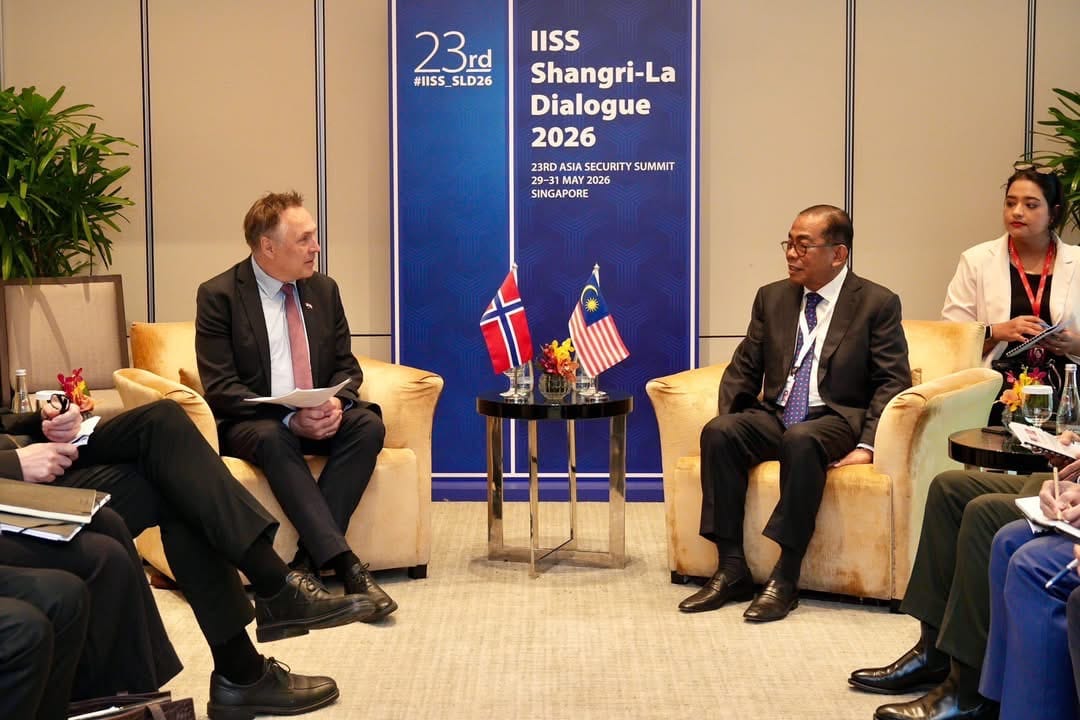
Still, Kuala Lumpur appears to be pursuing a calibrated escalation, not a rupture. Mohamed Khaled’s bilateral meeting with Norwegian Defence Minister Tore Sandvik on the sidelines of the forum, during which the Norwegian side apologised but maintained the cancellation, suggests that the diplomatic door remains open. The likely path ahead is continued Malaysian pressure for a practical remedy, whether through compensation, alternative arrangements or tighter safeguards in future defence contracts, without turning the dispute into a full-blown crisis with an important European partner.
The episode also speaks to ASEAN’s wider strategic anxiety. Southeast Asian states do not want to be forced into hard camps as global rivalries sharpen. They want reliable technology, credible partners and room to make sovereign choices. When a defence supplier withdraws at a critical stage, the lesson for the region is clear: procurement is no longer only about price, capability or delivery schedules. It is also about political risk.
In the end, the Malaysia-Norway missile dispute shows that security in an unsettled world is not built by weapons alone, but by the trust that stands behind them. By raising the issue in Singapore, not only in Kuala Lumpur, Malaysia is saying that the problem is not simply a missile that did not arrive. It is a promise that has been shaken. And when promises shake in international relations, every country is forced to ask a harder question: who is merely willing to sell you the equipment, and who will still stand by the agreement when the contract becomes a test of politics, not just trade?
Abdullah Bugis (kualalumpur.abdullah@gmail.com) is a content creator under the Newswav Creator programme, where you get to express yourself, be a citizen journalist, and at the same time monetize your content & reach millions of users on Newswav. Log in to creator.newswav.com and become a Newswav Creator now!
The User Content (as defined on Newswav Terms of Use) above including the views expressed and media (pictures, videos, citations etc) were submitted & posted by the author. Newswav is solely an aggregation platform that hosts the User Content. If you have any questions about the content, copyright or other issues of the work, please contact creator@newswav.com.
