
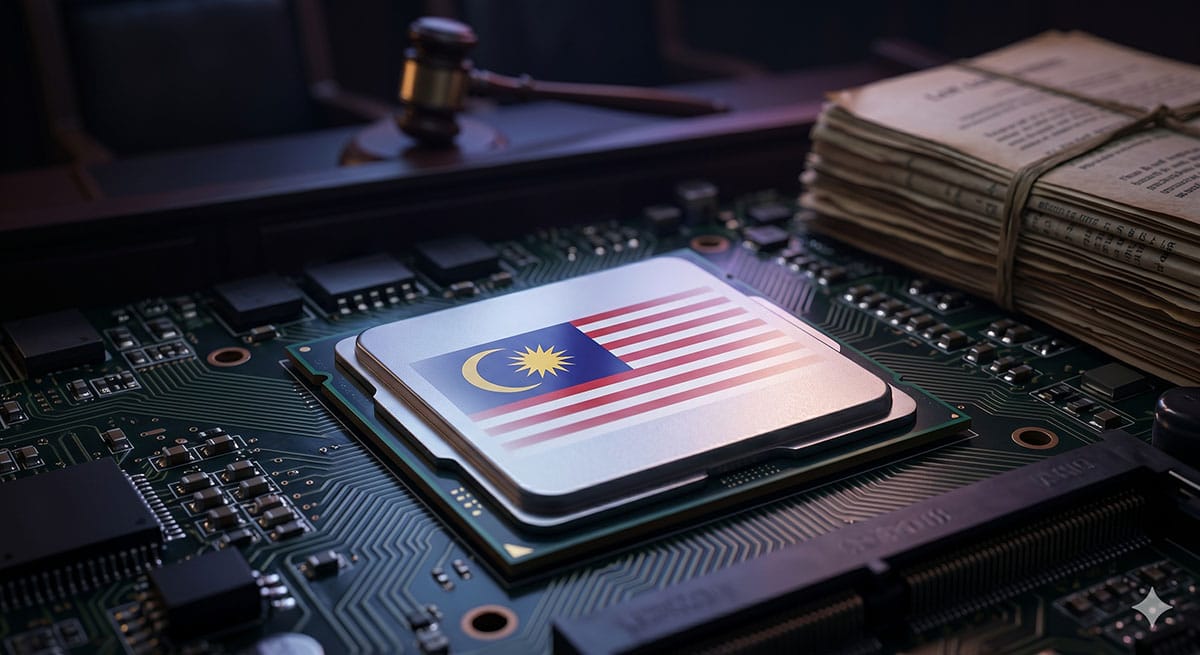
Malaysia dropped RM1.1 billion on chip blueprints and now the MACC wants to know exactly how that deal got signed.
By the time you read this, the MACC investigation into Malaysia's RM1.1 billion deal with Arm Holdings would have moved further along. But let's be clear upfront: this article isn't about who gets charged. It's about the bigger question sitting quietly in the background. Was the deal itself a smart move for Malaysia in the first place?
First, What Actually Happened
Back in March 2025, Prime Minister Anwar Ibrahim signed what was described as a landmark partnership with Arm Holdings, the UK-based semiconductor giant whose chip designs power virtually every smartphone on the planet. The deal was worth approximately RM1.1 billion, to be paid out over 10 years, and it gave Malaysia access to 32 Arm chip design licences: 25 basic and seven advanced. The stated goal was to shift Malaysia's semiconductor industry from the lower end of the value chain (assembly, testing, packaging) into actual chip design and intellectual property development.
Then, in early March 2026, the MACC opened an investigation into alleged abuse of power, cheating, and criminal breach of trust linked to how the deal was signed. Former Economy Minister Rafizi Ramli was summoned for questioning. So were over 20 other witnesses, including ministry officials and political analyst James Chai. As of early May 2026, MACC chief Azam Baki has confirmed that two individuals will be recommended for charges, though he declined to name them.
Rafizi, for his part, has consistently denied wrongdoing and insists the deal went through proper Cabinet scrutiny. The MACC, meanwhile, has yet to publicly clarify exactly what part of the process violated the law. The attorney general still has the final say on whether charges actually proceed.
So that is where things stand politically. Now let's talk tech.
The Real Question: Was the Deal Worth It?
Here is where I want to push back a little on the noise.
Whether or not individuals acted improperly in the process of signing this deal, the strategic logic behind it is actually sound. And it matters that we separate those two conversations.
Malaysia has long been one of the world's major players in the semiconductor industry. We contribute roughly 13% of global chip testing and packaging, and our semiconductor sector contributes around 40% of total national exports. Penang is not nicknamed "Silicon Valley of the East" for nothing. But here is the uncomfortable truth: Malaysia has been stuck at the backend for decades. We test chips and pack them in boxes. We do not design them.
That is a problem, because the real money and the real strategic power in the semiconductor world sits upstream. Chip design and intellectual property are where companies like Arm, NVIDIA, and Qualcomm extract their massive margins. Countries like Taiwan and South Korea understood this long ago. Malaysia, with its National Semiconductor Strategy launched in 2024, is finally trying to climb that ladder.
The Arm deal was the most concrete step taken in that direction. Access to 32 Arm licences means local firms can develop their own chip designs using Arm's architecture, the same architecture that runs your iPhone, your Android device, and a growing number of AI processors. The partnership also included a commitment to train 10,000 Malaysian semiconductor professionals in chip design. That is not nothing.
So Why Does Any of This Matter If the Deal Is Under Investigation?
Because the investigation, regardless of its outcome, casts a shadow over something Malaysia genuinely needs to get right.
The global semiconductor industry is expected to hit US$1 trillion in value by 2030, and it is being reshaped by the US-China tech rivalry. Countries and companies are scrambling to diversify their chip supply chains away from Taiwan. That creates a real window of opportunity for Malaysia, but only if we can convince foreign investors and partners that our governance is solid and our mega-deals are clean.
If the investigation results in convictions, it sends a damaging signal to the international tech community. If it drags on without resolution, it creates uncertainty that slows execution of the deal itself. Either way, Malaysia loses precious time.
As the Lowy Institute noted, ambition alone is not enough to climb the semiconductor value chain. Structural issues need to be resolved, and that absolutely includes how government procurement and strategic deals are handled.
My Take
I will say it plainly. The Arm deal, on paper, is the right kind of bet for Malaysia. We cannot stay in the packaging lane forever. The question now is whether the investigation will derail the deal's implementation, and whether those responsible for any wrongdoing in the process will actually be held accountable in a credible way.
Because the worst outcome here is not the charges. The worst outcome is that Malaysia spends the next few years arguing in court while our window to build a real chip design ecosystem slowly closes.
This analogy works here. You can have the best teh tarik recipe in the country. But if the kitchen has hygiene issues, nobody is coming back, no matter how good the drink is.
Get the kitchen right, Malaysia.
Kamarul Azwan (k.azwan@gmail.com) is a content creator under the Newswav Creator programme, where you get to express yourself, be a citizen journalist, and at the same time monetize your content & reach millions of users on Newswav. Log in to creator.newswav.com and become a Newswav Creator now!
The User Content (as defined on Newswav Terms of Use) above including the views expressed and media (pictures, videos, citations etc) were submitted & posted by the author. Newswav is solely an aggregation platform that hosts the User Content. If you have any questions about the content, copyright or other issues of the work, please contact creator@newswav.com.