
By Annan Vathegi
Fourteen years ago, in Ipoh, students from Sekolah Menengah Kebangsaan Tarcisian Convent voiced their frustration over SPM Moral results that did not reflect their trial exam performance. It made headlines then a moment of confusion, anger, and unanswered questions. Today, more than a decade later, the same story seems to be repeating itself. Different students, same subject, same frustration.
It begins to feel less like an isolated incident and more like a pattern that never quite gets resolved.
And each time it resurfaces, voices emerge some quick to speak, some eager to be seen as champions of the community. But this is not about who speaks the loudest. It is about whether anything actually changes.
Because for many Malaysian Indians, this is not just one issue. It is part of a longer, heavier pattern from temple disputes, to unfulfilled promises, to education struggles that quietly shape the future of an entire generation.
The names change. The headlines change. But the outcome often feels the same.
Every year, when SPM results are released, Malaysia goes through a familiar ritual. Families gather, WhatsApp groups light up, and students hold their breath as they open envelopes that are supposed to reflect years of effort. For many, it is a moment of pride. For others, it becomes a moment of confusion.
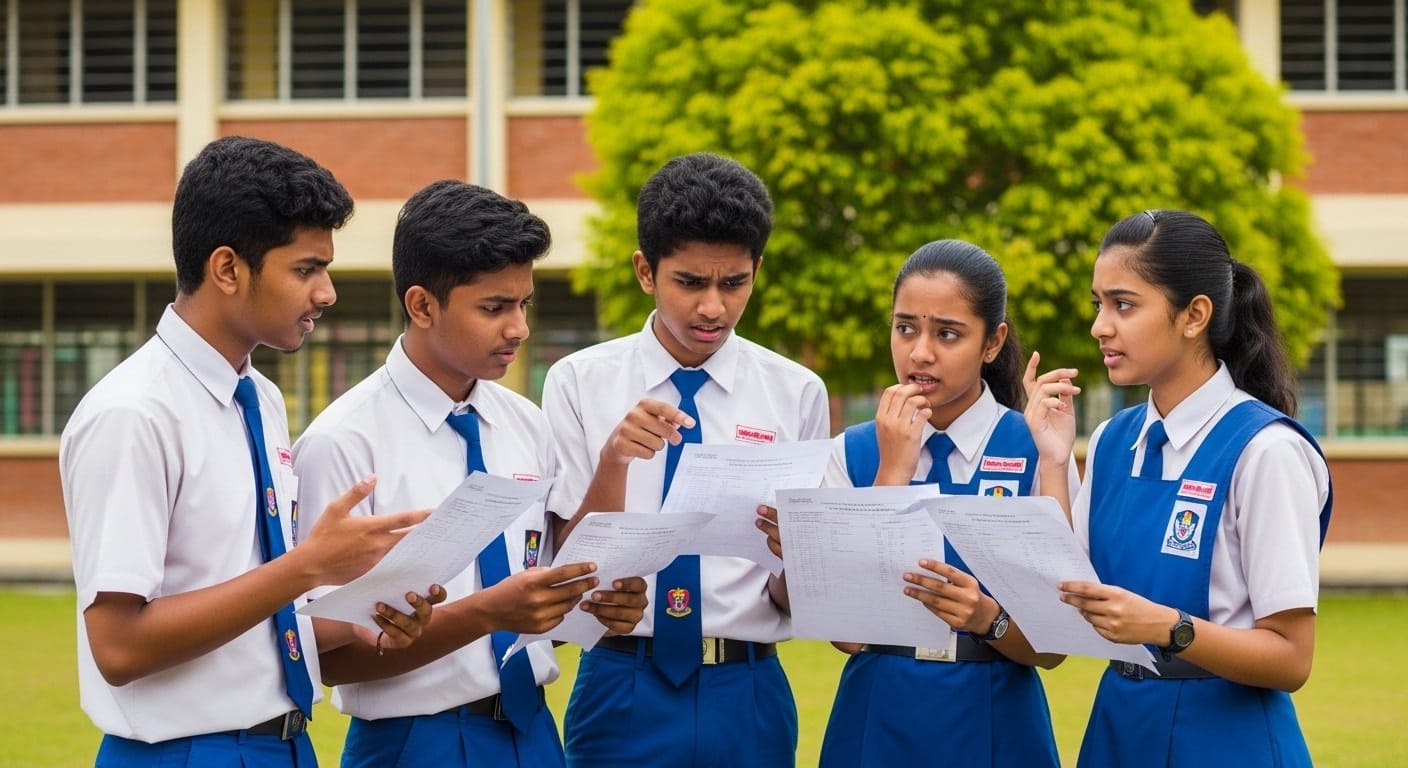
This year, that confusion has found a voice particularly among students who expected top grades in Moral but fell short of an A+. Among them are Indian students who have begun questioning whether something in the system does not quite add up.
At first glance, it sounds like a typical post-exam reaction. After all, disappointment is part of any results season. But this issue feels different not because of emotion, but because of a deeper contradiction that many students are struggling to understand.
How is it that students can score A+ in subjects widely considered more difficult Mathematics, Science, even Additional Mathematics yet fall short in Moral, a subject that is supposed to reflect values, understanding, and reasoning?
For many, this simply does not make sense.
The problem is not new. For years, students have quietly complained about the rigid structure of the Moral paper. It is not enough to understand values one must express them in a very specific format, using precise keywords and structured answers. Miss a phrase, misplace a value, or fail to align with the marking scheme, and marks are lost.
In other words, Moral is not just about being moral. It is about mastering a formula.
This creates a troubling situation. A student who genuinely understands ethical reasoning and social responsibility may still be penalised for not fitting into a narrow answering template. Meanwhile, a student who memorises the expected structure can score highly without necessarily engaging deeply with the subject.
This disconnect between intention and outcome is what frustrates many students and it is what fuels the current debate.
Among Malaysian Indian students, this frustration is compounded by a broader context. Education has long been seen as the primary pathway out of socio-economic challenges. For many families, especially those from estate backgrounds or lower-income urban areas, academic success is not just about grades it is about survival, mobility, and dignity.
So when a student works hard, performs well across subjects, and still feels unfairly assessed in one paper, the reaction is not just disappointment. It becomes a question of fairness.
But this is where we must be careful.
Raising concerns is valid. Jumping to conclusions is not.
To suggest systemic bias without clear evidence risks creating unnecessary division. At the same time, dismissing student concerns entirely risks ignoring genuine issues within the education system.
The real problem may not be bias it may be clarity.
Why does a subject like Moral, which is meant to cultivate ethical thinking, rely so heavily on rigid marking schemes? Why are students not given clearer guidance on how their answers are evaluated? And why does a subject that should encourage critical thinking feel, to many, like a test of memorisation?
These are not questions limited to one community. They affect students across Malaysia.
Yet, when frustration builds and voices begin to rise, another silence becomes noticeable the silence of leadership.
Where are the voices that should be stepping in to explain, to clarify, and to guide?
At a time when students are confused and seeking answers, the response from many public figures feels absent. It is easy to appear during celebrations, ceremonies, and public events. It is much harder to step into uncomfortable conversations and provide clarity when it matters.
Leadership is not tested when things are smooth. It is tested when questions are difficult and emotions are high.
Students do not expect perfection from the system. But they do expect transparency. They expect someone to explain how a subject works, how it is graded, and what can be done if something feels wrong.
This is especially important for communities where education carries significant weight. For many Malaysian Indians, education is not optional it is essential. It is the bridge between generations, the pathway from limitation to opportunity.
So when that pathway appears uncertain, leadership must respond not with slogans, but with substance.
This situation also reveals a deeper issue within our education system.
Are we teaching students to think, or are we teaching them to perform?
If Moral a subject rooted in values becomes a memorisation exercise, then something fundamental has been lost. Education should shape character, not just answers. It should encourage understanding, not just repetition.
If students feel that doing the “right thing” is not enough to score well, then we must ask whether the system itself needs to be re-examined.
At the same time, students must also recognise that every examination has its structure. Understanding how to answer within that structure is part of the process. Effort alone is not always enough alignment with expectations matters.
But that brings us back to the same question: are those expectations clearly communicated?
If not, then the issue is not student performance it is system design.
The current debate should not be reduced to anger or accusation. It should be an opportunity for reflection for educators, policymakers, and leaders alike.
Because this is not just about one subject or one group of students. It is about trust.
Trust in the system. Trust in fairness. Trust that effort will be recognised and rewarded appropriately.
When that trust is shaken, even slightly, the impact goes beyond one exam result.
It shapes how a generation views education, opportunity, and their place in society.
And that is something we cannot afford to ignore.
The question is no longer whether students are upset.
The question is whether we are willing to listen and whether those in positions of responsibility are prepared to respond with clarity, honesty, and action.
Because in the end, education is not just about producing results.
It is about building belief.
And once that belief is lost, it is far harder to rebuild than any grade on a piece of paper.
“When a system teaches values, it must also practice fairness.”
Annan Vaithegi (annanvaithegi@icloud.com) is a content creator under the Newswav Creator programme, where you get to express yourself, be a citizen journalist, and at the same time monetize your content & reach millions of users on Newswav. Log in to creator.newswav.com and become a Newswav Creator now!
The User Content (as defined on Newswav Terms of Use) above including the views expressed and media (pictures, videos, citations etc) were submitted & posted by the author. Newswav is solely an aggregation platform that hosts the User Content. If you have any questions about the content, copyright or other issues of the work, please contact creator@newswav.com.