
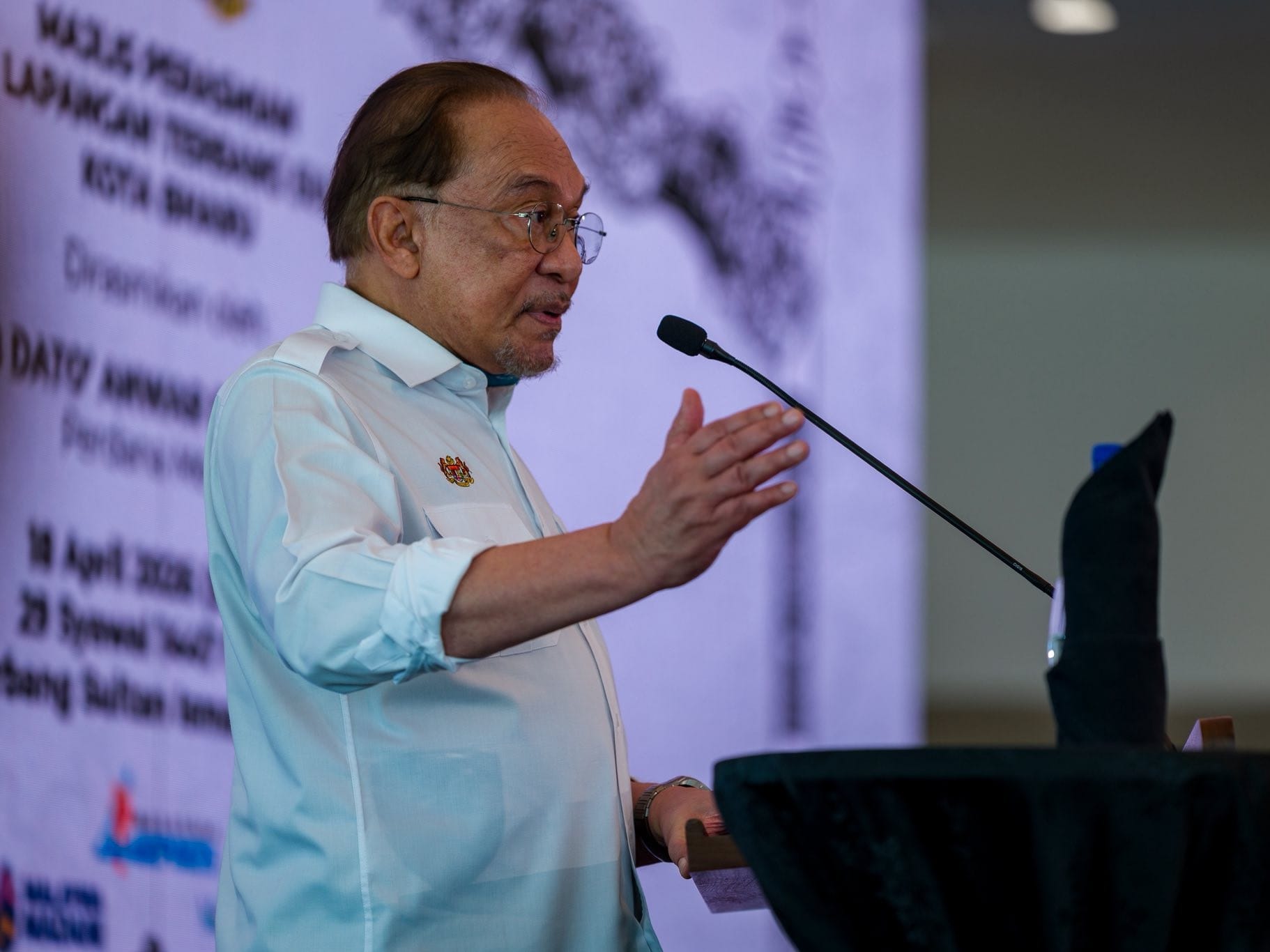
In the glass-walled corridors of Putrajaya, a quiet tremor is being felt. It isn't an earthquake, but the tectonic shift of the MADANI government’s “transformation” agenda, which has finally arrived at the doorstep of the nation’s middle management.
For years, the stereotype of the “lazy” civil servant the sluggish clerk, the absent decision-maker, the ketua cabang (branch head) whose answer to every urgent request was “nanti dulu” (wait a while) has been a staple of Malaysian water-cooler gripes. But in 2026, the rhetoric coming from the Prime Minister’s Office (PMX) has shifted from passive complaining to active, structural dismantling.
The message is clear, albeit unvarnished: if you are a branch head who is “lazy” or “lethargic,” the government is effectively inviting you to make an exit. It is a bold, controversial ultimatum in a nation where civil service employment has long been viewed as the ultimate sanctuary of job security.
But is this merely tough talk for the gallery, or the opening salvo of a genuine administrative revolution?
The Anatomy of a Warning
The Prime Minister’s recent, stinging critiques of bureaucratic inertia are not incidental. They are a calculated response to the high-stakes demands of the 13th Malaysia Plan (RMK13), which runs from 2026 to 2030. In a post-normal economic environment, where geopolitical trade frictions and inflationary pressures require agility, a “slow” administration is no longer just a nuisance it is a fiscal liability.
Analysts note that the term “ketua cabang” serves as a proxy for the entire strata of mid-to-senior management. These are the gatekeepers of implementation. If they refuse to adapt, the most well-intentioned policy whether it be the rollout of e-Invoicing or the RM5.9 billion artificial intelligence infrastructure fund is dead on arrival.
“The government is moving from the phase of 'reform' to 'transformation,'” says a senior policy analyst based in Kuala Lumpur. “When PMX says ‘take a holiday,’ he isn't suggesting a vacation. He is suggesting that if you cannot keep up with the speed of digital and fiscal integration, you are functionally obsolete to the state.”
The Great Reformer’s Dilemma: SSPA vs. Status Quo
The government’s primary weapon in this war on lethargy is the Public Service Remuneration System (SSPA), which entered its second phase in early 2026. On the surface, the SSPA is a carrot: it provides substantial pay raises up to 15% for the Implementation and Professional groups to help civil servants cope with the cost of living.
However, beneath the pay hike lies a stick. The SSPA is explicitly designed to shift the culture from seniority-based entitlement to performance-based outcomes. For decades, the career trajectory of a branch head was often determined by years of service. Under the new regime, the criteria are shifting toward digital competency, project delivery speed, and tangible efficiency savings.
The friction is palpable. The older guard, accustomed to a steady, predictable pace, is clashing with the new ILTIZAM framework, which demands the elimination of overlapping workflows and the adoption of AI-driven administrative tools.
The Data: Where Efficiency Meets Reality
Critics often dismiss government promises of “reform” as political theater. Yet, the data from the Special Task Force for Agency Reform (STAR) suggests something more tangible is happening. In the last year alone, STAR has been credited with achieving RM1.1 billion in compliance savings.
This isn't just about cutting fat; it’s about plugging the leaks. In a system where administrative bottlenecks can stall investment specifically in high-growth, high-value sectors like renewable energy and semiconductor manufacturing the speed of the “ketua” is directly proportional to the nation’s 4.0% to 4.5% projected GDP growth for 2026.
If a branch head delays a permit or complicates a procurement process due to simple inertia, the ripple effect on private sector investment is immediate. International investors do not care about internal administrative comfort; they care about the “time-to-market” for their capital.
The Cultural Bottleneck
Despite the technological investments, the "human software" remains the most difficult to update. The culture of “tidak apa” (it doesn’t matter) or “janji siap” (as long as it’s done, eventually) is a systemic issue that cannot be solved by payroll software alone.
Observers argue that PMX’s harsh tone is a deliberate effort to alter the internal social contract of the public sector. By labeling lethargy as an affront to national duty, the administration is attempting to stigmatize inefficiency. It is a risky maneuver. A demotivated or alienated civil service can silently "strike" by simply slowing down further a phenomenon known in management theory as "bureaucratic sabotage."
Yet, the Public Service Department (JPA) is doubling down. With the implementation of the Government Service Efficiency Act 2025, the legal mechanisms to bypass, replace, or discipline underperforming agencies are stronger than ever. The message to the “lazy branch head” is no longer a suggestion; it is a warning of impending obsolescence.
What Do You Think? I’d Love to Hear Your Opinion in the Comments Section.
As 2026 progresses, the question for Malaysia is not whether the government has the tools for change, but whether it has the political stamina to enforce it. The push for excellence is not just a populist slogan; it is the prerequisite for Malaysia to avoid the middle-income trap and emerge as a regional leader in the AI and green-tech sectors.
For the civil servant, the era of the "unfireable" middle manager is coming to an end. The salary hikes under the SSPA are not a reward for showing up; they are an investment in a new kind of public servant one who is proactive, tech-literate, and accountable.
The “lazy” branch head is now a relic of a bygone era. In the new Malaysia of 2026, the only remaining question is how many will choose to evolve, and how many will finally accept the PM’s advice to “take a holiday” permanently.
AM World (tameer.work88@gmail.com) is a content creator under the Newswav Creator programme, where you get to express yourself, be a citizen journalist, and at the same time monetize your content & reach millions of users on Newswav. Log in to creator.newswav.com and become a Newswav Creator now!
The User Content (as defined on Newswav Terms of Use) above including the views expressed and media (pictures, videos, citations etc) were submitted & posted by the author. Newswav is solely an aggregation platform that hosts the User Content. If you have any questions about the content, copyright or other issues of the work, please contact creator@newswav.com.