
There is no better vantage point for political analysis in Malaysia than a corner table at an Anneh coffee shop, right under a whirring ceiling fan that has seen better decades. On the table sits a steaming glass of Bru coffee, a plate with one crunchy masala vadai spiked with green chillies, and one pillowy soft uluntu vadai.
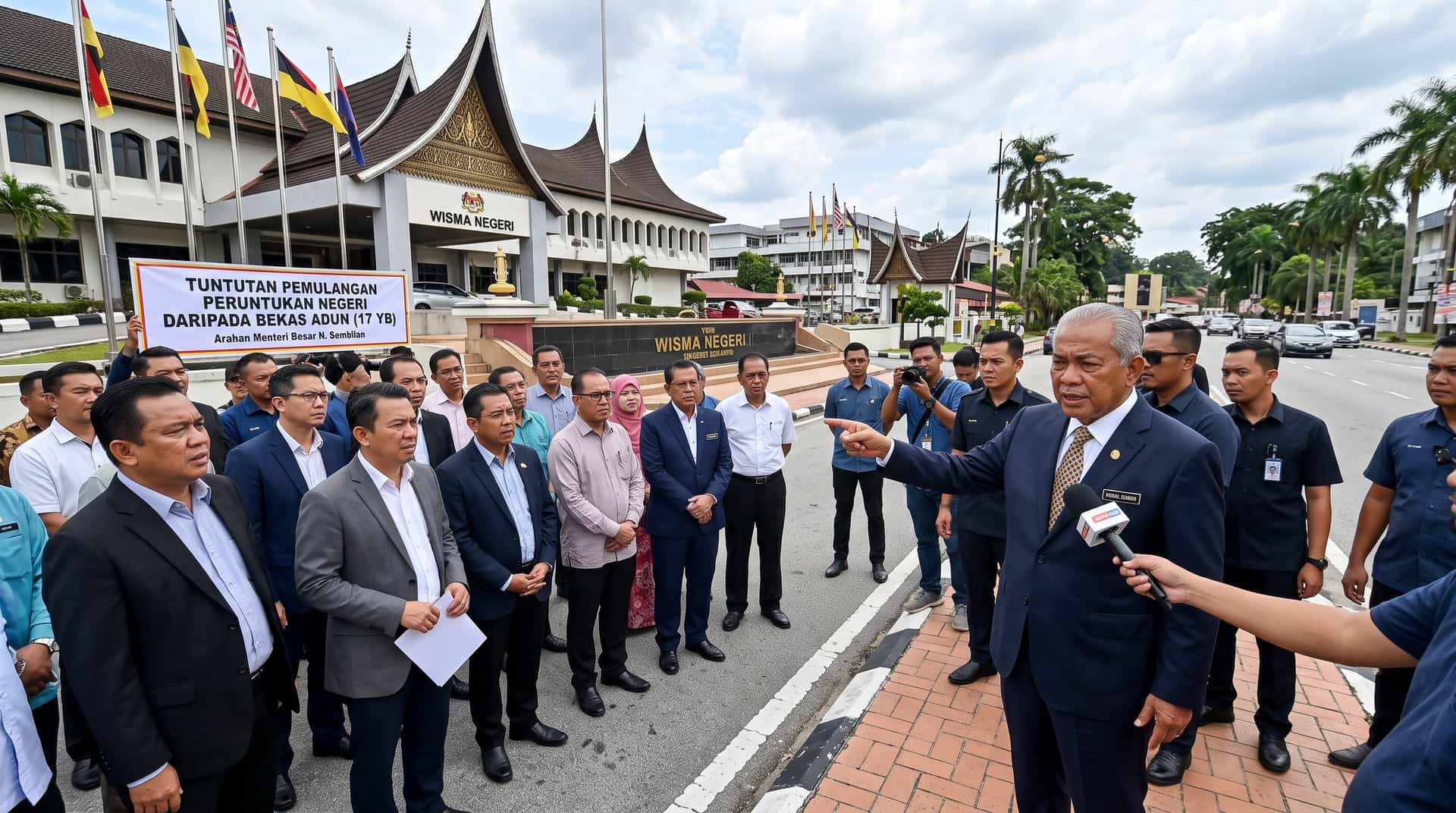
As you open the morning news, the storyline takes another hilarious twist: former representatives are now asking if the government expects them to knock on doors and demand the rakyat hand back public welfare funds.
You take a sip of the hot coffee, bite into the spicy vadai, and laugh to yourself. It is the quintessential Malaysian political cycle. Every time power shifts or even slightly recalibrates the incoming administration proudly announces a brand-new era of "visionary state development." But the very first policy move of this fresh new dawn? Chasing down yesterday’s YBs to collect money back like a neighbourhood loan shark.
The Legalized Power Trip
In our political arena, getting sworn into office comes with a curious psychological side-effect. The moment a leader touches the official seal, state development suddenly gets redefined. It is no longer just about building roads, fixing drains, or upgrading local markets. First, it is about: "Aha! Now I am legally in power, so step one is to go after the previous gang!"
When the political table flips, the narrative flips seamlessly with it:
- Yesterday's Opposition: "How can you expect us to ask the rakyat to return money already spent on schools and associations? Are we supposed to tell community groups to pay back their welfare contributions?"
- Today's Government: "Rule of law, brother! The assembly dissolved. You are no longer YB. Return the advance quarterly allocation into the state vault immediately or face a 30-day notice!"
It is a performance worthy of an Oscar. The political players swap scripts so fast it gives the average voter whiplash. The new team claims they are recovering funds to "protect state development," while the outgoing team insists they were just trying to "serve the people."
Meanwhile, sitting at the Anneh coffee shop, you realize the fundamental truth over your second bite of uluntu vadai: both sides are missing the real point.
Audit the Books, Fix the Pipeline
Strip away the partisan drama, and the core principle remains remarkably simple. State allocations were never meant to be a personal perk, a farewell bonus, or a golden parachute for an outgoing lawmaker. They are public money meant strictly for the service of the constituency.
If your tenure ends whether through an election loss or an assembly dissolution your custodial authority over public funds ends on that exact day. Spending ahead for a three-month block right before the assembly dissolves creates an administrative disaster. But if outgoing representatives claim every ringgit was spent legitimately on public welfare before stepping down, there is only one civilized solution: a comprehensive public audit.
Show us the receipts. Prove where the money went, to whom, and for what purpose. If the funds genuinely went to community projects and local schools, let the audit prove it. If they were rushed out to cushion an election cycle, let the books reveal that too.
Under our current administrative system, public service allocations are deposited directly into accounts linked to individual representatives or political coordinators. This arrangement inevitably leads to manual recovery efforts, where the state government must issue formal 30-day notices demanding that funds be returned whenever an assembly is dissolved or a term ends. As a result, routine financial management quickly devolves into a political football, turning simple fund retrievals into a public weapon for cheap political point-scoring.
To resolve this, the practical fix requires establishing centralized institutional accounts managed directly under the state legislative assembly. Under this structure, spending authorization is automatically locked the moment an assembly dissolves, completely removing the need for post-term clawback notices or messy arguments over who spent what. Unspent constituency allocations would then roll over seamlessly to the incoming elected successor, ensuring that public service continues uninterrupted without the partisan drama.
Serving the Rakyat vs. Playing the Game
As the Bru coffee gets cold, the deeper lesson becomes clear. True governance isn't measured by how enthusiastically a new government attacks its predecessors, nor is it measured by how stubbornly an outgoing government defends last-minute spending.
Real state development happens when systems are built to outlast politicians. The money in the state treasury comes from the sweat and taxes of the citizen buying a RM2 vadai, not from any political party's pocket. Whether a YB is wearing red, blue, or green, the funds must stay tied strictly to the seat and the community not the person holding the title.
Until we fix the administrative pipeline and mandate full financial transparency, we will just keep watching the same recycled political movie with a different title track.
“Governments may come and go like morning patrons at a Anneh coffee stall, but public funds belong to the table, not the person who just got up from the chair.” - Annan Vaithegi
You can check out PH reps told to return allocations paid a day before Negeri Sembilan assembly dissolved to watch a concise summary covering the immediate news context behind these state fund retrievals.
Annan Vaithegi (annanvaithegi@icloud.com) is a content creator under the Newswav Creator programme, where you get to express yourself, be a citizen journalist, and at the same time monetize your content & reach millions of users on Newswav. Log in to creator.newswav.com and become a Newswav Creator now!
The User Content (as defined on Newswav Terms of Use) above including the views expressed and media (pictures, videos, citations etc) were submitted & posted by the author. Newswav is solely an aggregation platform that hosts the User Content. If you have any questions about the content, copyright or other issues of the work, please contact creator@newswav.com.