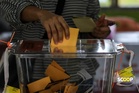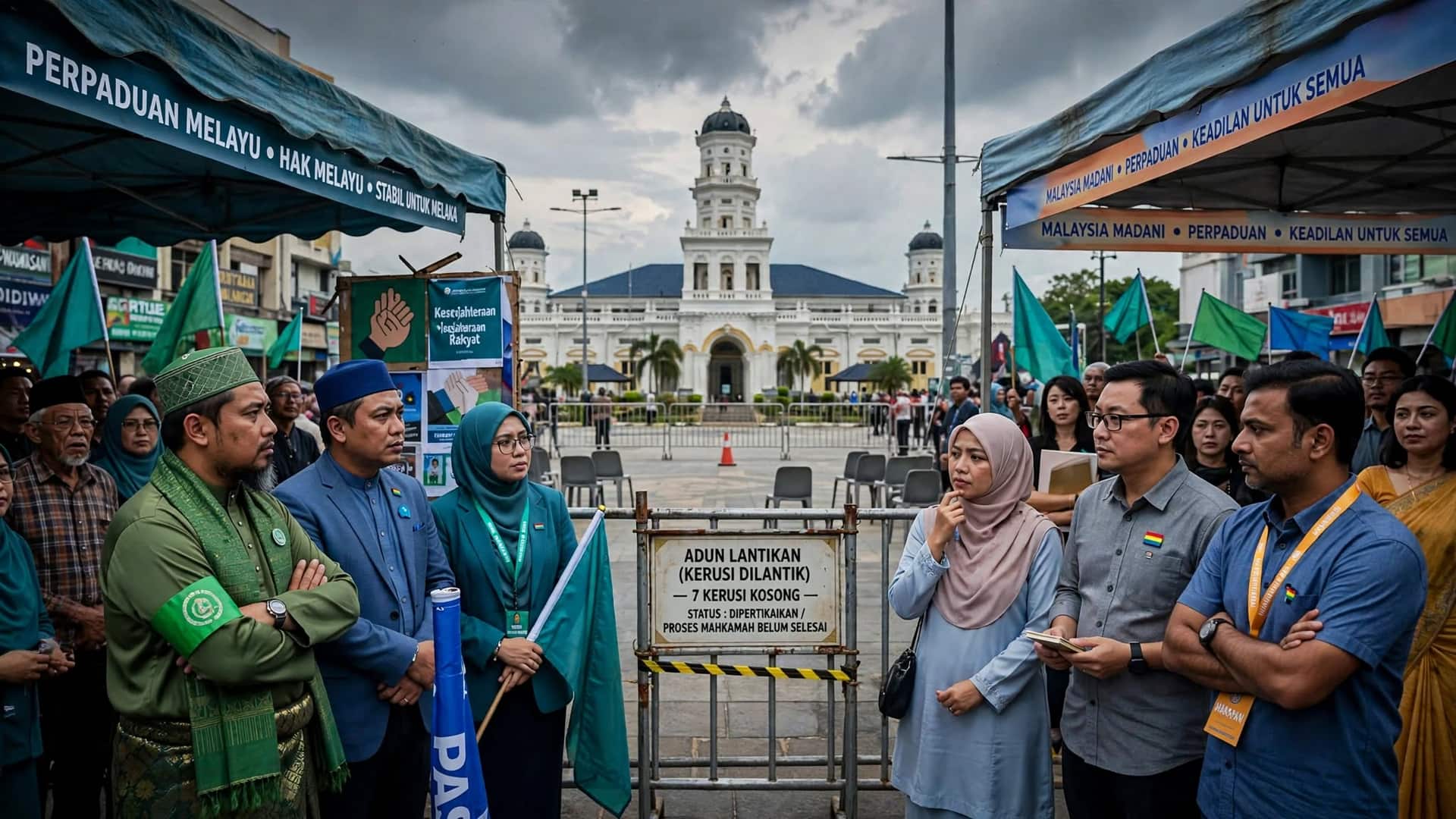
Following the dissolution of the 15th Malacca State Legislative Assembly on September 23, 2026, the state is heading toward a critical snap election. As political machinations accelerate across all 28 state seats, two distinct electoral theories are colliding. On one side stands the conservative ambition the idea that UMNO, PAS, Bersatu, and regional allies like Wawasan could sweep the state under a unified "Malay unity" narrative. On the other side is the administration of Prime Minister Anwar Ibrahim and its "Malaysia Madani" framework, which presents a non-racial, governance-first alternative.
Yet, both camps face severe internal contradictions. While conservative parties continue to market themselves as defenders of Malay rights, recent electoral cycles prove that voters are increasingly moved by practical economic realities. Simultaneously, while the Madani platform promises a multi-ethnic, rule-of-law governance model, its perceived reluctance to decisively enforce legislation against online racial and religious hate speech threatens to erode the very trust of the neutral, moderate voters it relies on to win.
The "One Banner" Myth and the Pitfalls of Identity Rhetoric
On paper, conservative strategists argue that if UMNO, PAS, Bersatu, and Wawasan formed a grand coalition under a single logo, they would dominate Melaka’s Malay-majority seats. The mathematical logic appears straightforward: consolidate conservative voters and avoid vote-splitting in multi-cornered contests.
However, this theoretical pact breaks down on basic political arithmetic:
- Seat Allocation Battles: Melaka has only 28 legislative seats. UMNO naturally seeks to defend the 21 seats it captured in 2021. Neither PAS nor Bersatu will accept running under UMNO’s Barisan Nasional (BN) scale logo, nor will they easily surrender their own organizational ambitions in key battleground constituencies.
- Contradictory Ideologies: Beyond the campaign trail, a coalition built solely on capturing power lacks a shared policy agenda. Power-sharing arrangements between competing conservative elites historically lead to immediate intra-coalition friction once executive portfolios and the Chief Minister’s post are on the line.
To mask these structural divides, campaigns often default to manufactured identity panics, claiming that Malay rights and Islamic institutions are under existential threat. Yet, recent regional state polls demonstrate the limits of this strategy.
In past campaigns across Johor and Negeri Sembilan, voters were bombarded with alarmist claims about threats to state sovereignty and national identity. In Johor, hyperbolic fears over foreign educational influence and institutional overreach were deployed to stir base voters; in Negeri Sembilan, manufactured controversies surrounding royal authority dominated campaign speeches. Yet, once the ballots were counted, these alleged threats dissolved into thin air. In their aftermath, state administrations were left dealing with real-world fallout: distracted civil service, lost investment opportunities, and lingering administrative friction.
Crucially, the current Melaka election was not triggered by a racial or religious crisis. It was caused by a straightforward executive dispute over a proposed state constitutional amendment allowing for up to seven appointed, non-elected assembly members (ADUN Lantikan) a move that led Pakatan Harapan (PH) to withdraw from the state executive council on democratic grounds. When campaign rhetoric diverges so radically from the actual causes of an election, identity-based appeals lose their persuasive power among discerning swing voters.
The Madani Dilemma: Inclusivity vs. Enforcing the Rule of Law
In contrast to the identity-driven bloc, the Malaysia Madani concept was built to appeal to neutral, moderate voters who prioritize good governance, social harmony, and economic growth regardless of race or religion. By positioning itself as a platform for all Malaysians, Madani theoretically holds a strong advantage in mixed, multi-ethnic constituencies across Melaka.
However, the Madani administration faces a growing perception problem that could severely impact voter turnout and enthusiasm:
- Rhetoric vs. Selective Enforcement: While the Madani framework preaches unity and equal protection under the law, critics argue that the authorities frequently adopt a passive stance when hate speech, racial provocations, and religious extremism circulate online or on the campaign trail.
- Existing Laws Left Unused: Malaysia possesses specific legislative tools including the Sedition Act, the Communications and Multimedia Act (CMA), and relevant sections of the Penal Code to penalize hate speech and incitement against minority communities or state institutions. Yet, when incendiary comments occur during sensitive political periods, official responses are often perceived as slow, muted, or strategically calculated to avoid alienating conservative voters.
- Alienating the Neutral Base: Neutral and moderate voters who form the core backing for Pakatan Harapan and reform-minded coalitions do not expect the state to police speech unnecessarily. However, they do expect a government that claims to represent all Malaysians to enforce existing laws consistently. When authorities remain silent in the face of explicit racial or religious hostility, moderate voters begin to view the Madani promise as politically timid rather than truly inclusive.
The Path Forward: What Will Decide Melaka?
For any coalition to win a simple majority of 15 seats in Melaka, it must address the primary concerns of everyday citizens rather than relying on identity shortcuts or symbolic slogans.
| Electoral Factor | Conservative Identity Bloc (UMNO / PN) | Neutral / Reformist Platform (Madani / PH) |
|---|---|---|
| Primary Campaign Pitch | Protection of Malay-Muslim rights and political unity. | Institutional governance, democratic integrity, and pluralism. |
| Major Strategic Weakness | Seat-allocation clashes and manufactured outrage that fails post-election. | Perceived hesitancy to enforce laws against online hate speech and incitement. |
| Key Voter Demand | Preservation of community representation and local grassroots welfare. | Economic stability, cost-of-living relief, and equal application of the rule of law. |
Ultimately, the Melaka state election will serve as a referendum on political authenticity. An alliance between UMNO, PAS, Bersatu, and Wawasan under one banner remains an unstable political fantasy that treats identity as a substitute for policy. Conversely, the Madani government cannot assume that moderate voters will automatically turn out if the administration appears unwilling to uphold its own laws against hate speech and discrimination.
The party or coalition that secures Seri Negeri will not be the one that shouts the loudest about identity or hides behind vague promises of harmony it will be the one that demonstrates the courage to enforce the law fairly and address the tangible economic needs of all Melakans.
Final Thoughts
The upcoming Melaka state election is fundamentally a referendum on political authenticity and administrative courage. A grand "one banner" alliance among conservative parties may offer temporary political convenience on paper, but it provides no practical blueprint for governance once campaign slogans fade. Conversely, the Madani framework cannot expect the quiet majority of moderate voters to remain perpetually patient if the state appears hesitant to uphold its own laws against hate speech and communal incitement.
True stability in Melaka and indeed across Malaysia will not be built on manufactured fear or political silence, but on a government willing to govern for all citizens equally under the law.
“A government that hesitates to defend its own values of equal justice will eventually find that voters hesitate to defend its mandate.” - Annan Vaithegi
Annan Vaithegi (annanvaithegi@icloud.com) is a content creator under the Newswav Creator programme, where you get to express yourself, be a citizen journalist, and at the same time monetize your content & reach millions of users on Newswav. Log in to creator.newswav.com and become a Newswav Creator now!
The User Content (as defined on Newswav Terms of Use) above including the views expressed and media (pictures, videos, citations etc) were submitted & posted by the author. Newswav is solely an aggregation platform that hosts the User Content. If you have any questions about the content, copyright or other issues of the work, please contact creator@newswav.com.